
FutureBit Launches HashFly: A Fruit Fly Brain Crypto Miner
The project serves as an experimental proof of concept, exploring the potential efficiency of wetware in performing complex computational tasks.
 Radwan AbdulhadiEditor and technology writer
An Organic Approach to Computing
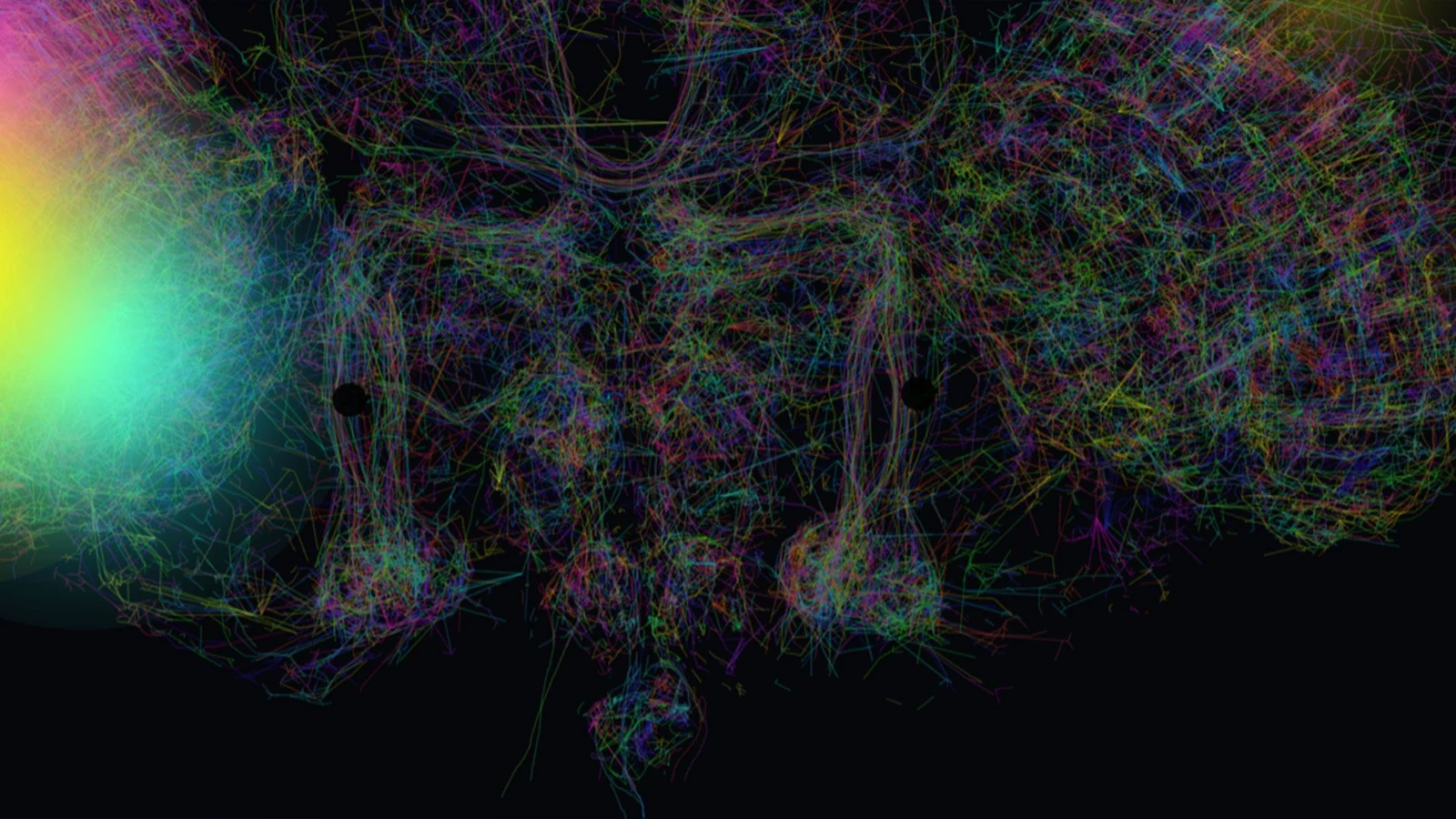
A novel experiment in computational efficiency has emerged following the release of a comprehensive dataset by Google. A project dubbed HashFly has been introduced as the first organic neuron Bitcoin miner based on the [fruit fly connectome](https://www.tomshardware.com/software/programming/google-maps-entire-brain-and-central-nervous-system-of-adult-male-fruit-fly-software-engineers-immediately-make-it-run-doom-ai-powered-3d-model-of-over-166-000-neurons-can-also-play-super-mario-64). FutureBit, a company primarily known for its Apollo series of ASIC mining hardware, designed this browser-based simulation to test the boundaries of organic computing, or "wetware."
Inside the HashFly Proof of Concept
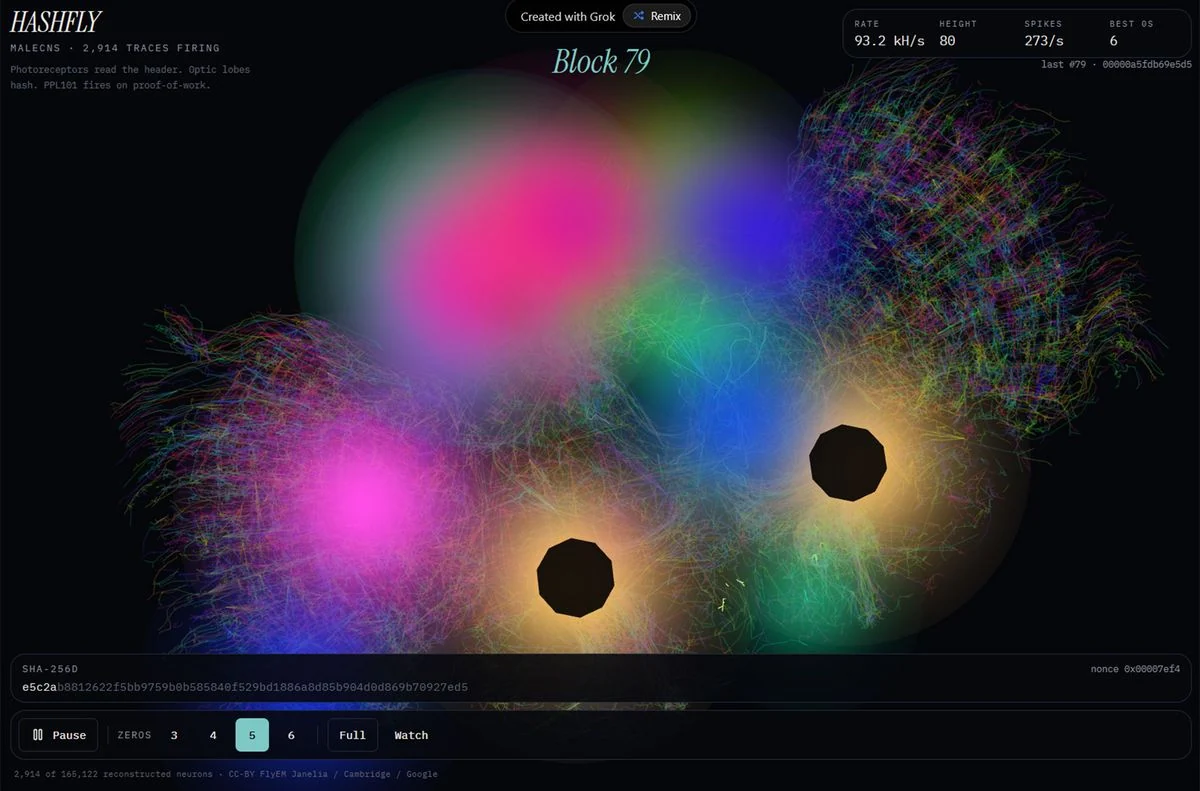
The [HashFly](https://dream-xenon-aurora-mint.grok.me/) interface allows users to witness the simulation in action, displaying the firing patterns of specific neurons. The current proof of concept utilizes 2,914 traces, representing a small fraction of the 165,122 reconstructed neurons found in the MaleCNS v1.0 connectome. The system simulates photoreceptors that would typically process light input in the biological fly, instead repurposing them to read block headers.
When the simulated PPL101 cells identify a double-SHA-256 target, the system registers the computation. While the difficulty level can be adjusted within the web application, FutureBit notes that the current implementation is significantly easier than actual Bitcoin mining. The browser-based performance is currently measured at approximately 100 kH/s, a far cry from the 18 TH/s capability of the company's dedicated Apollo III hardware.
Theoretical Efficiency Gains
The core motivation behind HashFly is to investigate the potential of biological substrates for specialized mathematical functions. FutureBit claims that if the model were scaled using real organic neurons rather than a simulated environment, it could theoretically achieve approximately 1 watt per terahash. According to the company, this level of performance would represent 10 times the efficiency of the best silicon 3nm ASICs currently available in the industry as detailed by [Tom's Hardware](https://www.tomshardware.com/tech-industry/cryptomining/googles-simulated-fruit-fly-brain-mines-bitcoin-in-web-browser-proof-of-concept-futurebit-says-real-organic-neuron-miner-could-have-10x-the-efficiency-of-the-best-silicon-3nm-asics).
Future Development and Industry Context
FutureBit has signaled plans to expand the project, stating that they are working to simulate all neurons in the current dataset using the SHA-256 hash function. The company intends to publish their findings as they move beyond the initial proof of concept. This project is part of a broader trend of experimental applications involving the Google connectome mapping, which has seen hobbyists and developers attempt to run software ranging from gaming to simulated day trading.
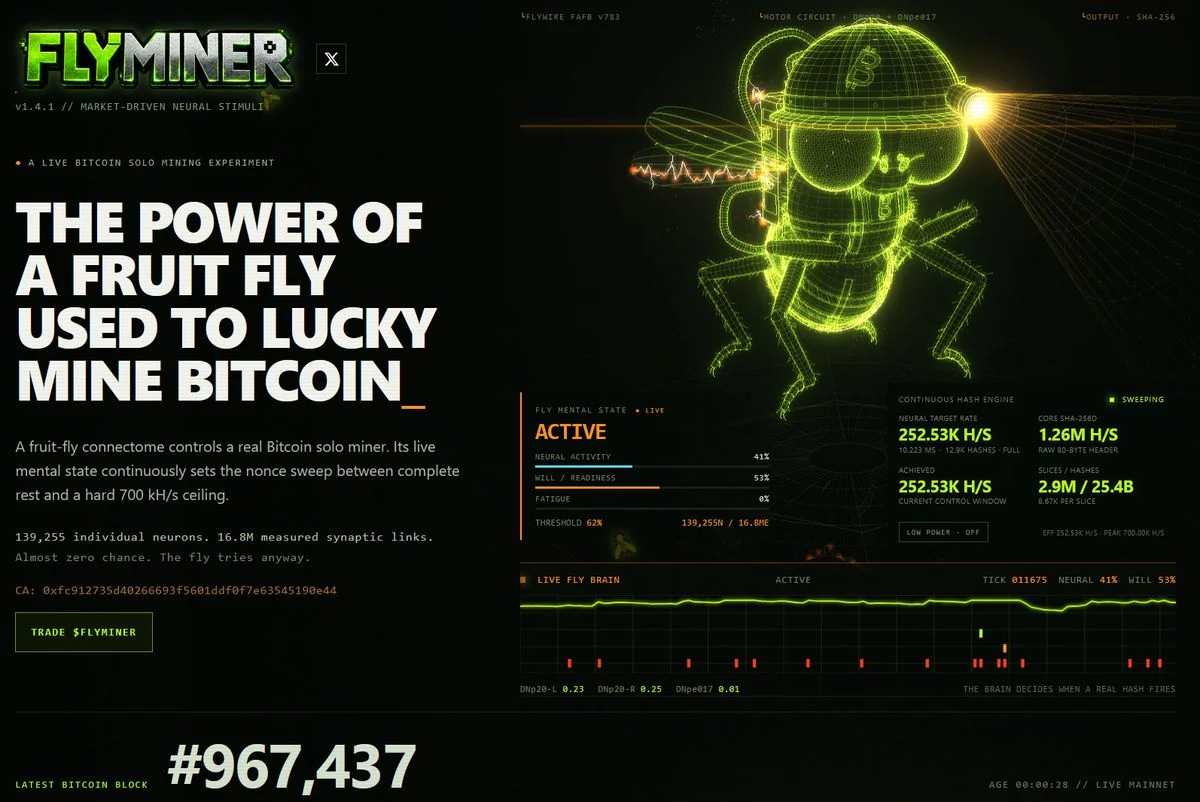
Competition in this niche area is already appearing, with other projects like FlyMiner attempting similar, albeit unsuccessful, mining ventures by applying ASIC control structures to the connectome. These initiatives highlight the ongoing interest in the intersection of biological mapping and digital computation, even if they currently offer no viable path toward profitable cryptocurrency generation.
Sources
- Tom's HardwareGoogle's simulated fruit fly brain 'mines Bitcoin' in web browser proof of concept — FutureBit says real organic neuron miner could have '10x the efficiency of the best silicon 3nm ASICs'