Google Chrome Introduces Suspicious Site Warnings
Google has announced a new browser safety feature for Chrome that brings a two-stage warning system to URLs, helping users distinguish between potentially shifty sites and definitively dangerous ones.
 Radwan AbdulhadiEditor and technology writer
New Two-Stage Browser Protection
Google [is launching](https://blog.google/security/our-latest-defenses-evolving-web-scams/) a new browser safety feature for Chrome that aims to keep users better informed about how malicious a website might be before they open it. The new suspicious site warnings, which are available when Chrome's Enhanced Protection mode is turned on, build on a similar system first introduced for [Chrome file downloads in 2024](https://security.googleblog.com/2024/07/building-security-into-redesigned.html). That previous download system provided visually different notifications for blocked files based on whether they were determined to be suspicious or dangerous.
The expansion of this philosophy into website URLs helps users separate marginally shifty sites from overtly dangerous ones. With web threats constantly evolving, providing clear, graded distinctions allows individuals to make better security decisions on the fly. Google hopes that by extending the two-stage visual methodology from downloaded binaries directly to web browsing, users will develop a clearer intuition regarding internet threats on both desktop and mobile platforms.
Distinguishing Suspicious and Dangerous URLs
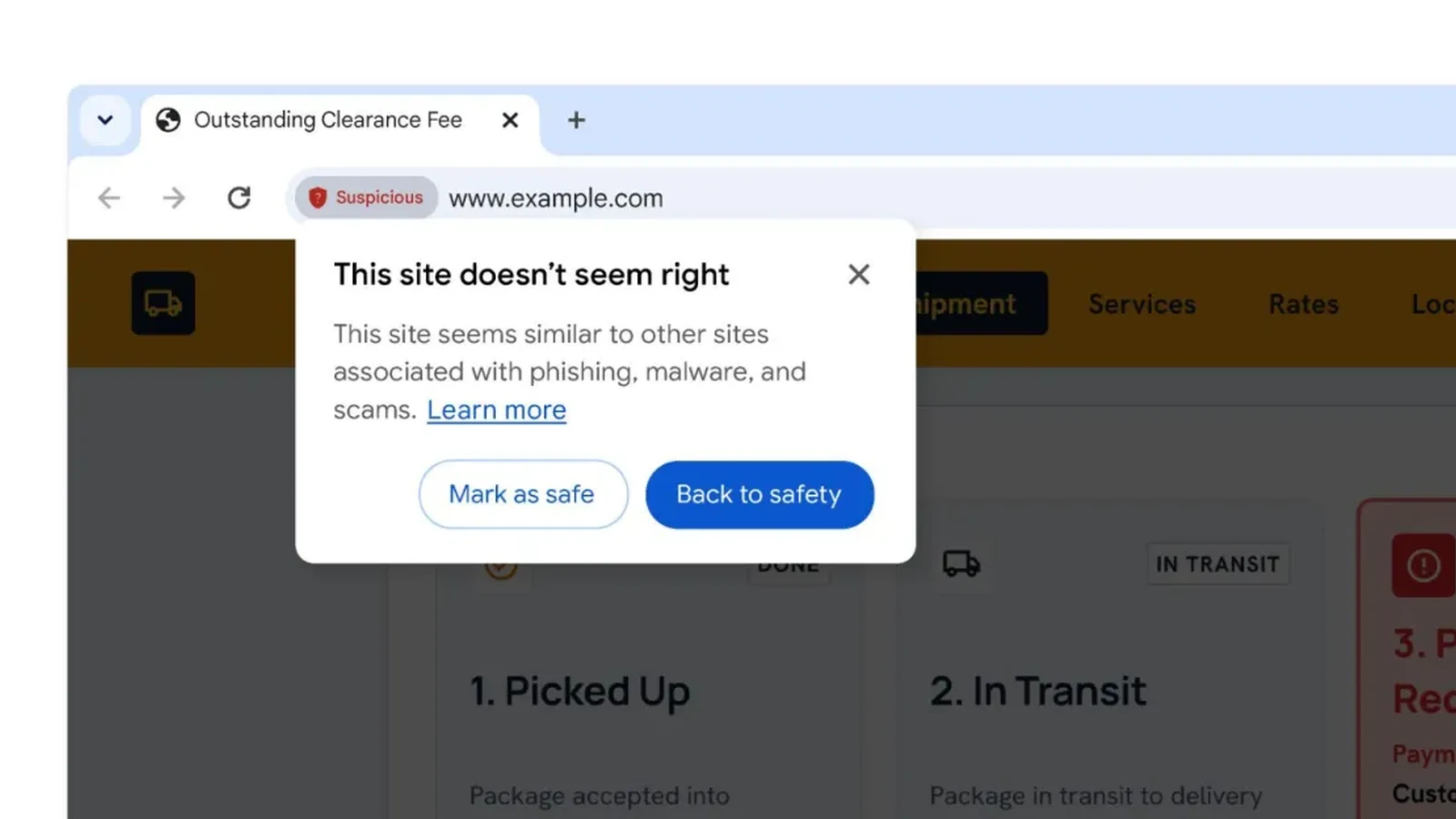
When browsing the web with Chrome, the browser will flag a website as suspicious if it detects that the target URL shares qualities with other sites associated with phishing, malware, and digital scams. Google describes this particular alert category as carrying a "lower confidence verdict" with a potential risk of user harm. This means there remains a small chance the domain was incorrectly flagged, and users are advised to proceed only if they are entirely confident that the destination is safe.
Conversely, warnings issued for genuinely dangerous websites carry a much higher confidence verdict alongside a severe risk of user harm. Google advises that these dangerous sites should be avoided entirely rather than bypassed. The technical distinction between these verdicts ensures that users are not overwhelmed with false alarms while still remaining adequately protected against actively malicious web infrastructure.
Visual Interface and User Experience
Google has designed the interface so that it is easy to distinguish between the two warning types at a glance. Notifications for suspicious websites will appear as a pop-up window on both desktop and mobile devices. In this state, the underlying webpage remains visible but is visibly darkened, and the prompt includes an option to mark the page as safe if the site was flagged mistakenly by automated filters.
Meanwhile, the already familiar notification style for confirmed dangerous sites is intentionally much harder to ignore. This high-priority warning message occupies almost the entire display screen, and the target website is completely replaced by a solid red background. This stark visual contrast ensures that users recognize the severity of the threat immediately upon navigating to a blocked link.
Integration With Enhanced Protection and Gemini AI
These new suspicious site warnings require Chrome's Enhanced Protection mode to be active in order to function. Alongside rolling out this website warning redesign, Google also implemented improvements to [Gemini-powered scam detection](https://blog.google/security/using-ai-to-stop-tech-support-scams-in/) specifically for users who have opted into Enhanced Protection.
By combining artificial intelligence tools with traditional heuristic and signature-based threat intelligence, Google aims to stay ahead of sophisticated modern web scams. The integration of Gemini models allows Chrome to analyze suspicious behavioral patterns in real time, offering an additional layer of security for everyday internet users navigating unfamiliar domains.
Broader Context and Availability
The introduction of these URL safety features highlights Google's ongoing efforts to harden its browser ecosystem against rapidly changing web threats. As phishing campaigns and fraudulent websites become increasingly convincing, browser developers must adopt nuanced notification strategies that prevent alarm fatigue while still blocking malicious traffic.
With the feature now rolling out to Chrome users who utilize Enhanced Protection, millions of individuals across desktop and mobile form factors will benefit from the graded warning system. Google continues to refine its automated detection engines to minimize false positives while expanding coverage against emerging online scams.
Sources
- The VergeChrome will now show a warning before you visit ‘suspicious’ sites
Continue chronologically


Related entity coverage
Related stories
Google Chrome adds Gemini-powered scam detection and warnings
Google Chrome introduces Gemini-powered scam detection and new ClickFix attack warnings as part of its Enhanced Protection in Safe Browsing.

Google Starts Rolling Out Universal Cart Across Search and Chrome
Google is widely rolling out its new Universal Cart feature, bringing a prominent shopping cart icon to Search, Chrome, AI Mode, and the Gemini app.
Chrome 156 for Googlebook Launches With 14 Updates
Google is rolling out Chrome 156 for Googlebook via the Play Store, bringing 14 updates, improvements, bug fixes, and new AI mode features.

Google's SynthID AI Detector Goes Public for Everyone
Google's SynthID Detector is now available globally for regular users, offering a simple way to check if images, videos, or audio files are AI-generated.