When You Should—and Shouldn’t—Use AI to Search the Web
AI chatbots like Claude, ChatGPT, and Gemini can easily retrieve information from the web, but deciding when to use AI versus a traditional search engine depends heavily on your specific query.
 Radwan AbdulhadiEditor and technology writer

The Rise of AI-Powered Web Search
If you've interacted with the likes of Claude, ChatGPT, and Gemini, you've probably noticed that these AI chatbots can search the web on your behalf. Depending on what you are looking for, finding relevant results through a chatbot can often be much easier.
When asked to search the web, the latest versions of these bots combine traditional web search methods with knowledge extracted from their training data. Everything is subsequently packaged and formatted in a polished generative AI style, which explains why companies are so keen to push AI features into everyday user workflows.
When AI Search Works Best
AI search is a safe bet when looking up something simple and widely known, such as the height of the Empire State Building. Because this information is widely accessible online and favored by language models, the likelihood of receiving correct results is exceptionally high.
Furthermore, AI search proves extremely helpful when handling complex queries that a standard search engine might struggle to parse. For instance, asking an AI to find specific restaurants matching a strict budget and family size allows the system to query and collate multiple sources, yielding a well-synthesized answer instead of a basic list of blue links.
Limitations and Source Reliability
Despite their convenience, AI search tools can falter when dealing with obscure questions. If a topic has only one or two references online, an AI may misinterpret the query or select an incorrect source, while still presenting a confident answer.
According to recent Stanford University research, while AI is generally effective at pulling accurate information when it finds a reliable source, it frequently struggles when accurate sources are missing or when a query is misunderstood. Additionally, studies have found that AI web searches sometimes select sources based purely on query relevance rather than their actual authority, occasionally favoring personal blogs over professional sites.
When Traditional Search Engines Still Win
Traditional web searches remain the preferred option when you require full control over your sources. Offloading searches to an AI saves time, but the underlying process is opaque and relies entirely on the chatbot to properly interpret your intent and extract accurate facts.
Other scenarios where traditional search outperforms AI include breaking news—where AI data can sometimes suffer from timeliness lags—and high-stakes searches involving health, law, or personal finances where errors are unacceptable. For precise details like celebrity quotations, statistical reports, or device specifications, utilizing a standard search engine ensures you can easily prioritize trusted websites and verify information yourself.
Sources
- WIREDWhen You Should—and Shouldn’t—Use AI to Search the Web
Continue chronologically

Related entity coverage
Related stories
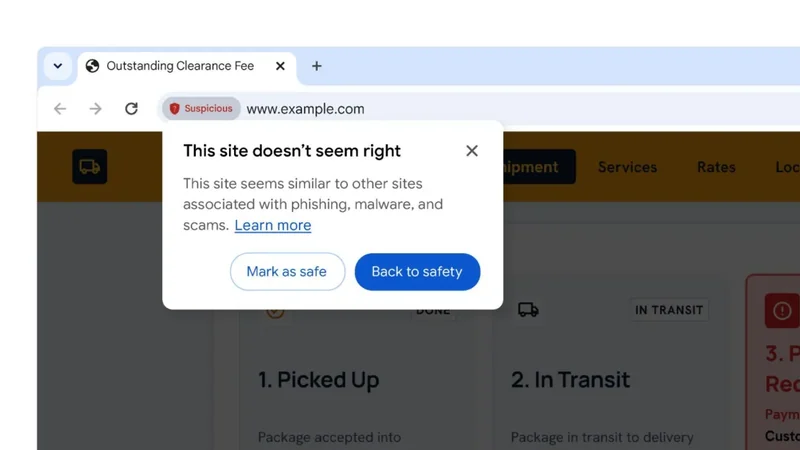
Google Chrome Introduces Suspicious Site Warnings
Google Chrome is launching a new two-stage browser safety feature designed to warn users about suspicious and dangerous websites before they visit them.
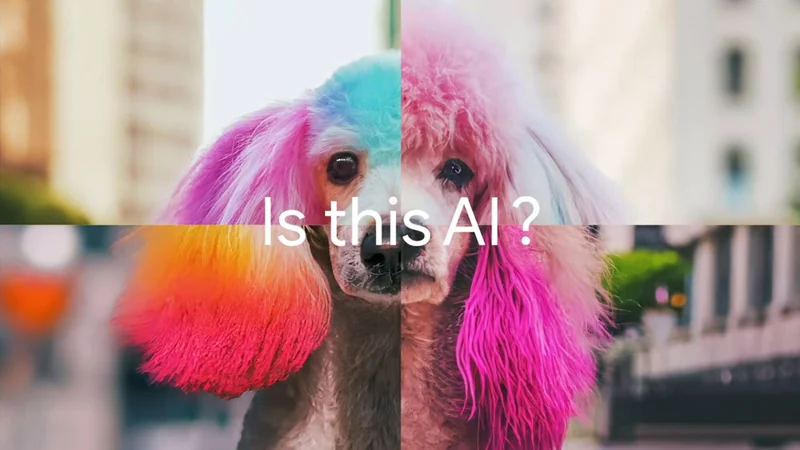
Google's SynthID AI Detector Goes Public for Everyone
Google's SynthID Detector is now available globally for regular users, offering a simple way to check if images, videos, or audio files are AI-generated.
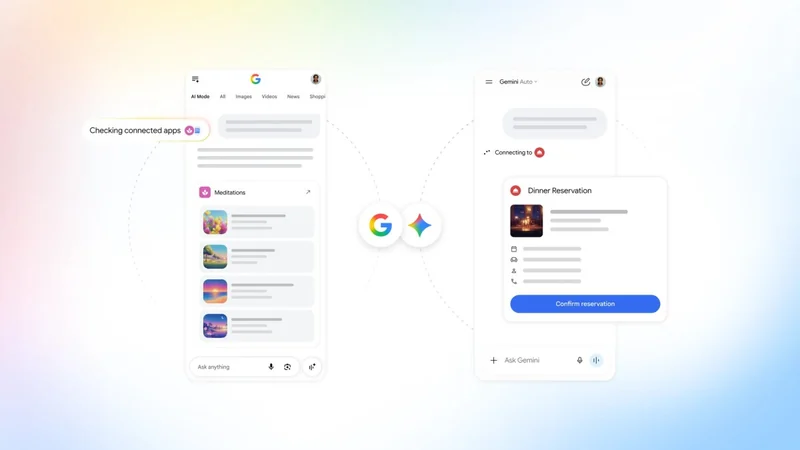
Google Opens Gemini and Search to More Apps With Connected Platform
Google debuts a new developer platform allowing businesses to connect their third-party apps directly to Gemini and Google Search.
Gmail's Live AI Search Arrives for Subscribers
Google is rolling out its new Gmail Live AI search and voice features for Google AI subscribers, bringing conversational inbox search to life.