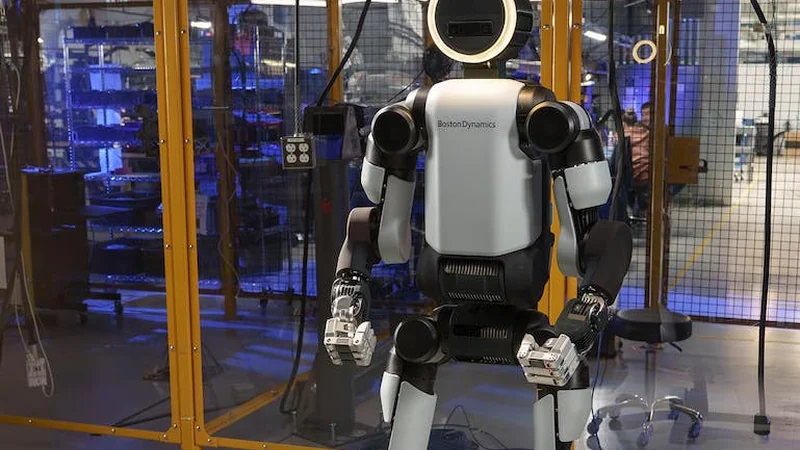
Boston Dynamics Reveals Insights Into Redesigned Humanoid Hand
Boston Dynamics has provided deeper insight into the engineering and design choices behind its newly unveiled humanoid robot hand.
 Radwan AbdulhadiEditor and technology writer
Engineering the Redesigned Humanoid Hand
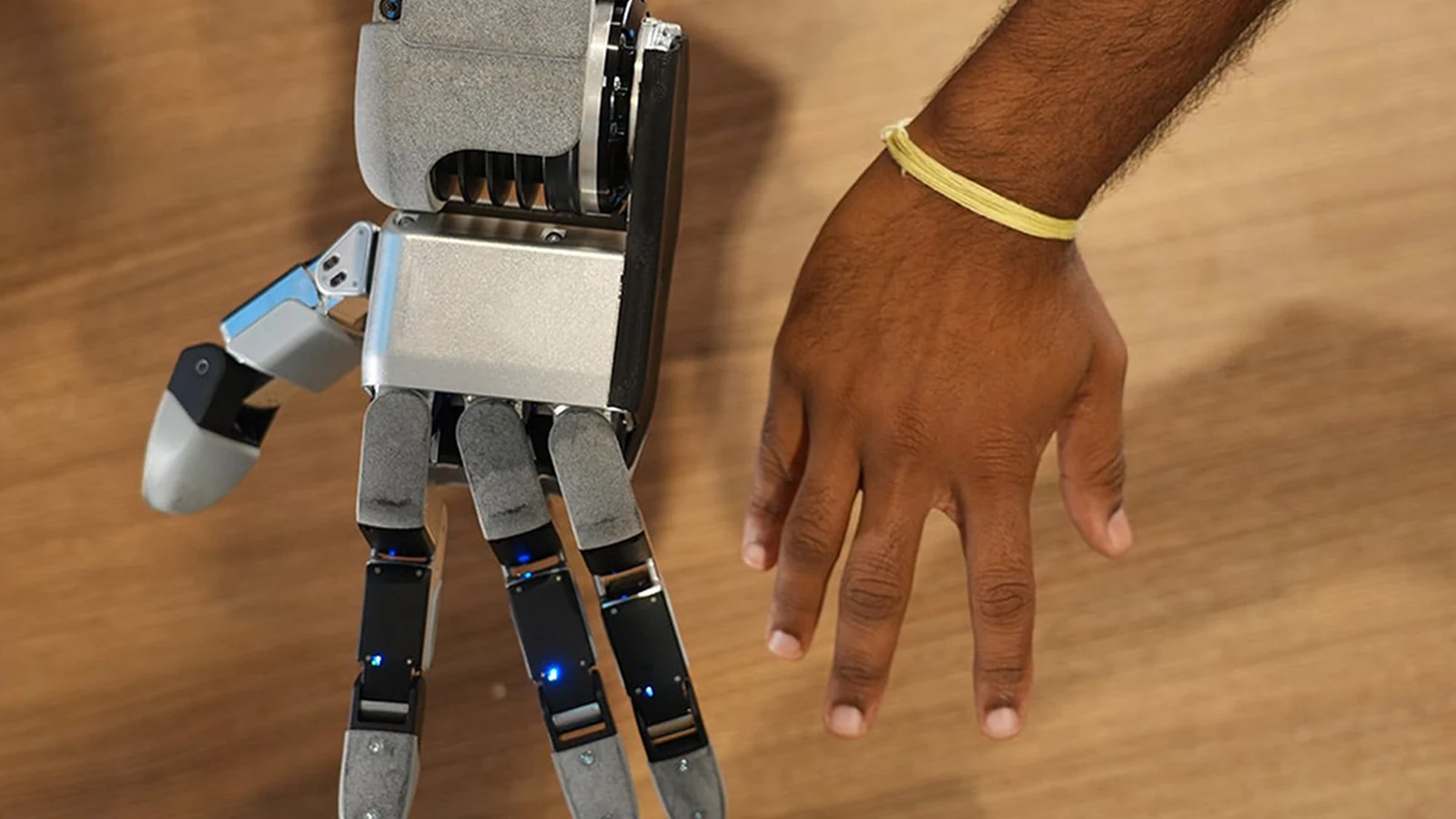
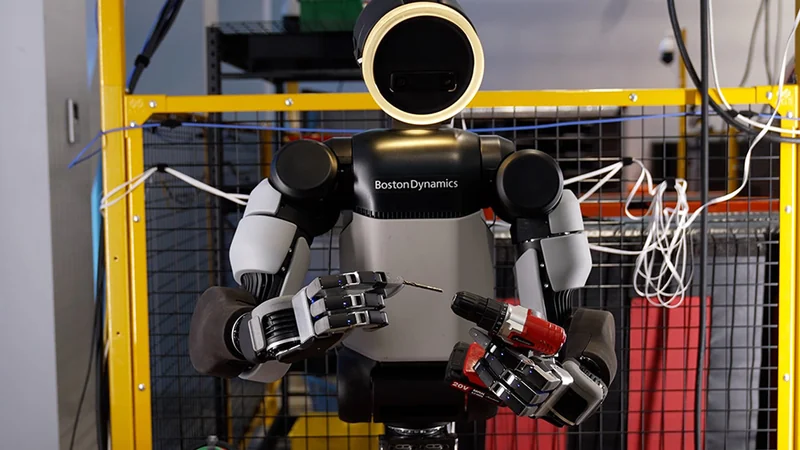
Boston Dynamics recently shared a closer look at its latest humanoid robot hand, which features four fingers and 13 degrees of freedom (DoF) through direct actuation. Speaking with The Robot Report, Alberto Rodriguez, director of robot behavior for Atlas at Boston Dynamics, discussed the complex engineering decisions behind the updated gripper.
Among the most noticeable changes to the hardware is that Boston Dynamics dropped the pinky finger and reduced the overall size of the gripper. According to Rodriguez, having a clear product roadmap for the Atlas platform enabled the engineering team to navigate difficult design trade-offs regarding dexterity, strength, ruggedness, cost, reparability, and sensing.
Modularity, Simplicity, and Actuation
Lessons learned from the main body of the Atlas humanoid heavily influenced the hand's development. The company applied principles of simplicity, modularity, and actuator maturity to improve operational velocity. A reliable robot allows the team to capture data faster, run more experiments, and deploy early iterations with greater confidence.
The resulting hardware consists of 13 identical, completely encapsulated actuators with no fragile cables crossing joint spaces. Because earlier hand iterations already demonstrated the capability to lift objects weighing over 100 lb., engineers chose not to increase strength further, opting instead to slightly decrease it to improve actuation transparency.
In-House Development and Simulation Goals
Boston Dynamics maintains that developing hands in-house is essential due to how critical end-effectors are to the overall value proposition of humanoid robots. As outlined in a company blog post, every hand design emerges from consequential trade-offs that must align with long-term product planning and manufacturing scalability.
Beyond physical robustness, the hand was specifically constructed to support high-fidelity simulation. This capability facilitates sim-to-real reinforcement learning, allowing control policies to transition smoothly from virtual environments directly onto physical hardware without unexpected friction penalties.
Testing Protocols and Representative Tasks
To establish rigorous functional requirements, the development team evaluated prototypes against a suite of representative industrial tasks. These include handling cables, working with handheld power tools, and manipulating small fasteners like screws. Researchers also tested the hands with non-mission-oriented tasks, such as juggling and speed hand games, to explore the boundaries of the system's capabilities.
Early prototypes undergo extensive vetting by systems, behavior, and controls teams to uncover unforeseen design challenges. Rigorous validation testing helps refine potential issues early in the process, ultimately streamlining the path toward field deployment and mass manufacturing.
Sources
- The Robot ReportBoston Dynamics gives more insight into its redesigned humanoid hand
Continue chronologically
Related stories
Boston Dynamics Reveals Four-Fingered Hand for Atlas
Boston Dynamics has unveiled a new four-fingered hand for its Atlas humanoid, designed for high-fidelity simulation and tool manipulation.
Boston Dynamics Appoints Former Amazon Exec Rohit Prasad as CEO
Boston Dynamics has named former Amazon executive Rohit Prasad as its new CEO, aiming to accelerate its physical AI strategy and productize intelligent machines.

2026 Robotics Handbook Explores Humanoids and AI
The 2026 Robotics Handbook examines humanoid robots, artificial intelligence, dexterous manipulation, and automation trends in construction.
Humanoid Robots and AI Emerge as Helpers, Not Enemies
Rapid AI advances bring humanoid robots like Boston Dynamics' Atlas out of the lab and onto factory floors, serving as helpers rather than enemies.