Ancient 4.1-Billion-Year-Old Martian Meteorite Found in Sahara
A rare meteorite discovered in the Sahara Desert offers unprecedented insights into the early environmental history and watery past of our neighboring planet.
 Radwan AbdulhadiEditor and technology writer
Discovery in the Desert
In 2022, a strange rock was found in the Sahara Desert, and subsequent analysis has proven it to be an extraordinary find for planetary science. Weighing approximately two pounds, the fragment originated from Mars’ crust before being ejected by a massive impact, traveling through space, and eventually reaching Earth.
The Sahara Desert has long served as a natural archive for the history of Earth and the solar system. Among its vast sands, researchers have previously recovered 40-million-year-old fossils and other significant meteorites. For instance, a 4.5-billion-year-old fragment found in 2019 may have originated from an ancient, now-vanished protoplanet comparable in size to the moon.
Unlocking the Martian Past
Named Teghaza 001, this ancient meteorite dates back approximately 4.1 billion years. During this remote epoch, Earth was a young world marked by intense geological activity, featuring early oceans but completely devoid of plants, animals, or complex life forms.
While Martian meteorites found on Earth are exceptionally valuable for analyzing planetary composition and geological history, they frequently offer limited data regarding ancient environmental conditions. However, new studies published in Science and Science Advances demonstrate that Teghaza 001 is fundamentally different from previously recovered samples.
A Rosetta Stone for Mars
Beyond its remarkable age, Teghaza 001 preserves distinct chemical traces documenting interactions between materials in the Martian crust and an ancient hydrosphere. Experts emphasize that the unique nature of the sample elevates its significance for the scientific community.
Yang Liu of NASA’s Jet Propulsion Laboratory highlighted the importance of the discovery in a press release, noting that one of the paper's reviewers referred to the meteorite as a true 'Rosetta Stone for Mars.'
Water, Magma, and Hydrogen Traces
Within the meteorite, tiny crystals of a mineral known as apatite preserve distinct signatures from two unique sources of hydrogen. One source originates from the deep interior of Mars, while the other is directly tied to the planet's ancient hydrosphere.
This chemical evidence confirms that material was actively exchanged between deep-seated magma and a surface rich in liquid water. Because the rock formed roughly 500 million years after the birth of Mars and the broader solar system, these volatile planetary processes occurred very early in its existence.
NASA scientist Lee Saper, who also contributed to the research, explained that the specimen represents the first piece of Martian crust obtained from a region previously unsampled by researchers. The rock effectively records ancient water-rock interactions and potentially captures an imprint of the Martian atmosphere during the period when the planet was actively losing its water resources.
Ongoing Exploration and Serendipity
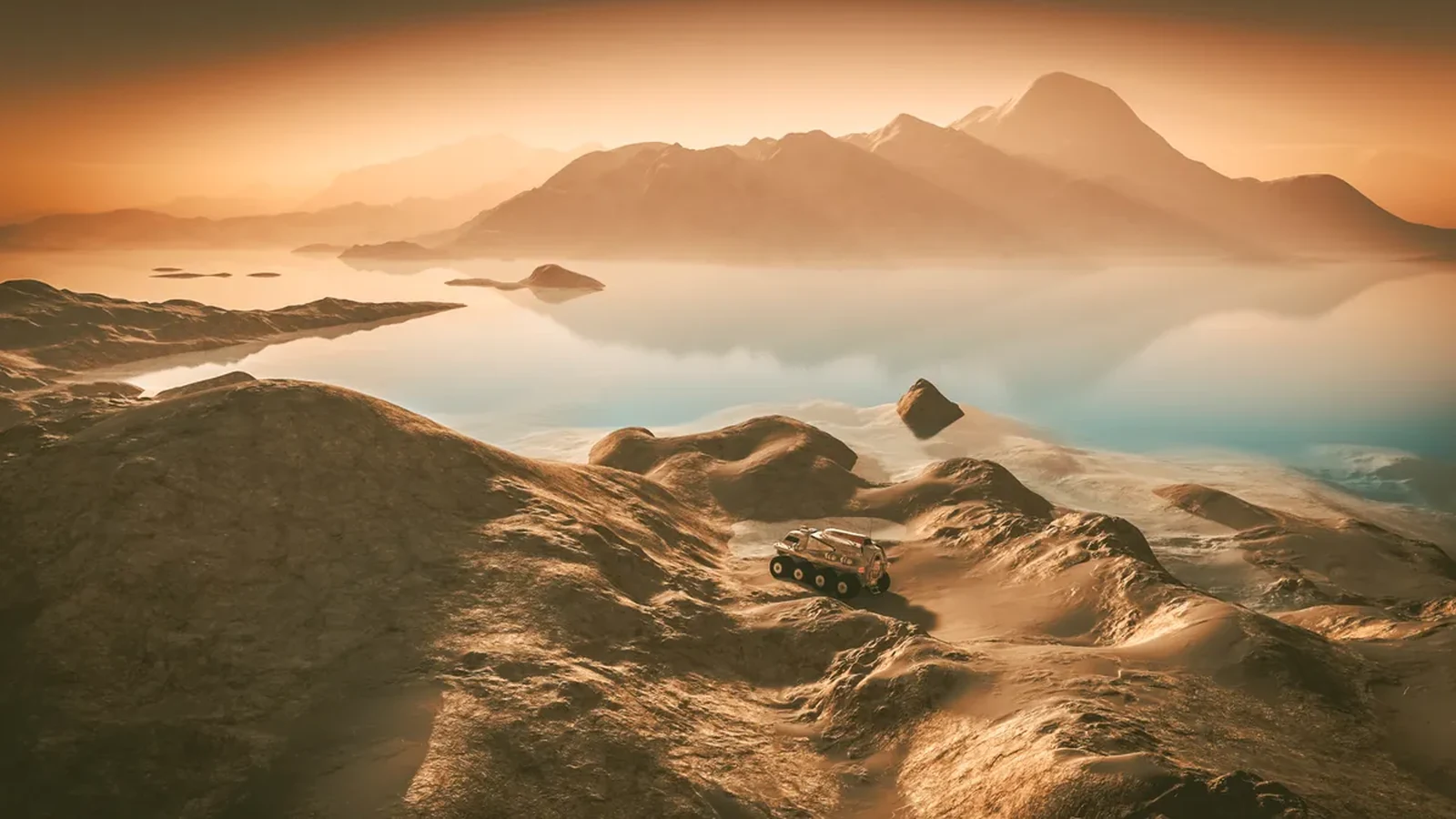
Although modern Mars is cold, dry, and barren, historical evidence gathered by various space missions indicates that the planet once supported extensive rivers, lakes, and potentially massive bodies of water.
The exact mechanisms driving this dramatic planetary transformation over billions of years remain a central mystery in planetary science. Investigating these questions is the primary motivation behind sending robotic probes, advanced rovers, and future crewed missions to the Red Planet.
Nevertheless, scientific breakthroughs often rely on serendipity. In the case of Teghaza 001, critical answers regarding the evolutionary history of our celestial neighbor arrived unexpectedly in the form of an extremely rare meteorite recovered from the sands of the Sahara.
Sources
- WIREDAncient Meteorite Found in the Sahara Holds Secrets About Mars’ Watery Past
Continue chronologically

Related stories
Japan Launches MMX Mission to Retrieve Samples From Phobos
Japan has successfully launched the MMX spacecraft on a five-year mission to land on Mars' largest moon, Phobos, and return samples to Earth.
Icarus Robotics Completes First Microgravity Tests for ISS Robot
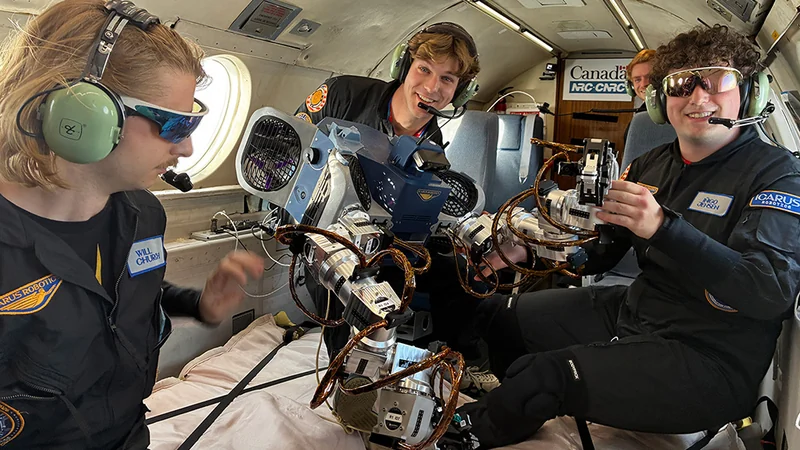
Brooklyn-based Icarus Robotics successfully tested its JOY space robot during parabolic flights, marking a milestone ahead of its 2027 ISS mission.
NASA Seeks Commercial Solutions to Save Hubble Space Telescope
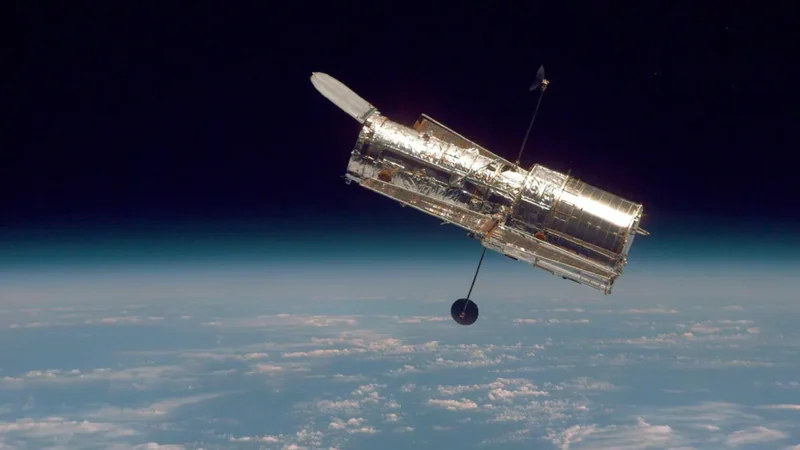
NASA is taking proposals from the commercial space industry to boost the Hubble Space Telescope's orbit and extend its operational life.
NASA Updates Artemis Lander Plans and Solves Orion Issue
NASA has detailed updated Artemis lunar lander plans, modifying mission architecture for SpaceX and Blue Origin while addressing Orion propulsion challenges.