Japan Launches MMX Mission to Retrieve Samples From Phobos
Japan has initiated its ambitious Martian Moons eXploration mission, launching a spacecraft toward the Martian system to collect and return samples from Phobos.
 Radwan AbdulhadiEditor and technology writer
Launch and Journey to Mars
Japan launched a $578 million mission on a five-year expedition to land on the largest moon of Mars and retrieve samples for return to Earth. The robotic Martian Moons eXploration mission, known as MMX, lifted off from the Tanegashima Space Center in southern Japan.
The spacecraft rode into orbit atop a flagship H3 rocket. The launch vehicle utilized a configuration featuring four strap-on solid rocket boosters, full-throttle main engines, and an extended payload shroud. The upper stage accelerated MMX to a top speed exceeding 24,000 mph to break free from Earth's gravitational pull for the 10-month voyage to Mars.
Mission Objectives and International Collaboration
JAXA president Hiroshi Yamakawa declared the launch a success as the spacecraft established contact with ground controllers and deployed its solar panels. Japan's science minister, Yoshihiro Seki, noted that the mission targets the world's first sample return from the Martian moons.
Building on Japan's experience with the Hayabusa 2 missions, the MMX program attracted international participation from NASA and European space agencies. Yasuhiro Kawakatsu, the mission's project manager at JAXA, highlighted that international partners are participating with the understanding that Japan holds a proven track record in deep space celestial body sample returns.
Exploring Phobos and Deimos
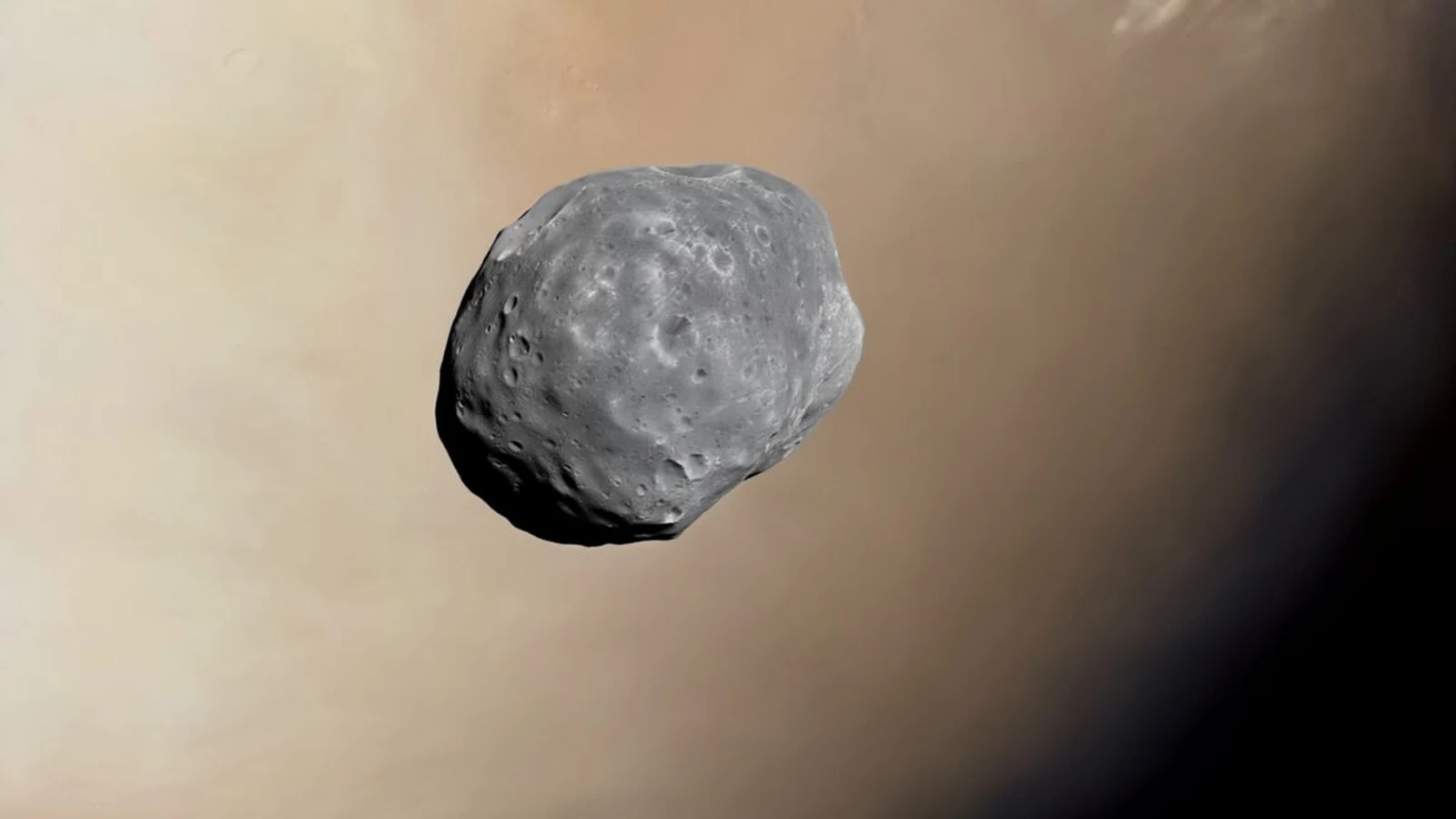
Upon reaching the red planet next August, MMX will spend roughly three years conducting encounters with the Martian moons, Phobos and Deimos. Phobos is the larger of the two moons, featuring a lumpy shape and an average diameter of 14 miles.
Because the gravity of Phobos is extremely weak and overpowered by Mars, the MMX spacecraft will operate in a quasi-satellite orbit. The mothership will release a four-wheeled rover named Idefix, contributed by French and German space agencies, to drive across the rough topography of the Martian moon.
Landings and Sample Collection Plan
The climax of the MMX mission will occur in 2029, when the main spacecraft attempts up to two landings on Phobos. The landing gear is engineered to absorb energy and mitigate the risk of tipping over in the uneven gravity environment of the moon.
During its stay on the surface, the spacecraft will use a coring drill and a NASA-provided pneumatic sampler to capture at least 10 grams of material. MMX will then depart in 2030 and guide a sample return capsule toward a remote landing zone in South Australia in 2031.
Scientific Significance
Scientists hope the retrieved samples will help determine whether Phobos is a captured asteroid or the remnant of an early giant impact on Mars. Furthermore, studying material from Phobos may offer clues before attempting a direct sample return from the surface of Mars, which remains a significantly more difficult undertaking.
Sources
- Ars TechnicaJapan launches mission to bring home a piece of the Martian moon Phobos
Continue chronologically


Related stories
NASA Seeks Commercial Solutions to Save Hubble Space Telescope
NASA is taking proposals from the commercial space industry to boost the Hubble Space Telescope's orbit and extend its operational life.
Ancient 4.1-Billion-Year-Old Martian Meteorite Found in Sahara
Discover how a 4.1-billion-year-old meteorite found in the Sahara Desert preserves crucial chemical secrets about Mars' ancient watery past.

NASA Releases Nearly 1 TB of Artemis II Data to Public
NASA has made roughly 800 gigabytes of scientific data from the Artemis II mission available to the public, including images, audio, and reports.

NASA Updates Artemis Lander Plans and Solves Orion Issue
NASA has detailed updated Artemis lunar lander plans, modifying mission architecture for SpaceX and Blue Origin while addressing Orion propulsion challenges.