NASA Updates Artemis Lander Plans and Solves Orion Issue
During a detailed news conference, NASA outlined major architectural updates for its upcoming Artemis lunar landing missions, addressing long-festering spacecraft performance limits.
 Radwan AbdulhadiEditor and technology writer
Artemis Program Updates and Schedule
During a lengthy news conference, NASA provided a detailed overview of its evolving strategy to return astronauts to the lunar surface as soon as 2028 under the Artemis Program. Although much of the underlying information has been previously reported, this marked the first time the agency laid out these modifications in comprehensive detail, acknowledging substantial changes in mission architecture.
NASA officials stated they continue to track toward a summer 2027 launch for Artemis III, which is designed as a demonstration mission involving docking with both Blue Moon and Starship near Earth. Following that, the agency is aiming for a 2028 launch of Artemis IV, which would feature an actual landing on the Moon.
“This is an achievable path we are on right now,” NASA Administrator Jared Isaacman said during the presentation. “We have the mandate, we have the resources, and the support from our stakeholders to be able to execute, and that’s what we intend to do.”
SpaceX Starship Lander Architecture Adjustments
A primary hurdle for SpaceX involved initial mission requirements to dock with Orion in a near-rectilinear halo orbit around the Moon, which demanded excessive energy and presented operational difficulties. Relief came earlier this year when NASA canceled the Lunar Gateway, solving that specific logistical constraint for SpaceX engineers.
Under the updated architecture, SpaceX will fuel a Starship lunar lander in low-Earth orbit before it docks with Orion in high-Earth orbit. The crew will travel to the Moon inside Orion, after which two of the four astronauts will transfer into Starship to execute the lunar landing.
A prominent point of discussion surrounds the exact number of tanker launches required to fully fuel Starship for a lunar mission. A NASA Safety Panel recently reported that about 22 tanker launches would be necessary, though SpaceX founder Elon Musk contested that figure, arguing the actual requirement will be six to eight launches.
During the Friday question-and-answer session, NASA officials declined to provide a precise refueling count. They cited remaining uncertainties regarding Starship's lift capacity, cryogenic methane and liquid oxygen boil-off rates in orbit, and the overall efficiency of propellant transfers between vessels. However, Administrator Isaacman noted that Musk's estimate of six to eight launches is possible as an ultimate potential end state.
Blue Origin and New Glenn Mission Operations
In response to demands for a faster approach, Blue Origin has modified its mission concept to eliminate vehicle-to-vehicle refueling requirements for its initial flights. The operations concept involves a New Glenn rocket launching three transfer stages modeled after the Blue Moon Mark 1 lander into low-Earth orbit.
Subsequently, New Glenn will launch the Blue Moon Mark 2 lander into orbit to rendezvous with the transfer stages, which will then push the vehicle stack toward the Moon.
While initial mission charts showed Orion docking with Blue Moon in an elliptical lunar orbit roughly 8,500 kilometers above the surface, NASA is also actively working to enable an option for docking in low-Lunar orbit. According to Artemis Program manager Jeremy Parsons, a lower orbit a few hundred kilometers above the Moon would significantly reduce the propellant required for Blue Moon to reach the surface and return, while also offering faster opportunities for crew abort and return.
Solving the Orion Spacecraft Propulsion Challenge
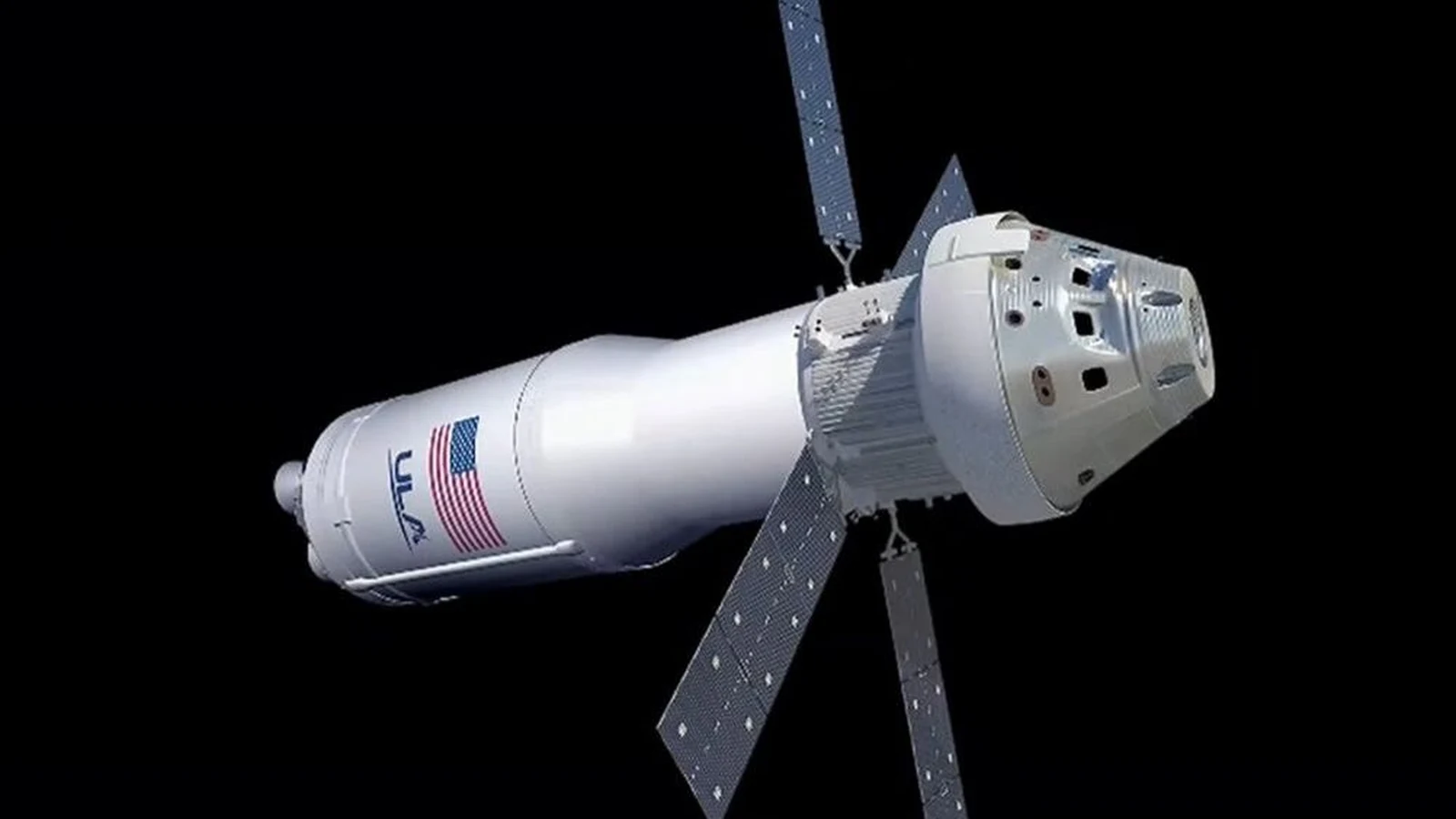
To enable lower lunar orbit operations, NASA announced it is collaborating with United Launch Alliance to develop an extended version of the Centaur V upper stage. Combined with the Space Launch System core stage, this upgraded upper stage will provide Orion with the necessary capability to reach low-lunar orbit.
For years, NASA faced criticism because the Orion spacecraft, constrained by its low-performing Service Module, lacked the delta-V capability to launch from Earth, reach low-lunar orbit, and return directly to a Pacific Ocean splashdown. Previous leadership relied on workarounds like the Lunar Gateway to place Orion in reachable orbits, shifting the performance burden onto external lander developers.
“Getting Orion to low-Lunar orbit means solving propulsion and spacecraft integration problems that were left unaddressed for far too long,” Isaacman remarked during the briefing.
Leadership and Stakeholder Support
NASA leadership emphasized that these sweeping architectural changes are intended to actively support commercial partners and accelerate schedules. By listening to performance data and identifying where lander developers encounter bottlenecks, the agency aims to streamline operations and ensure timely mission execution.
“We’re listening to the data, and looking at what’s happening around us,” Isaacman stated, highlighting the agency's proactive approach. “What progress are our landing partners making? Where are they struggling? What can we do to be helpful? Their lives get easier if we can get Orion closer to the Moon, substantially. We could choose to continue on our track and say, maybe they’ll show up and meet our timelines. Or we can say well let’s start turning those knobs to help.”
Sources
- Ars TechnicaNASA updates lander plans for Moon landings, finally solves long-festering Orion issue
Continue chronologically


Related stories
Launch Crisis More Severe Than Anticipated, Report Says
A new report from Quilty Space indicates that the global rocket launch crisis is worse than expected and may persist well into the late 2030s.
SpaceX Plans First Ever Starship Upper Stage Catch in November
SpaceX aims to catch Starship's upper stage and Super Heavy booster using launch tower arms during its upcoming fifteenth test flight next month.
SpaceX Eyes Boost Mobile in Bid to Establish Mobile Carrier
SpaceX is reportedly holding talks to buy Boost Mobile or use its network as Elon Musk seeks to build a hybrid cellular-satellite carrier service.
Elon Musk Pours Millions Into Midterms As Oversight Looms
Elon Musk contributes over $76 million to his personal political committee in October, fueling high-stakes midterms and intense political scrutiny.