AMD's Performance Rating System Debuted 25 Years Ago
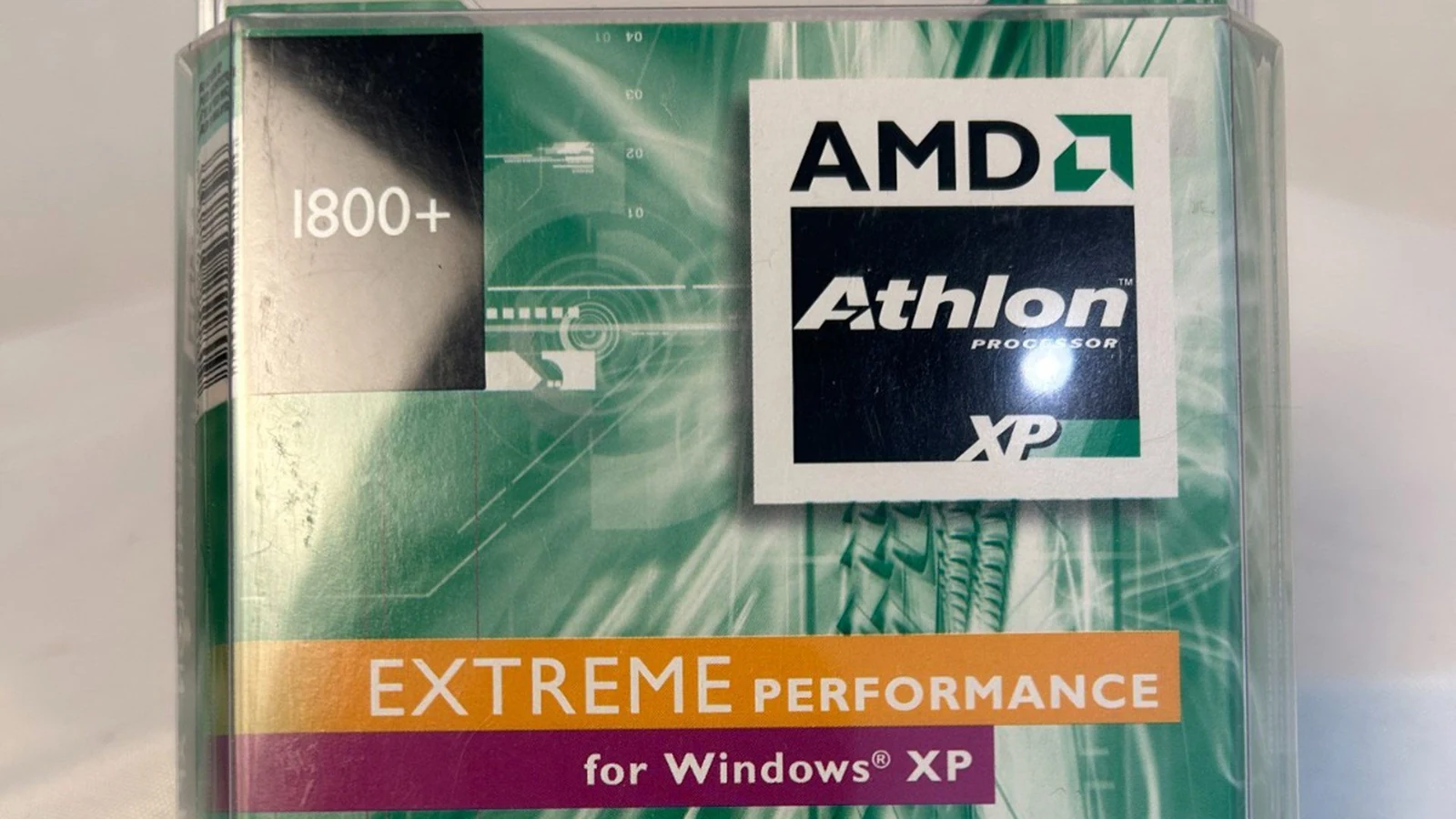
A quarter of a century ago, AMD introduced its Athlon XP processor family and a unique naming scheme designed to counter Intel's clock speed advantage.
 Radwan AbdulhadiEditor and technology writer
Challenging the Megahertz Myth
A quarter of a century ago today, AMD launched its AMD Athlon XP processor family alongside an ambitious naming convention designed to tackle a major marketing imbalance. At the time, Intel's Pentium 4 processors were winning the raw clock speed race, establishing clock speed as the primary performance metric in the minds of consumers. Although AMD's processors ran at lower raw clock speeds, their actual application and gaming performance matched or exceeded Intel's offerings.
Faced with this perception gap, AMD mounted a campaign to explode the 'megahertz myth' using the slogan 'Performance matters more than MHz.' To bridge the gap between perceived and actual capabilities, the company adopted the Performance Rating (PR) designation for its new CPUs, powered by the Palomino core.
Early Benchmark Results and Reception
Initial testing from October 2001 indicated that AMD cleverly undersold its chips using the PR naming system to prevent strong consumer opposition. Benchmark tests revealed that the Athlon XP 1800+ frequently outperformed Intel's flagship Pentium 4 2 GHz processor in the majority of evaluated workloads.
Furthermore, observations showed that an Athlon XP running at 1533 MHz could successfully match or beat a Pentium 4 operating at a clock speed nearly 33% higher. While the early naming convention immediately drew comparisons to a 'Pentium Rating' system, industry analysts noted that AMD had little alternative marketing-wise during the fierce competition of the early millennium.
The Evolution and Ultimate End of the PR Scheme
The Performance Rating system remained active for approximately five years before being phased out. As semiconductor technology evolved, subsequent architectures from both AMD and Intel rendered the rating system obsolete for practical use.
The turning point came when Intel lost its prominent clock speed advantage during the market transition from the Pentium 4 Netburst architecture to Pentium M and Core processors. Concurrently, the widely praised Athlon 64 allowed AMD to move away from an inferior-complex naming scheme tied directly to its chief rival.
Shift Toward Multi-Core Processing
By the conclusion of the AMD PR era, the processor marketing battlefront had entirely shifted toward multi-core processing designs. As the decade progressed, CPU marketing strategies and product naming conventions completely sidelined any direct references to raw clock speeds.
Sources
- Tom's HardwareAMD attempted to crush the 'Megahertz myth' with its Performance Rating system on this day 25 years ago
Continue chronologically

Related stories
Gears of War E-Day Pushes Unreal Engine 5 CPU Limits
An in-depth benchmark of 25 Intel and AMD processors reveals that Gears of War E-Day is an uncharacteristically CPU-heavy Unreal Engine 5 title.

Nvidia Vera CPU Benchmarked Against AMD and Intel
Nvidia's Vera data center CPU is benchmarked against AMD EPYC Turin and Intel Granite Rapids-AP, showcasing strong Python performance and bandwidth.
How much does DDR5 RAM speed matter for gaming?
Explore how memory bandwidth and latency impact gaming frame rates, and whether high-end DDR5 RAM speeds are genuinely worth the extra cost.
Intel's Gloomy PC Outlook Triggers $1 Trillion Chip Market Wipeout
Intel shares plunge 30% after a weak PC outlook, erasing $150 billion and sparking a wider semiconductor market bloodbath across the industry.