
Gears of War E-Day Pushes Unreal Engine 5 CPU Limits
A fresh hardware evaluation tests 25 processors from Intel and AMD on Gears of War E-Day, uncovering heavy CPU utilization and unique core scaling across Unreal Engine 5.
 Radwan AbdulhadiEditor and technology writer
Unreal Engine 5 Core Strain
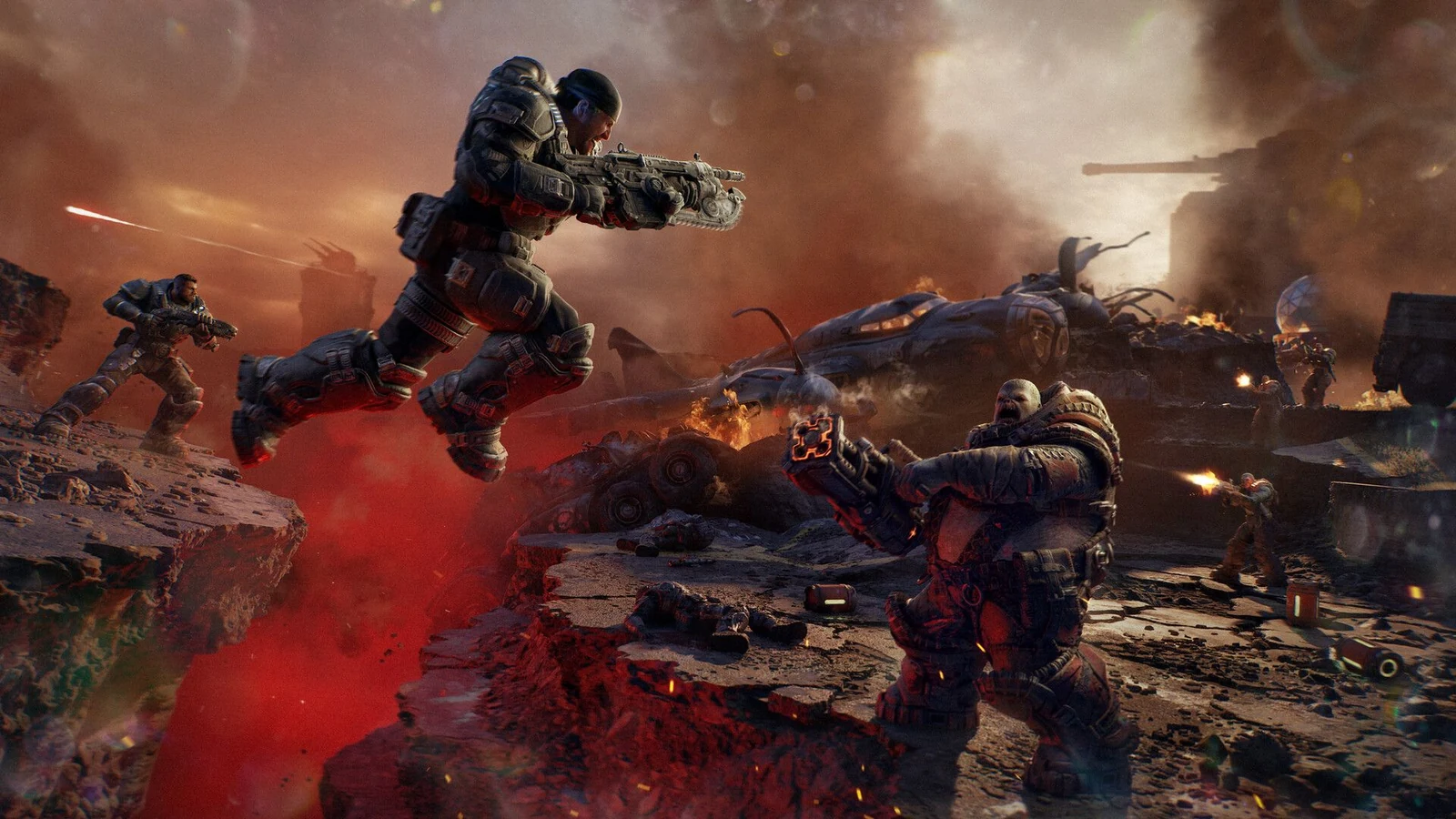
Unreal Engine 5 games are rarely known for putting heavy workloads onto the central processing unit, but Gears of War E-Day breaks that traditional mold. Upon loading into the game, monitoring overlays reveal CPU utilization pinned steadily between 80% and 90%. This high demand spans across the opening hours of the campaign regardless of scene complexity or player interactions, distinguishing it from most modern AAA titles built on the same engine. Further details are available from Tom's Hardware in the original source material.
Previous evaluations of titles utilizing Unreal Engine 5 typically showed minimal CPU scaling, leading hardware testing suites to omit many of them. While exceptions like Marvel Rivals and The Blood of Dawnwalker exist, they rarely match the stark hardware scaling seen in traditional hardware favorites like Starfield or Baldur's Gate 3. Gears of War E-Day proves to be a stark departure from the norm, exhibiting broad performance gaps across a diverse pool of processors. Further details are available from Terms & Conditions in the original source material.
Testing Methodology and Setup
To evaluate the title thoroughly, hardware testers utilized standardized testing platforms paired with an RTX 5090 Founders Edition graphics card. Testing was conducted primarily at 1080p to clearly expose architectural differences between chips, while select processors were evaluated at 1440p to analyze higher resolution scaling. Meanwhile, 4K testing was entirely omitted because graphical analyses confirmed the game remains completely bound by GPU performance at that extreme resolution.
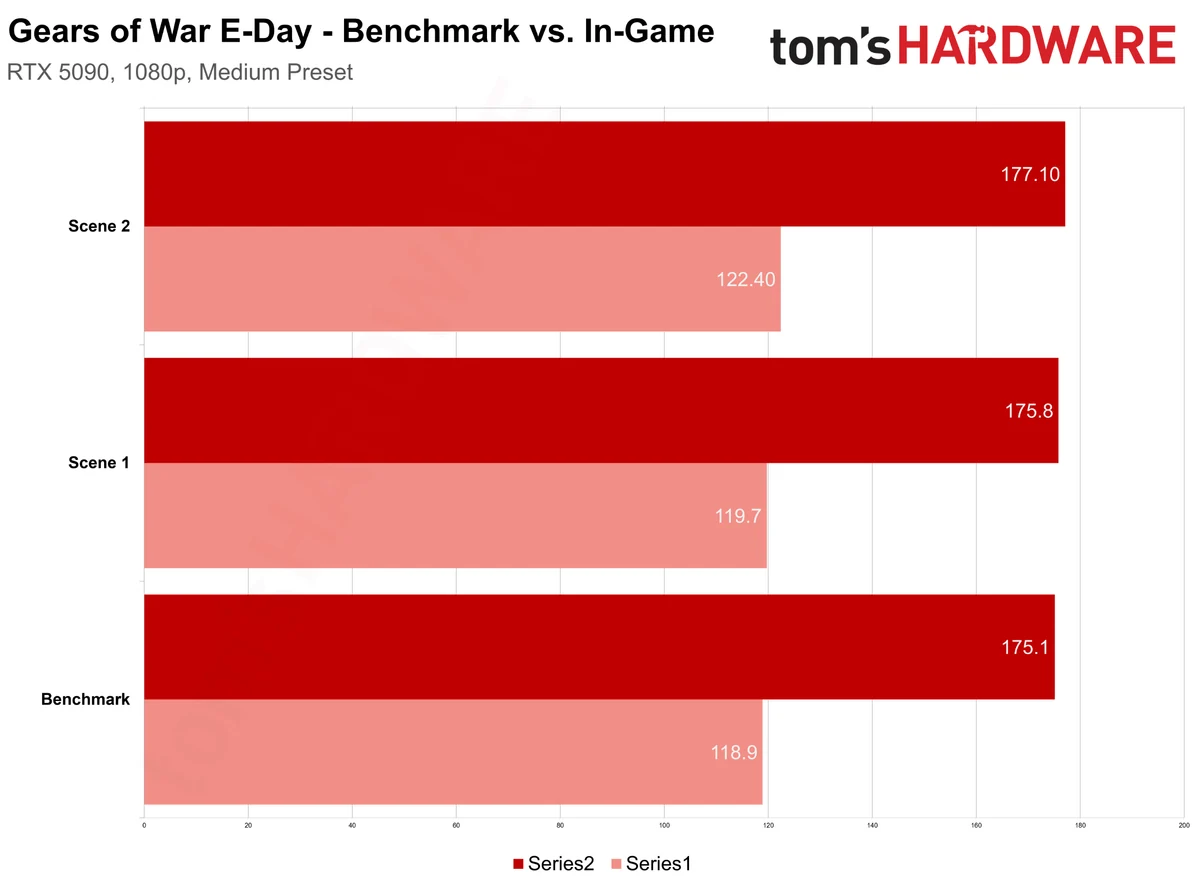
Comparisons were also drawn against the game's built-in benchmark, which is a common inclusion for titles published by Microsoft. While the built-in tool uses sweeping camera angles that render significantly more geometry than normal gameplay, actual in-game sequences yielded slightly higher frame rates. Nevertheless, the benchmark serves as a reliable general approximation for overall system performance.
Graphics Presets and Performance Scaling
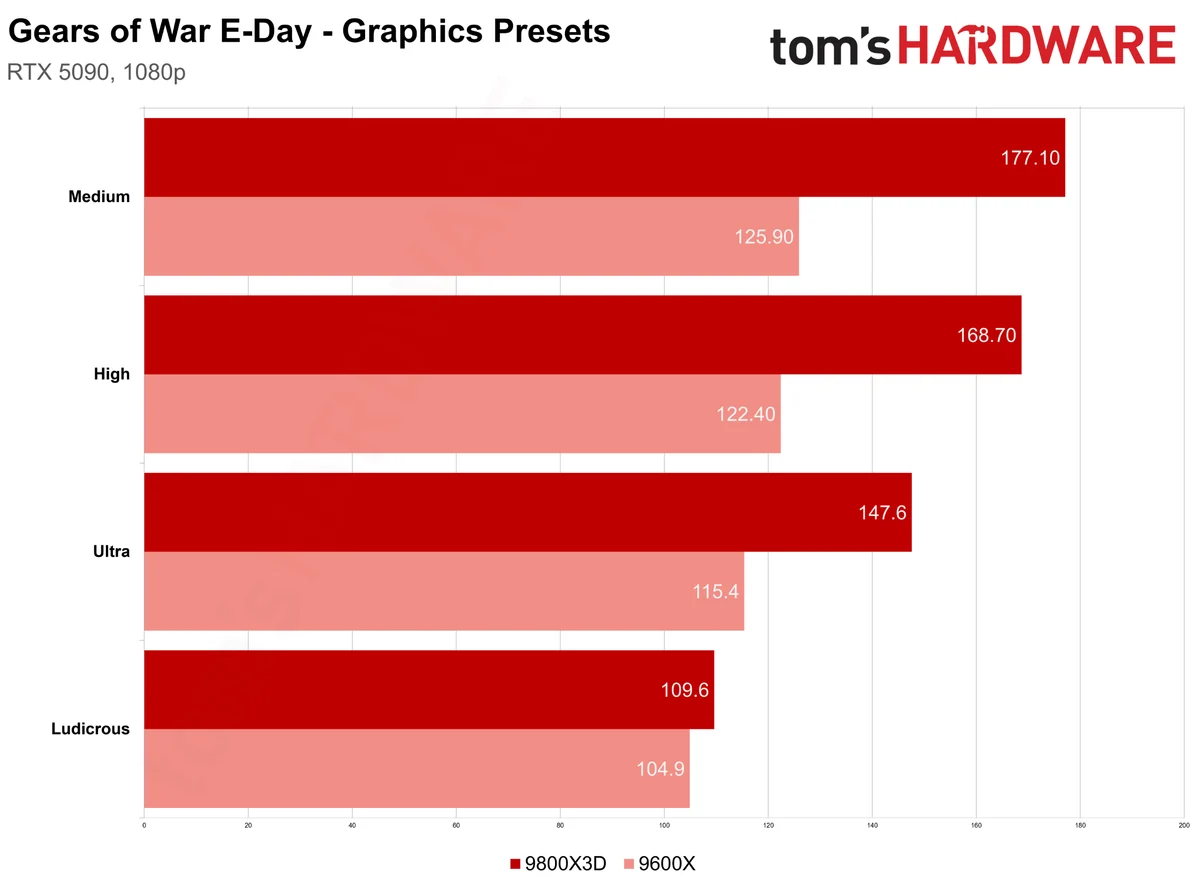
The game features five distinct graphics presets, prompting researchers to test the top four settings to determine where CPU scaling begins and ends. The performance dynamic proved binary; utilizing the most demanding Ludicrous preset heavily compressed the performance variance between different chips, showing just a 6.8% difference between the Ryzen 7 9800X3D and Ryzen 5 7600X. Switching down to the Ultra preset widened that gap to nearly 29%.
Ultimately, testers settled on the High preset as a baseline for assessing performance. Lowering settings to Medium offered negligible performance gains while slightly exaggerating chip disparities. High established a balanced visual floor that captured near-maximum hardware scaling without introducing unreasonable testing bottlenecks.
AMD and Intel Processor Results
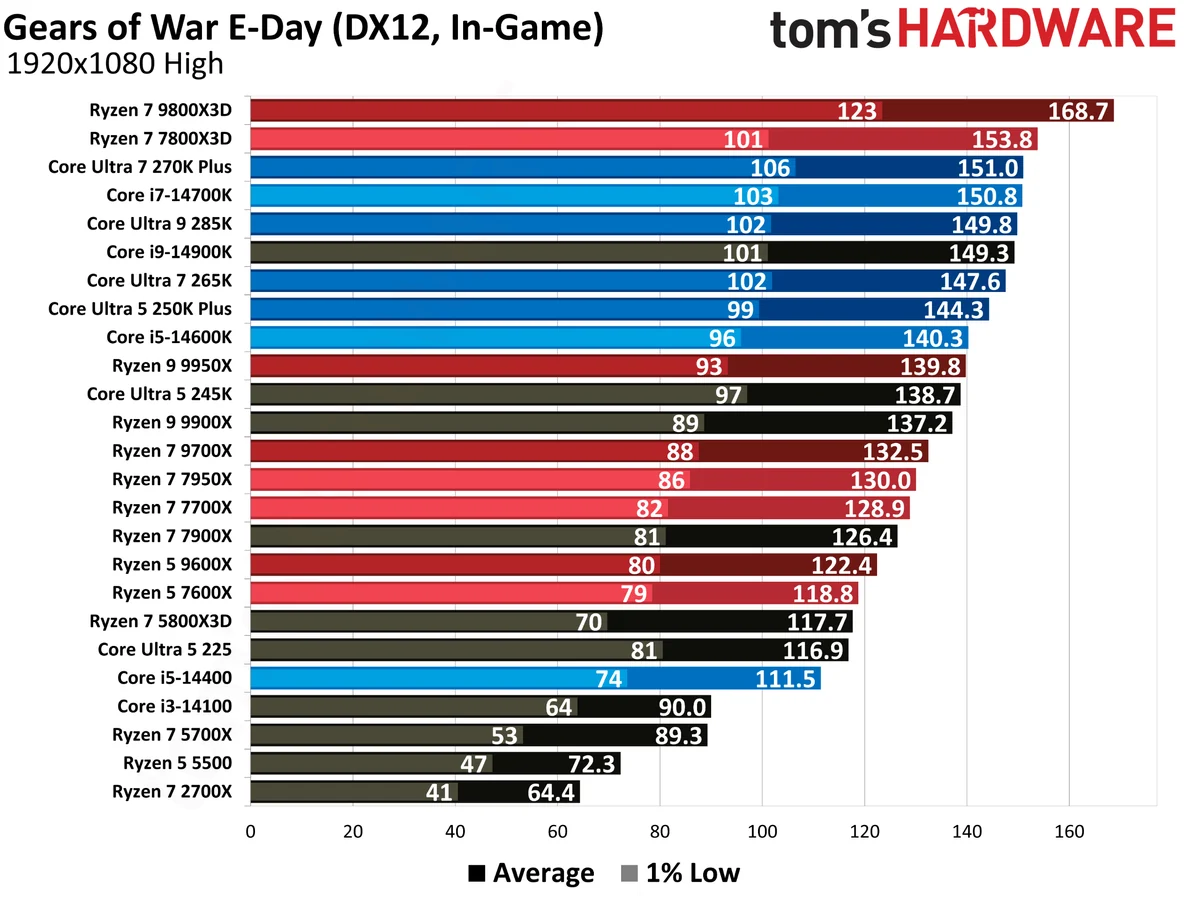
Unsurprisingly, AMD's X3D models claimed the top positions on performance charts, with the Ryzen 7 9800X3D and Ryzen 7 7800X3D leading the pack. However, unlike many gaming workloads that struggle to utilize higher core counts, Gears of War E-Day showed notable scaling past standard six or eight-core configurations. For example, moving from a six-core Ryzen 5 7600X to an eight-core Ryzen 7 7700X yielded a nearly 9% performance increase, outstripping normal averages.
On the Intel side, mainstream Raptor Lake and Arrow Lake processors outperformed all non-X3D competitors. Intriguingly, core count dynamics even inverted some expected generational trends, with higher core models outperforming smaller configurations more noticeably than in typical titles. Performance scaling generally plateaued around the 150 frames-per-second mark at 1080p resolution.
Resolution Scaling and Efficiency
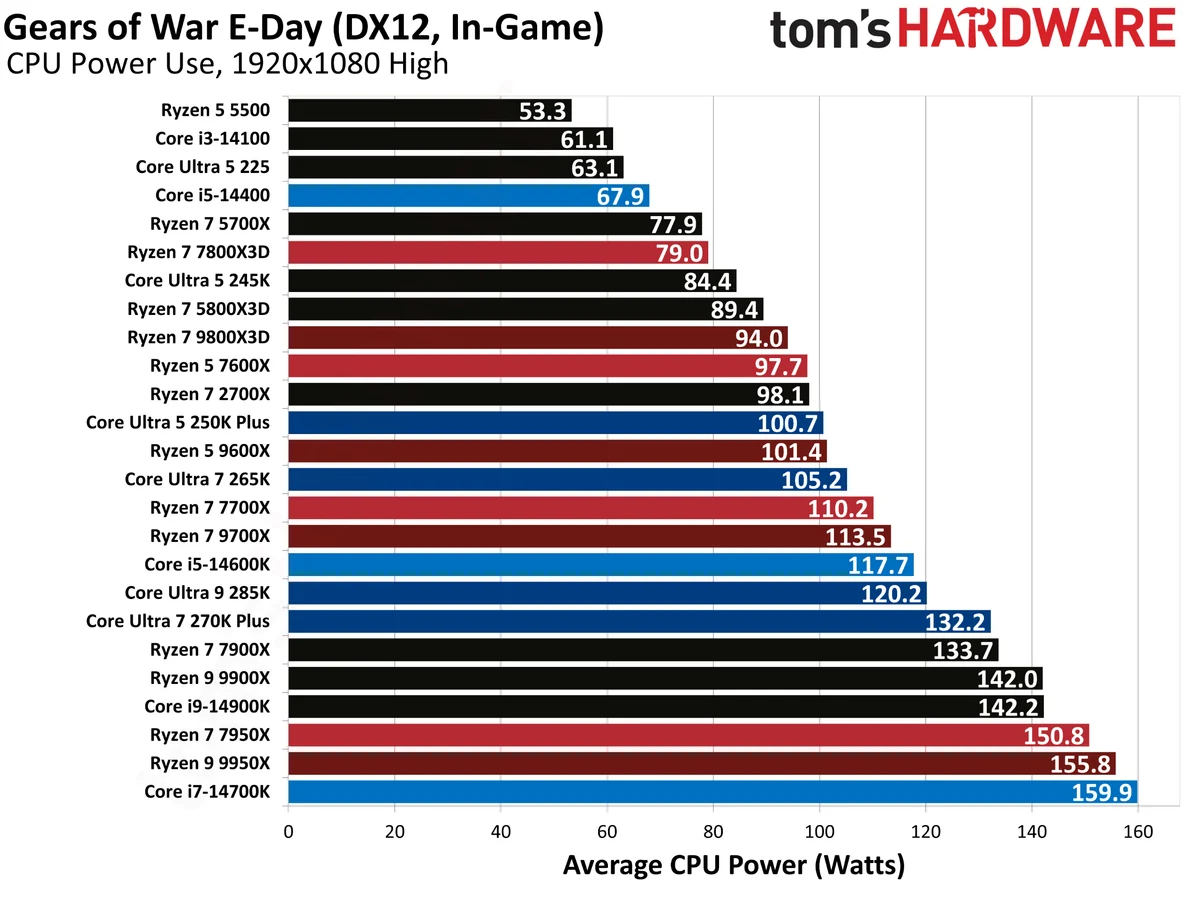
Evaluating performance at 1440p demonstrated that higher resolutions quickly shift the burden back to the graphics hardware. While entry-level and high-end chips still showed measurable gaps, systems running above a 130 frames-per-second ceiling normalized closely together as they became GPU-bound. Meanwhile, power consumption metrics aligned with expectations, positioning AMD's Zen 4 and Zen 5 flagships alongside Intel's top Raptor Lake components.
On the efficiency front, AMD's Ryzen 7 9800X3D and 7800X3D stood out by delivering high frames per watt. For readers interested in exploring broader hardware choices, further details can be found in related hardware rankings and benchmarks.
Sources
- Tom's HardwareGears of War E-Day is an uncharacteristically CPU-heavy Unreal Engine 5 game — benchmarking 25 CPUs from Intel and AMD and investigating ‘low core mode’