United CEO Doubts Boom Supersonic Airliner 2029 Launch
Boom Supersonic faces delivery timeline doubts from major airline customers while simultaneously pivoting resources toward developing natural gas turbines for AI data centers.
 Radwan AbdulhadiEditor and technology writer
Timeline Doubts from United Airlines
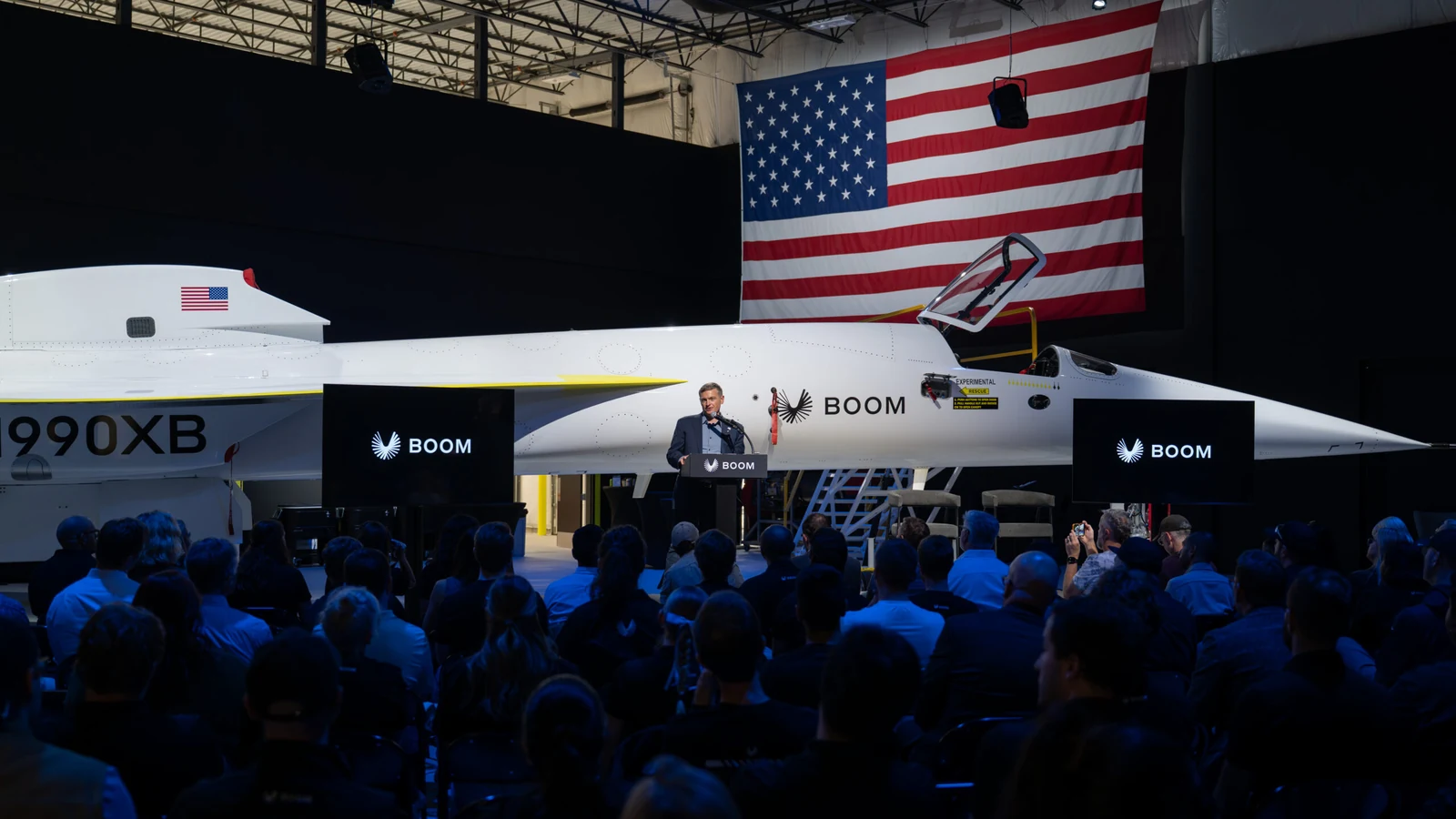
Boom Supersonic is facing mounting skepticism regarding its ambitious delivery schedule, with high-profile backer United Airlines expressing doubts about the enterprise. United Airlines CEO Scott Kirby has explicitly stated that the company's original plan to deliver the first Overture supersonic airliner by 2029 is unlikely to be met.
Kirby shared his assessment during an interview on the Office Hours: Business Edition podcast. Noting that '29 is the official timeline, Kirby remarked that it is not going to happen by that year and will take longer. This follows earlier comments from March where he previously evaluated the chances of the Overture airliner entering commercial service at 50-50, pointing to the numerous hurdles remaining for development and FAA certification.
Regulatory Backing and Aircraft Development
The push to bring back supersonic commercial travel has received political backing from the Trump administration through regulatory easing. Following an executive order from President Donald Trump, the Federal Aviation Administration (FAA) proposed a new rule that would overturn a long-standing ban on commercial supersonic flights over the United States, provided the aircraft are quiet enough.
Boom has previously stated intentions to achieve aircraft certification and carry its first paying customers by 2029. The company maintains conditional agreements with carriers including American Airlines, Japan Airlines, and United Airlines, supported by non-refundable deposits that allow airlines to fully purchase the Overture aircraft upon commercial availability.
North Carolina Factory Questions
While development continues, physical infrastructure intended for the airliner has drawn scrutiny. Boom completed the construction of a dedicated factory for the Overture airliner in 2024 at Piedmont Triad International Airport in Greensboro, North Carolina.
However, the facility has largely remained dormant since its completion, raising pointed questions for North Carolina state leaders who provided more than $50 million in taxpayer funding to help construct the production plant. Despite these concerns, company leadership has continued to champion a broader industrial renaissance.
Pivot Toward AI Data Center Power
Amid uncertainties in its aviation timeline, Boom has shifted substantial focus toward developing natural gas turbines to power AI data centers as an alternative revenue stream. The company unveiled a new facility in Centennial, Colorado, dedicated to producing a 42-megawatt natural gas turbine called Superpower.
The energy venture has also attracted political attention. US Secretary of Energy Chris Wright participated in the facility's unveiling event alongside Colorado Governor Jared Polis, reflecting ongoing government interest in power solutions for expanding artificial intelligence infrastructure.
Customer Loss and Future Production Targets
The data center power strategy has already encountered turbulence. Boom CEO Blake Scholl acknowledged the recent loss of a major $1.25 billion deal that would have seen data center developer Crusoe purchase 29 of the company's gas turbines. Crusoe has been actively involved in constructing Texas data centers for major technology firms like Oracle, Google, and Microsoft.
Despite losing the Crusoe agreement, Scholl stated that the company expects to deliver roughly 250 megawatts of Superpower turbines next year to other unspecified sites. Boom aims to deliver its first gas turbines to data center customers in mid-2027, with plans to ramp up annual production to 25 turbines in 2028 and 50 turbines by 2029.
Synergistic Engine Development and Next Steps
Boom maintains that the creation of data center gas turbines shares technological synergy with its design of the Symphony engine intended for the Overture airliner. The company recently completed a prototype turbine core called Sprint Core, which is designed to eventually power both the Superpower gas turbine and the airliner's engine.
The prototype turbine core is scheduled for testing at the Colorado Air & Space Port, with leadership planning an initial test firing before Thanksgiving. While this marks a tangible engineering milestone, the company still faces immense challenges in proving it can successfully launch and scale both its artificial intelligence power business and its supersonic passenger aircraft ventures.
Sources
- Ars TechnicaSupersonic airliner in doubt as company shifts to powering AI data centers
Continue chronologically
Related stories
How to check if your upcoming flight has Starlink Wi-Fi
Learn how to check if your upcoming commercial flight is equipped with Starlink satellite internet as airlines roll out high-speed connectivity.

MacBook Pro Battery Life: 2011 vs. 2026 Comparison
A 15-year comparison between the 2011 MacBook Pro and the 2026 M5 Max model shows how hardware efficiency has dramatically increased battery runtime.
NVIDIA Cloud Partners Scale Across Europe for Sovereign AI
NVIDIA Cloud Partners are expanding regional compute capacity across Europe, the Nordics, Africa, and Central Asia to power sovereign AI infrastructure.
Reliable Robotics Lands $115M to Top $1B Valuation
SpaceX alumni-founded aviation startup Reliable Robotics has secured a $115 million funding extension, pushing its valuation past $1 billion.