Dartmouth Provost Resigns After Undisclosed AI Use
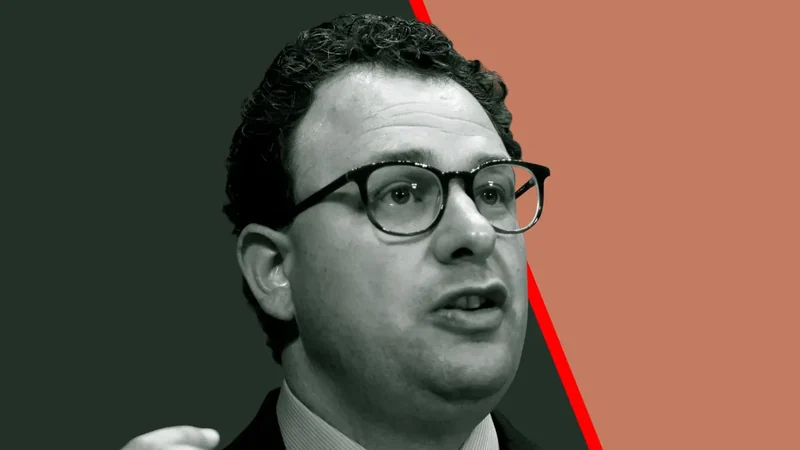
Dartmouth College Provost Santiago Schnell stepped down from his position following an advisory committee investigation into his undisclosed artificial intelligence use in academic writing.
 Radwan AbdulhadiEditor and technology writer

Resignation Following AI Investigation
Earlier in the year, Dartmouth College provost Santiago Schnell penned a Washington Post op-ed titled “Universities are fighting AI cheating. But there’s a deeper problem.” However, Schnell soon encountered those very complexities firsthand when he resigned from his position after an advisory committee discovered he had failed to disclose significant artificial intelligence use in an academic paper and in his public opinion piece, despite publisher requirements. Further details are available from Ars Technica in the original source material.
The advisory committee's investigation faced hurdles due to what the report characterized as "insufficient cooperation." Although Schnell provided his Dartmouth laptop, he did not turn over personal LLM account logs related to the writings in question, nor did he agree to an in-person meeting with the committee.
Scope of AI Assistance and Editorial Tools
Despite the lack of personal logs, the committee reviewed the Claude enterprise account Schnell utilized via Dartmouth. The records showed him employing the large language model to revise papers, locate and resolve code bugs, and edit or generate figures. For example, Schnell would submit his papers to Claude and prompt the tool to act as a reviewer with expertise in chemical dynamics to generate a referee report.
Schnell maintained that he utilized AI strictly as an editorial aid and discussion partner. He explained to various outlets that he used chatbots solely to refine arguments and check grammar, noting that he omitted disclosures because he did not realize AI-assisted editing required formal notification.
Discrepancies in Public Statements and Committee Findings
The Dartmouth committee report suggested that Schnell's public accounts may have understated his actual AI usage, noting that he frequently went beyond his stated descriptions when writing. Furthermore, a Claude exchange noted in the report showed Schnell uploading a manuscript titled Academic Freedom and Catholic Mission and asking if there were signatures of AI writing present in the article, before incorporating suggested revisions.
Following these disclosures and the subsequent report findings, Schnell stepped down from his role as provost, prompting discussions across the academic community regarding the precise boundaries of AI assistance in scholarly research.
Broader Institutional Stance on Artificial Intelligence
Even with the leadership scandal, Dartmouth continues to lean into artificial intelligence initiatives. The institution traces its ties to the field back to 1956 when the foundational concepts were established, and it has organized events such as the upcoming conference featuring student hackathons and prominent industry figures.
Dartmouth President Sian Leah Beilock addressed the situation by emphasizing the necessity for institutional leaders to maintain rigorous standards of transparency. In a statement regarding the leadership transition, Beilock stressed that leaders must model the human judgment and clarity expected from students and researchers in a fast-changing environment.
Perspectives on Authorship and Responsibility
In a related academic paper addressing AI detection tools, Schnell argued that treating writing as a strict binary between human and artificial intelligence is overly simplistic. Instead, he maintained that modern writing will inevitably involve a blend of human decision-making and AI assistance, provided the human author maintains ultimate responsibility for the final text.
Detailing his own writing process in the paper, Schnell explained how he used advanced AI models to brainstorm, structure arguments, and review drafts while retaining final control over content, methodology, and revisions. Despite leveraging extensive AI assistance, Schnell consistently rejected the notion that chatbots act as true co-authors, comparing their utility to historical mathematical tools used in research.
Sources
- Ars TechnicaDartmouth's provost warned us about AI cheating—but his own AI use cost him his job
Continue chronologically


Related entity coverage
Related stories
Anthropic Bans Cruel Behavior Toward AI in Usage Policy Update
Anthropic has updated its usage policy to ban sustained and needless abuse toward its AI models, alongside stricter rules on elections and weapons.

Anthropic's Claude Game Cloning Ban Won't Stop AI Copying Boom
Anthropic added new system prompt rules to Claude to block specific video game cloning, but the measure is unlikely to stem a massive wave of AI copying.

Anthropic Updates Claude to Stop Recreating Existing Video Games
Anthropic updates its Claude AI to block the recreation of existing video games following a surge of AI-decompiled browser games and copyright issues.

Anthropic Files S-1 Prospectus for Nasdaq IPO
Anthropic has filed its S-1 prospectus with the SEC to list on Nasdaq under the ticker ANT, detailing financials, risks, and compute deals.