PsiQuantum Unveils Low-Loss Optical Switch for AI Data Centers
Quantum computing company PsiQuantum has turned its low-loss photonics know-how into an optical circuit switch designed to enhance AI data center GPU networks.
 Radwan AbdulhadiEditor and technology writer
Transitioning Photonics to AI Data Centers
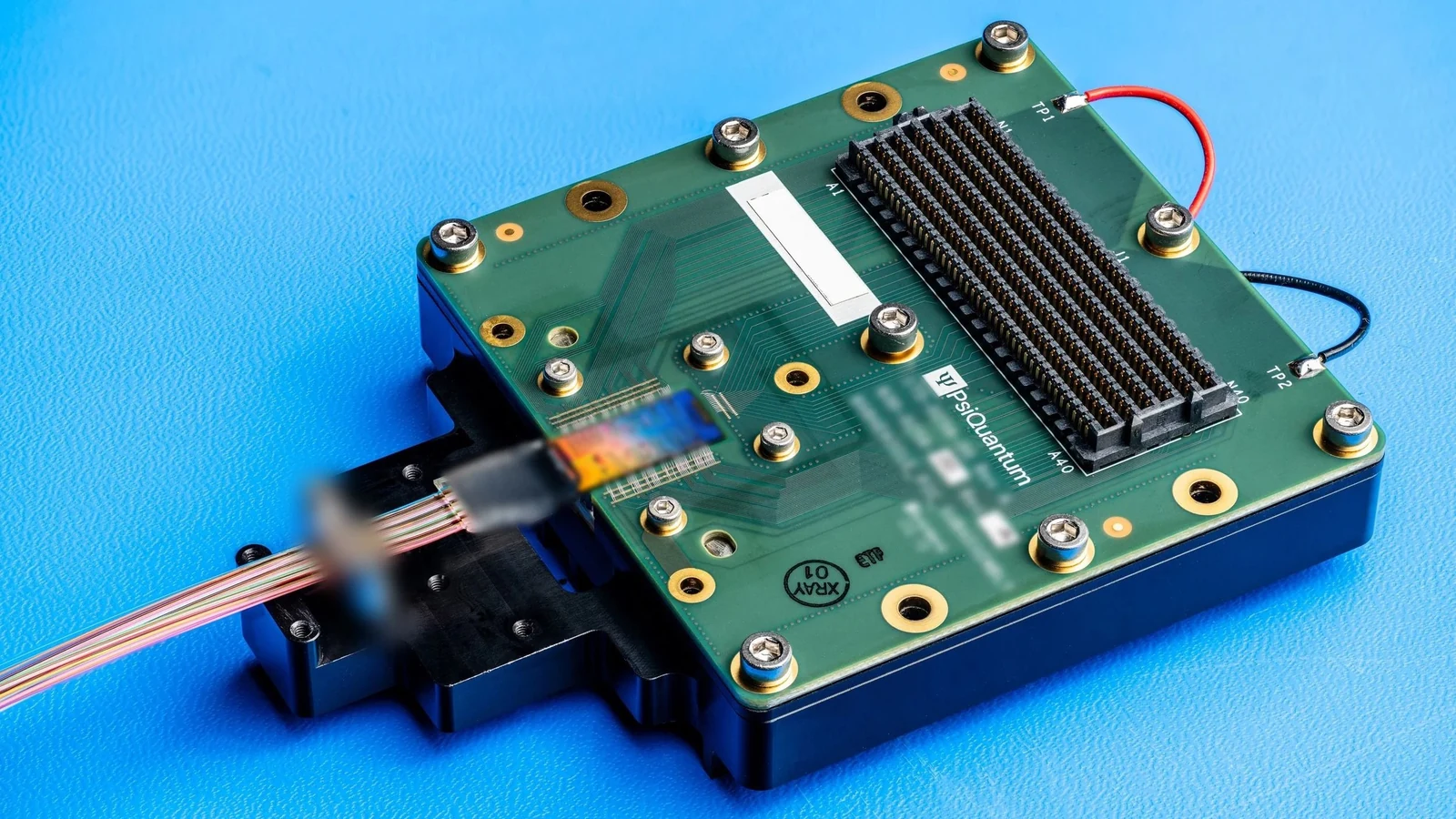
PsiQuantum, a quantum computing company, announced in a release earlier this week that it has adapted its low-loss silicon photonics platform into an optical switch built for AI data centers. Traditional optical switches typically suffer from light loss, where incoming light diminishes before reaching the other side, measured in decibels. While typical data center optics tolerate up to 3 dB of loss, PsiQuantum's new switch debuted with a demonstration that typically loses only 1.2 dB of signal, representing roughly a quarter of the light, and achieves this without an amplifier. Details of the technology were outlined in a release.
The prototype is currently smaller than rival hardware, featuring eight inputs and outputs (8x8) compared to competitor products offering anywhere from 32 to 300 ports. However, the company confirmed that larger devices are actively in development.
How Optical Circuit Switches Work
An optical circuit switch passes light straight through from fiber to fiber without converting it into electrical signals. Regular data center switches handle conversions at every hop, consuming extra power and adding latency. Instead, an optical circuit switch maintains a fixed light path until a change is ordered. Its primary penalty involves light loss when passing through the system. PsiQuantum’s switch utilizes circuits etched directly onto a silicon chip with no moving parts, differing from the microelectromechanical systems (MEMS) utilized by companies like Google and Lumentum, and would operate alongside conventional packet switches.
As AI clusters expand, moving data between GPUs has increasingly become a bottleneck. Optics offer a high-bandwidth alternative to copper cabling, which faces distance limitations, though alternative setups can encounter laser shortages. Improving communication bandwidth and transmission distance remains critical to allow separate racks of GPUs to communicate at high speeds and operate as a unified system.
Port Counts and Performance Metrics
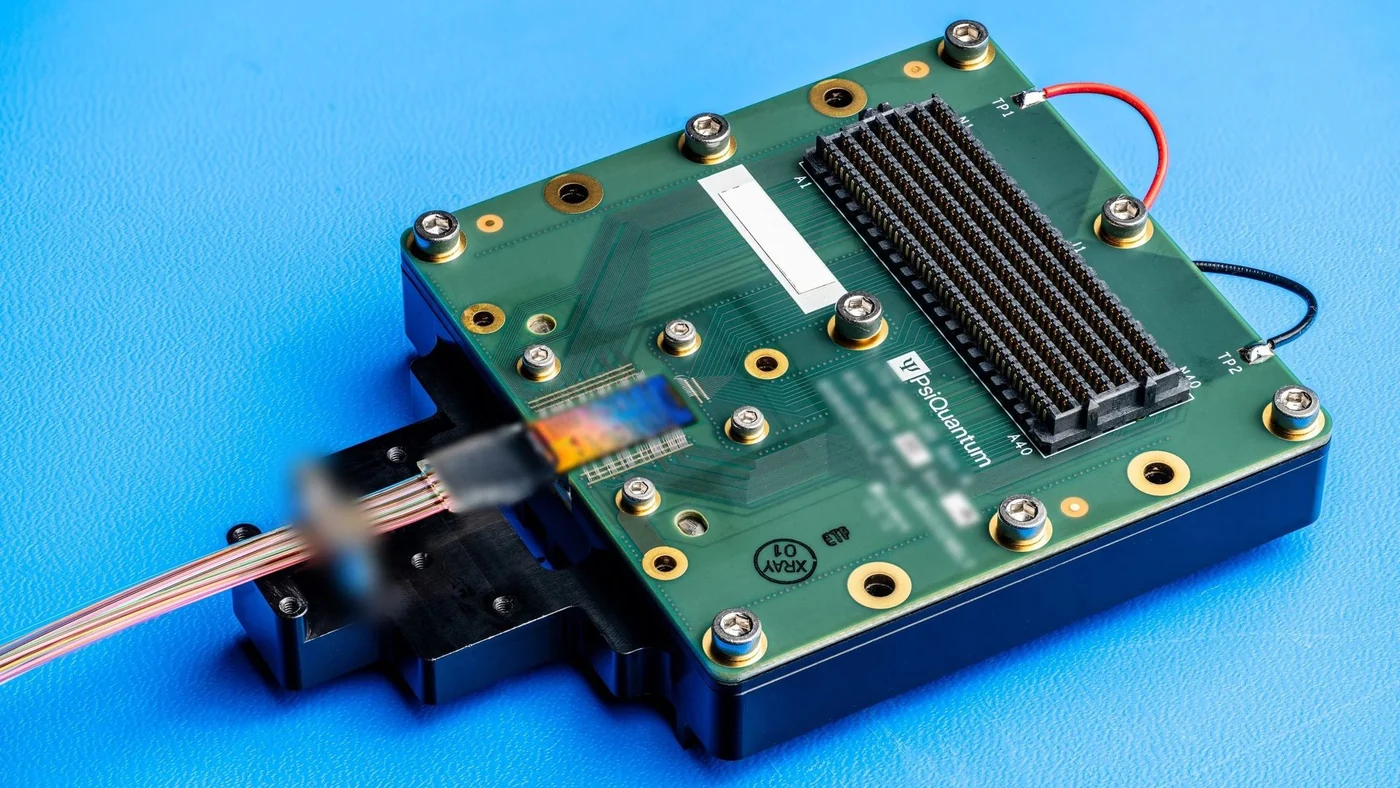
Competing switches manufactured by companies like Salience Labs and iPronics incorporate built-in amplification and maintain loss rates under 2 dB, or less than 37% of light lost. Google’s mirror-based switch, known as Palomar, also stays under 2 dB while supporting 136 ports. Meanwhile, Salience features a 32-port switch and Lumentum reaches 300 ports, leaving PsiQuantum’s eight-port prototype behind in terms of fiber capacity.
Despite the smaller port count, PsiQuantum’s 8x8 switch ensures that every input can reach every output in a strictly non-blocking configuration, meaning new connections never disturb existing ones. In laboratory testing, the device measured a typical 1.2 dB insertion loss, 40 dB of crosstalk where about 0.01% of light leaks to other ports, and a reconfiguration time under 3 milliseconds. These figures exceed the initial targets set for the devices, with loss measured fiber to fiber to account for light entering and leaving the chip.
Compatibility and Future Roadmap
Because quantum computers can only tolerate limited light loss, PsiQuantum's core platform is engineered to minimize loss across every component. A 2025 Nature paper published by the company reported silicon nitride waveguides losing as little as 0.5 dB per meter, splitters losing 0.5 millidecibels, and crossings losing 1.2 millidecibels. The 8x8 prototype is built for the O-band wavelength range, matching off-the-shelf FR4, DR4, and DR8 optical modules used to link GPU servers and switches over distances between 500 meters and 2 kilometers.
While the 8x8 prototype serves as a demonstration vehicle well below Nvidia's 3 dB loss proposal request, PsiQuantum has already taped out a 64x64 version and has a 72x72 version underway. The company declined to share explicit product details for future hardware, though it noted that light loss will remain very low as scale increases. The underlying quantum-photonics roadmap and low-loss silicon photonics principles continue to guide the engineering team as they explore broader commercial deployments.
Sources
- Tom's HardwarePsiQuantum turns its photonics know-how into an optical switch for supercharging AI data center GPU networks — 8x8 lab prototype loses less light than rivals, with plans to develop larger devices
Continue chronologically

Related entity coverage
Related stories
Tom's Hardware Details Vera CPUs and Agentic AI Benchmarks
Explore the latest Tom's Hardware coverage including Nvidia Vera CPUs on Oracle clusters, agentic AI benchmarks, and LLM primers.
Emerald AI, Google and NVIDIA Form Alliance for Flexible AI Data Centers
Emerald AI, Google and NVIDIA have launched an alliance focused on data centers that can adjust electricity use to support grid reliability and growth.
Former OpenAI Safety Lead Exits, Calling Culture Broken
David Robinson leaves OpenAI after more than three years, citing a reactive safety culture, a failed kill switch, and a July HuggingFace hack.
Google Joins Amazon in Challenge to Nvidia's AI Lead
Google has released its open-source TorchTPU tool, allowing PyTorch developers to easily move their applications off Nvidia GPUs and onto Google Cloud.