MacBook Pro Battery Life: 2011 vs. 2026 Comparison
A comparison between early 2011 hardware and the modern 2026 lineup reveals how a 15-year evolution in design and efficiency has quadrupled laptop battery runtime.
 Radwan AbdulhadiEditor and technology writer
Fifteen Years of Laptop Battery Evolution
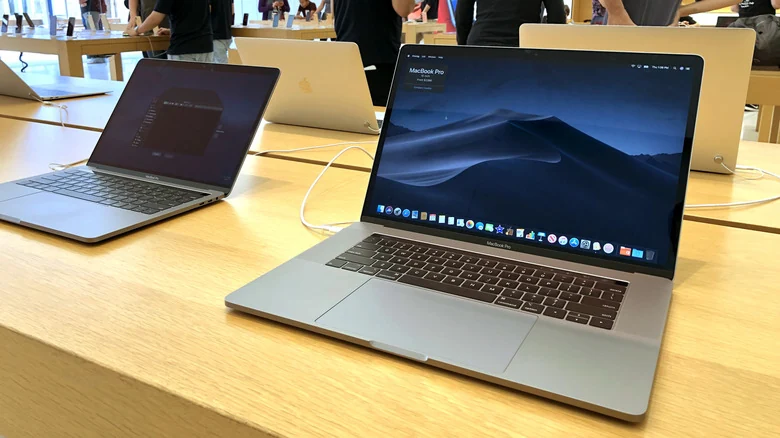
When examining portable computing over a decade and a half, performance is not the only metric that has shifted dramatically. In 2011, video rundown tests showed that the 15-inch model delivered seven hours of battery life, a result highlighted in our [MacBook Pro review (early 2011)](https://www.engadget.com/2011-03-04-macbook-pro-review-early-2011.html) as quite impressive for the era.
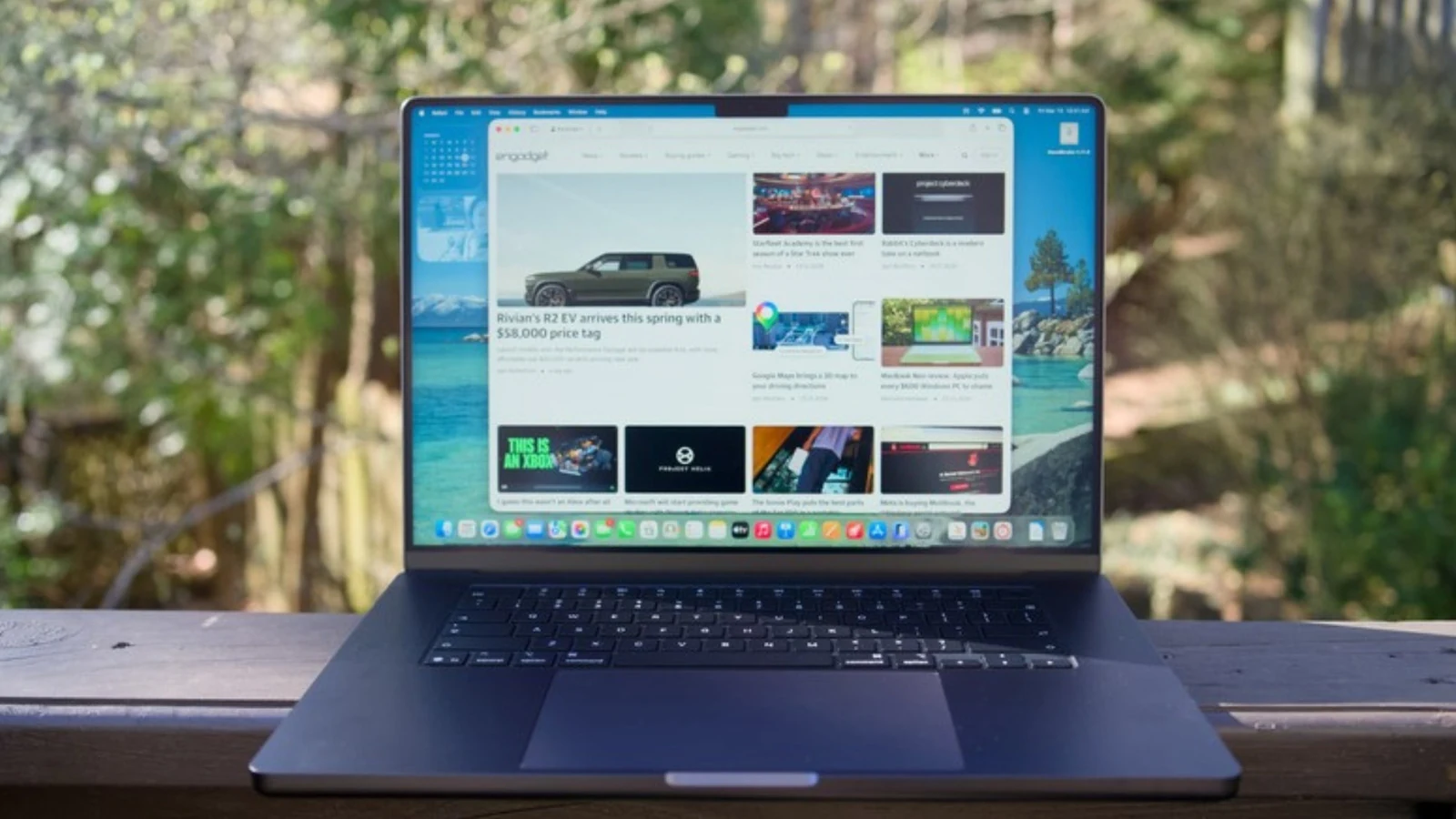
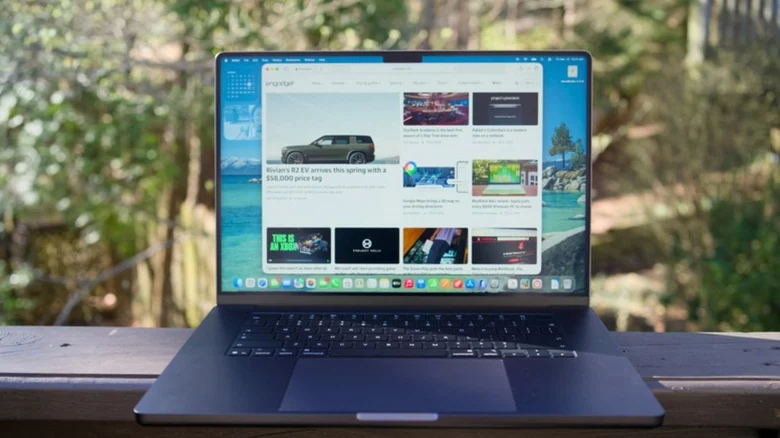
Fast forward fifteen years, and testing outlined in our [MacBook Pro M5 Max 16-inch review](https://www.engadget.com/computing/laptops/macbook-pro-m5-max-16-inch-review-still-the-pinnacle-120000325.html) reveals that the 16-inch MacBook Pro powered by the M5 Max lasted an astonishing 30 hours and 46 minutes. This represents a runtime more than four times longer than the historical 2011 benchmark.
Minimal Capacity Growth and Hardware Efficiency
Interestingly, this massive leap in longevity did not come from a radically larger internal power cell. The physical battery capacity has only grown by about 30 percent, moving from 77.5 watt-hours in the 2011 version to 99.6 watt-hours in the 2026 iteration.
Apple markets the 16-inch laptop's battery as 100 watt-hours, though the exact technical specification sheet registers it at 99.6 watt-hours. This figure places it precisely 0.4 watt-hours under the Federal Aviation Administration limit, which requires special airline approval for lithium-ion batteries exceeding 100 watt-hours.
By contrast, the 2011 configuration sat roughly 22 watt-hours below the FAA limit while carrying a bulkier physical footprint. The older machine weighed 5.6 pounds and measured 0.95 inches thick, whereas the modern M5 Max build weighs 4.7 pounds and measures 0.66 inches.
Physical Dimensions and Form Factor Changes
Comparing the 2011 model's 15.4-inch display alongside the modern 2026 model's 16.2-inch screen creates a fair physical size comparison. Engineers managed to squeeze a slightly larger energy source into a body that is roughly 16 percent lighter and 31 percent thinner.
Because regulatory restrictions limit overall capacity expansion without requiring cumbersome travel approvals, hardware efficiency remains the primary driver behind modern longevity gains. Almost all the extra runtime comes from optimized internal components rather than sheer cell volume.
Testing Methodology and Power Draw
To evaluate longevity, Apple utilized comparable evaluation methods for both generations, measuring web browsing across 25 popular websites connected via Wi-Fi. The 2011 evaluation operated the screen at 50 percent brightness, while the 2026 testing configuration set the display eight clicks up from its lowest brightness setting.
Analyzing capacity against stated runtimes indicates an average power draw of roughly 11W for the historical hardware, compared to approximately 6.2W for the modern M5 Max system. Internal lab rundown results display a parallel downward trend in power consumption over the fifteen-year span.
Charging Speeds and Power Adapters
Beyond lasting significantly longer on a single charge, the 2026 laptop benefits from drastically faster recharging capabilities. The machine ships with a 140W USB-C power adapter, representing a 65 percent increase in output power compared to the 85W MagSafe adapter included in 2011.
Apple notes that the modern charger can replenish the device to 50 percent capacity in approximately 30 minutes, provided a compatible USB-C cable and a power source rated at 140W or higher are used. The 2011 technical documentation made no mention of rapid replenishment technology.
Based on manufacturer metrics, a quick half-hour charging session on the contemporary M5 Max hardware yields roughly eight hours of active web browsing—surpassing the total runtime capacity of a fully charged 2011 machine.
Long-Term Durability and Software Longevity
Regarding long-term wear, Apple specifies that the internal cells in both generations are engineered to retain up to 80 percent of their original capacity after managing 1,000 complete charge cycles.
Such durability metrics hold little practical weight for the 2011 hardware today, as those older machines cannot support software releases newer than 2017's macOS High Sierra, with subsequent updates requiring mid-2012 hardware or later.
Sources
- EngadgetMacBook Pro battery life in 2011 vs 2026: how much has it really improved in 15 years?
Continue chronologically


Related entity coverage
Related stories
Apple Launches Redesigned MacBook Pro With PROLED XDR Display
Apple has unveiled 14-inch and 16-inch MacBook Pro models with tandem OLED displays, touch support, M5 Pro and M5 Max chips, starting at $2,899.
Apple Unveils First Touchscreen MacBook Pro with OLED Display
Apple announces its first major MacBook Pro redesign in over five years, featuring an OLED touchscreen, lighter build, and starting at $2,899.
MacBook Pro M5 Max Drops to Its Lowest Price Ever
The 16-inch MacBook Pro M5 Max has hit its lowest price ever, dropping to $3,499 with 20 percent off ahead of rumored new MacBook announcements.
Apple Announces Touchscreen MacBook Pro With OLED Display
Apple has officially announced its first touchscreen MacBook Pro featuring an OLED display, M5 Pro and M5 Max chips, and starting prices from $2,899.