Inside Omron’s Next-Generation LD Mobile Robots
Software, safety, and fleet management are becoming just as critical as the hardware itself in the evolution of modern mobile robotics, according to insights from an Omron project manager.
 Radwan AbdulhadiEditor and technology writer
The Evolution of Mobile Robotics and Intralogistics
In the fast-evolving landscape of mobile robotics, industry leaders are increasingly recognizing that software, safety, and fleet management are becoming just as important as the robot itself, according to an OMROM project manager. As modern factories demand higher levels of adaptability and efficiency, the focus within automation has expanded far beyond basic mechanical movement.
This shift is reshaping how manufacturing facilities approach intralogistics transformation. Rather than deploying isolated machines, system integrators and manufacturers are looking at holistic automation ecosystems that can seamlessly integrate into existing factory floor layouts.
The integration challenge involves harmonizing physical hardware with advanced digital architectures, ensuring that every asset on the floor communicates effectively and safely within dynamic environments.
Leadership and Strategy at OMRON Industrial Automation Europe
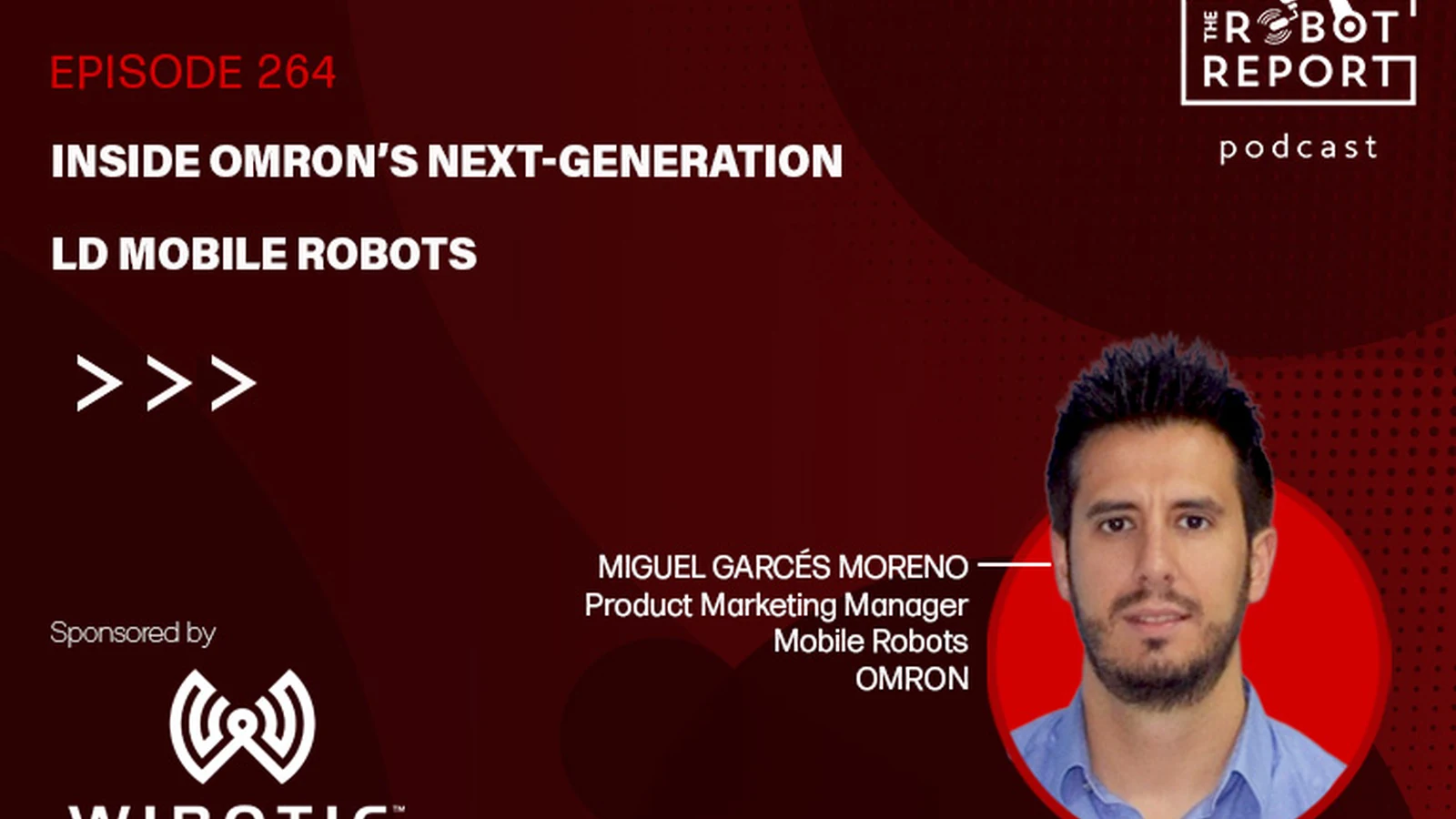
Insights into these next-generation deployments come from industry professionals like Miguel Garcés Moreno, product marketing manager for Europe, the Middle East, and Africa (EMEA) for mobile robots at OMRON Industrial Automation Europe. His role places him at the forefront of shaping how smart factory technologies are deployed across diverse regional markets.
Garcés Moreno leads product strategy across autonomous mobile robots ( AMRs ), industrial automation, and force- and power-limited or collaborative robots . By bridging the gap between high-level operational goals and ground-level hardware execution, his work helps manufacturing clients optimize their internal logistics pipelines.
His strategic oversight touches multiple facets of the industrial automation spectrum, helping enterprises navigate the complexities of deploying flexible, space-efficient, and fully automated intralogistics architectures.
Technical Expertise in the Smart Automation Ecosystem
Backed by an industrial engineering degree and a Master’s in Industry 4.0, Garcés Moreno brings deep technical and market expertise across the smart automation ecosystem. This multidisciplinary educational and professional background allows for a comprehensive understanding of how individual components interact within a larger factory network.
His professional purview spans advanced technologies including AI vision , motion control , and PLCs . These core technological pillars are essential for enabling modern robots to navigate complex, unpredictable human-populated environments with precision and reliability.
Understanding how these subsystems communicate ensures that automation deployments remain scalable and maintainable over their operational lifecycles, minimizing downtime and maintenance overhead.
Transforming Modern Factory Floors
Today, Garcés Moreno focuses on helping manufacturers transform modern factory floors with flexible, space-efficient, and fully automated intralogistics systems. Traditional fixed-path automation is increasingly giving way to more adaptable solutions that can dynamically reroute and adjust to changing production schedules.
This operational flexibility is critical for facilities dealing with high-mix, low-volume production runs, where fixed conveyor systems would introduce bottlenecks. Mobile robots provide the agility required to scale operations up or down without extensive facility redesigns.
By optimizing material flow and reducing manual transport tasks, these intelligent intralogistics solutions directly contribute to improved overall equipment effectiveness and enhanced workplace ergonomics.
Closing the Loop of Autonomy
Closing the loop of autonomy takes more than a great robot. It requires robust supporting infrastructure, reliable energy management, and sophisticated fleet coordination software to ensure continuous, uninterrupted workflows across every shift.
Technologies such as wireless charging and automated fleet energy management play a pivotal role in maintaining high operational uptime. By allowing robots to opportunistically charge during normal operations without human intervention, facilities can maximize their return on investment.
As the industry continues to mature, the emphasis will undoubtedly remain on these foundational software and infrastructure layers, proving that a robot's true value lies just as much in its intelligence and management as it does in its physical form.
Sources
- The Robot ReportInside Omron’s next-generation LD mobile robots
Continue chronologically
Related stories
The State of Robots and Automation in Modern Manufacturing
Explore the latest advances in manufacturing robotics, covering growth in industrial automation, collaborative robots, and global adoption trends.
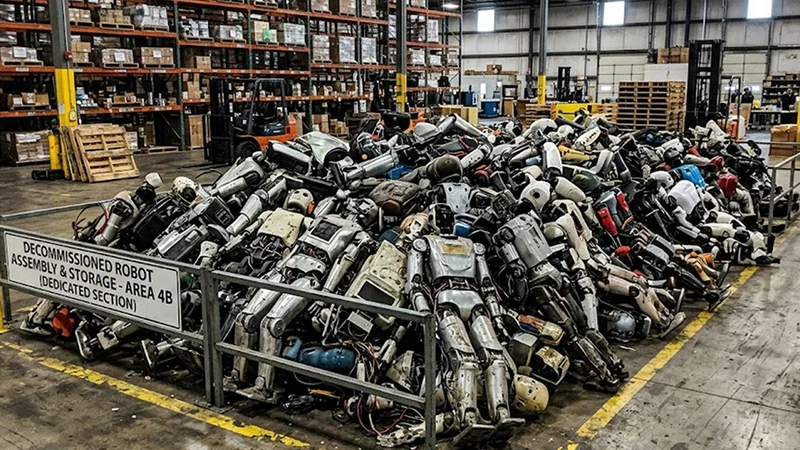
Decommissioning Humanoid Robots: The Challenge of Retirement
As humanoid robot production scales, industry experts warn that recycling these machines requires surgical precision to avoid safety and data risks.
Cloudflare Launches Traces in Open Beta for End-to-End Request Visibility
Cloudflare has introduced Cloudflare Traces in open beta, extending automated request tracing across security rules, caches, Workers, and origin infrastructure.
Boston Dynamics Reveals Four-Fingered Hand for Atlas
Boston Dynamics has unveiled a new four-fingered hand for its Atlas humanoid, designed for high-fidelity simulation and tool manipulation.