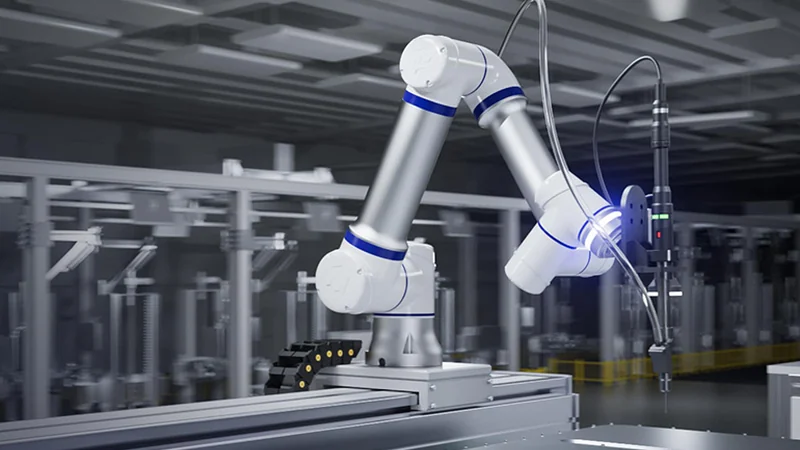
White House Issues Section 232 Ruling on Foreign Robots
A recent Section 232 investigation by the U.S. Secretary of Commerce concluded that heavy dependence on robotics imports threatens national security and economic competitiveness.
 Radwan AbdulhadiEditor and technology writer
Section 232 Investigation and National Security Findings
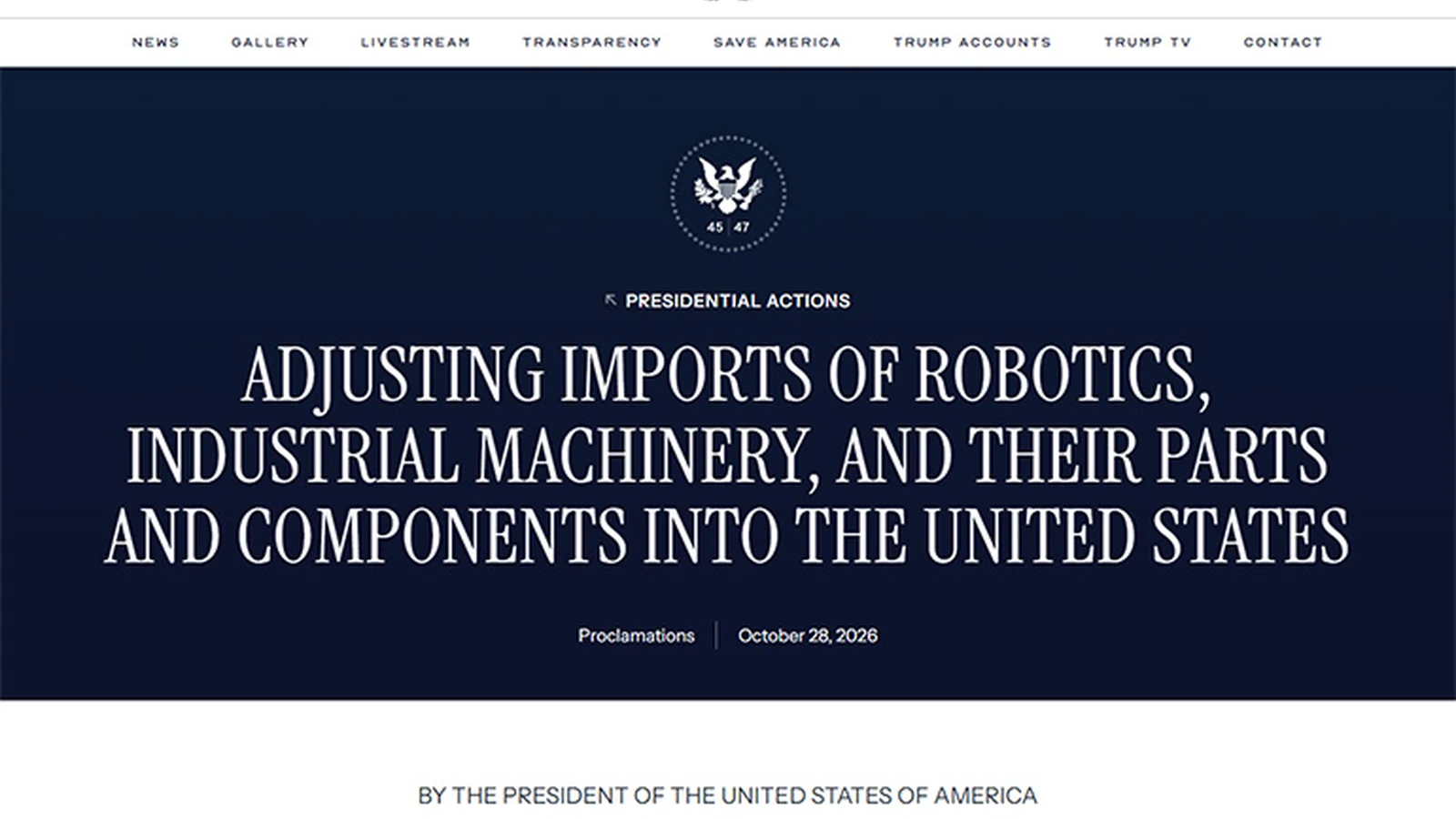
The administration of U.S. President Donald J. Trump officially addressed the nation's reliance on foreign technology by releasing a presidential proclamation. According to the document, the U.S. Secretary of Commerce submitted a comprehensive report under Section 232 evaluating the national security implications surrounding imports of robotics, industrial machinery, and their associated parts and components.
The findings concluded that these systems are being imported into the United States in quantities and under circumstances that threaten to impair national security. The proclamation highlighted that robotics and industrial machinery are foundational to modern production processes, supporting approximately $7.1 trillion in manufactured goods shipments and $86 billion in equipment production during 2024.
Impact Across Critical Sectors and Defense
The federal assessment noted that automated systems and related technologies have become mission-critical across several key pillars of the economy and national defense. From military and law-enforcement operations to vital infrastructure markets including agriculture, automotive production, and electronics fabrication, imported systems have expanded significantly over the past decade alongside rising cybersecurity considerations.
The Section 232 statement specifically pointed to advanced hardware categories, including autonomous systems, humanoid and quadruped platforms, and autonomous ground vehicles, as direct support mechanisms for the U.S. military. Despite an increase in domestic production investments, the administration asserted that local capacity currently falls short of meeting overall national demand.
Mandate for International Trade Negotiations
In response to the identified vulnerabilities, the president directed the Secretary of Commerce and the U.S. Trade Representative to engage in formal negotiations with international trading partners. The objective is to adjust imports of robotics, industrial machinery, and components to eliminate threats to national security. Because a significant portion of major industrial automation suppliers are based overseas, the future trajectory of these trade discussions remains a focal point for global markets.
Analysts suggest that geopolitical competition, particularly involving rival nations such as China, serves as a primary motivator behind these regulatory measures and recent federal actions. Government agencies are increasingly scrutinizing supply chain dependencies to safeguard critical technological infrastructure.
Industry Reactions and Domestic Supply Chain Realities
Industry observers and corporate leaders have shared mixed perspectives on what the proclamation means for the broader automation sector. Brendan Schulman, vice president of policy and government relations at Boston Dynamics, characterized the decision as another strong signal of federal backing for entities working to build and expand domestic supply chains for robots.
Schulman noted that the Special Competitive Studies Project Robotics Commission previously reached similar conclusions regarding technological reliance. He added that the upcoming phase involves months of federal negotiations with trading partners before further trade policy measures are weighed.
Component Gaps and Perspectives on Potential Tariffs
Robert Little, a robotics business development advisor and former executive, emphasized that while companies like FANUC, Teradyne Robotics, and Yaskawa have announced plans to boost U.S. manufacturing footprints, significant structural gaps remain within the domestic supply ecosystem. Specifically, he pointed to shortfalls in domestic production capabilities for sensors, actuators, precision gears, and encoders as critical areas requiring intervention.
Meanwhile, Ash Sharma, vice president of research and chief information officer at Interact Analysis, cautioned that the Section 232 determination does not automatically translate to immediate tariffs. Instead, market analysts view the declaration as a directional indicator of future policy, noting that subsequent quotas or duties could profoundly influence supplier pricing, competitiveness, and localization efforts across the United States.
Sources
- The Robot ReportWhite House makes Section 232 determination regarding foreign-made robots
Continue chronologically

Related stories
Trump Declares Foreign Robot Imports a National Security Threat
President Trump has issued a proclamation declaring foreign-made factory robot imports a national security threat, ordering trade talks and potential tariffs.
Tech Leaders Sign Voluntary White House AI Safety Accord
Tech executives met with Donald Trump to sign a voluntary AI safety agreement featuring four layers of controls, self-regulation, and audits.

Nvidia Push Into Physical AI Aims For Safer Robots
Nvidia expands its safety technology for physical AI to support safer humanoid robots, autonomous vehicles, and warehouse machines.
Teradyne Robotics and Elite Robots Settle Software Dispute
Teradyne Robotics and Elite Robots have mutually agreed to end their ongoing software and cobot legal dispute without disclosing terms.