iPhone Duo vs Pixel 11 Pro Fold: Foldable Flagship Comparison
A detailed look at how Apple's new foldable stacks up against Google's flagship device across hardware, software features, and daily performance.
 Radwan AbdulhadiEditor and technology writer

Design and Display Form Factors
The mobile market features two distinct premium foldable options in the iPhone Duo and the Google Pixel 11 Pro Fold, as highlighted in reporting on the Apple iPhone Duo. Apple adopts a passport-style wide design, an approach that Samsung also embraced it with its Fold 8 this year, featuring a 5.4-inch outer display and a 7.6-inch inner screen. In contrast, Google's device offers an 8-inch inner display alongside a 6.5-inch outer panel.
Screen specifications and optical characteristics differ significantly between the two manufacturers. The Pixel 11 Pro Fold reaches a peak brightness of 3,600 nits on its screens. Meanwhile, the iPhone Duo achieves a maximum brightness of 3,000 nits, though its foldable panel incorporates a nano-texture layer designed to minimize glare and reduce the visible crease.
Physical Dimensions and Durability
When evaluating build quality and physical proportions, the iPhone Duo weighs approximately 9 ounces (254 grams) and measures 11.3 mm in thickness when closed. Google's competing foldable is lighter at 8.4 ounces (239 grams) and thinner at 10.1 mm, though it can still feel bulky compared to traditional devices. Apple utilizes a titanium frame paired with Ceramic Shield back glass, whereas Google relies on a fiberglass composite back alongside its own ceramic glass on the outer screen. Both flagship smartphones carry an IP68 certification for water and dust resistance.
Software Optimization and Features
Apple has tailored iOS 27 for the unique proportions of the iPhone Duo, adding unique Duo-only features such as a dedicated split-screen layout. The user interface adapts dynamically across folded, open, and half-folded tabletop tent orientations.
On the other side, Android adaptation for foldables remains inconsistent despite Google's multi-year head start. Many applications continue to simply stretch their interfaces across larger panels rather than presenting tailored controls or distinct workflows when unfolded.
Camera Capabilities and Hardware
Camera performance stands out as a major differentiator. The Google Pixel 11 Pro Fold features a 48-megapixel main sensor, an ultra-wide sensor, and a 10-megapixel telephoto lens supporting optical zoom. According to Engadget's review of the Pixel 11 Pro Fold, this hardware combination delivers the best camera system available on any foldable device. Conversely, the iPhone Duo carries two 48-megapixel sensors for wide and ultra-wide shots but lacks optical zoom capabilities or the variable aperture found on traditional non-foldable flagship models.
Battery Endurance and Charging Speeds
Battery performance claims vary by manufacturer. Apple estimates up to 31 hours of inner screen video playback and 44 hours on the outer display for the iPhone Duo. Real-world testing of Google's foldable demonstrated approximately 27 hours of external screen video playback, exceeding the company's official 24-hour estimate.
Charging metrics give Apple an advantage when using high-wattage equipment. The iPhone Duo can replenish 50 percent of its battery in roughly 20 minutes when paired with a 60W power adapter. Meanwhile, the Google Pixel 11 Pro Fold maxes out at 30W charging support, requiring 30 minutes to reach a 50 percent charge.
Pricing and Market Availability
Market positioning and pricing place these foldable devices in direct competition. The Google Pixel 11 Pro Fold starts at $1,899 with 256GB of storage and is currently available for purchase. The Apple iPhone Duo starts at $1,999 with 256GB of storage, scaling up to $3,199 for the 2506GB or 2TB configurations, and hit store shelves following pre-orders on October 23.
Sources
- EngadgetApple iPhone Duo vs Google Pixel 11 Pro Fold: The differences beyond foldable style
Continue chronologically

Related entity coverage
Related stories
Finding the Android Equivalent to the New iPhone Duo
Explore how the iPhone Duo compares to major Android foldables from Samsung, Google, and Motorola in display size, cameras, durability, and price.
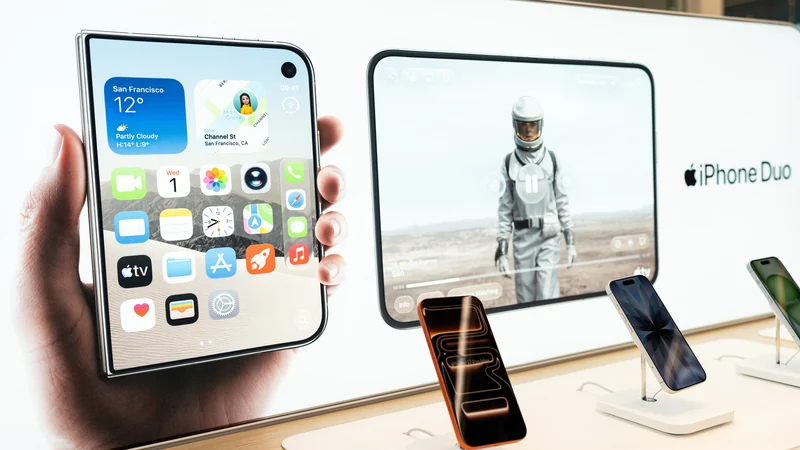
Apple iPhone Duo Review: A First-Class Foldable
Apple enters the foldable market with the iPhone Duo, offering a wide passport design, dual displays, and robust titanium construction.
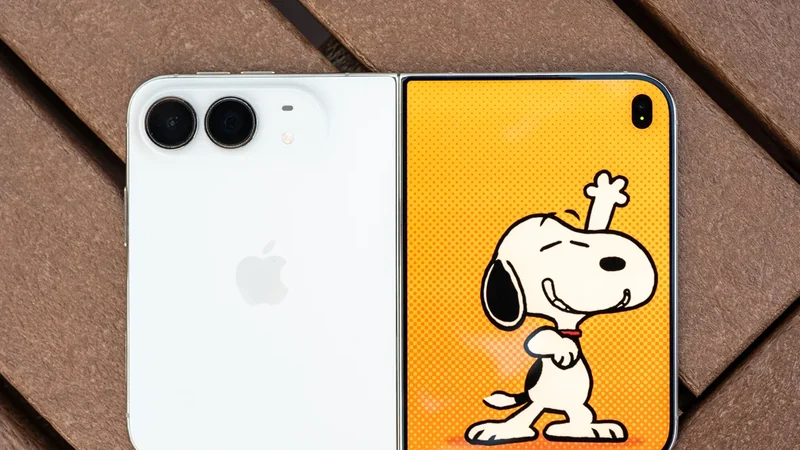
Samsung Galaxy Z Fold 8 Sees Surge in Demand After iPhone Duo Launch
Samsung reports a 16% increase in Galaxy Z Fold 8 demand and 300% spike in search interest following Apple's iPhone Duo release, boosting foldable market visibility.
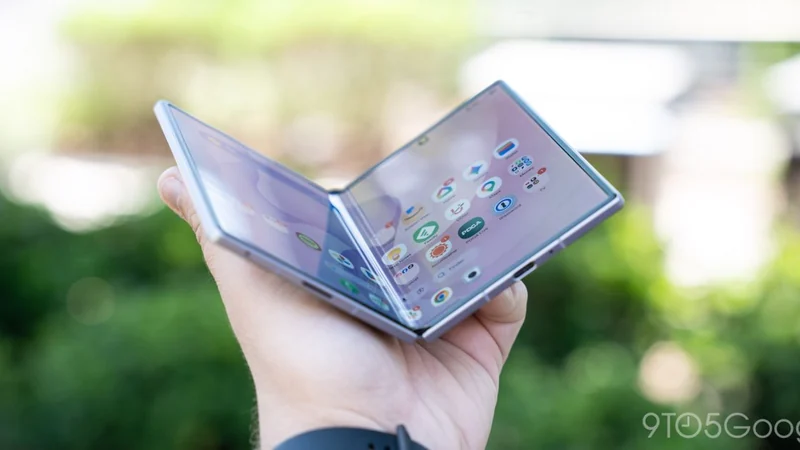
Google Launches the Pixel 11 Pro Fold With Incremental Upgrades
Google has announced the Pixel 11 Pro Fold, featuring a lighter build, brighter display, and updated camera capabilities amidst growing foldables competition.