Bolt Graphics Powers On Its First Zeus Test Chip
Bolt Graphics has reached a significant milestone by successfully powering on its first simulation-centric test chip, though the commercial Zeus GPU is still several years away from volume production.
 Radwan AbdulhadiEditor and technology writer
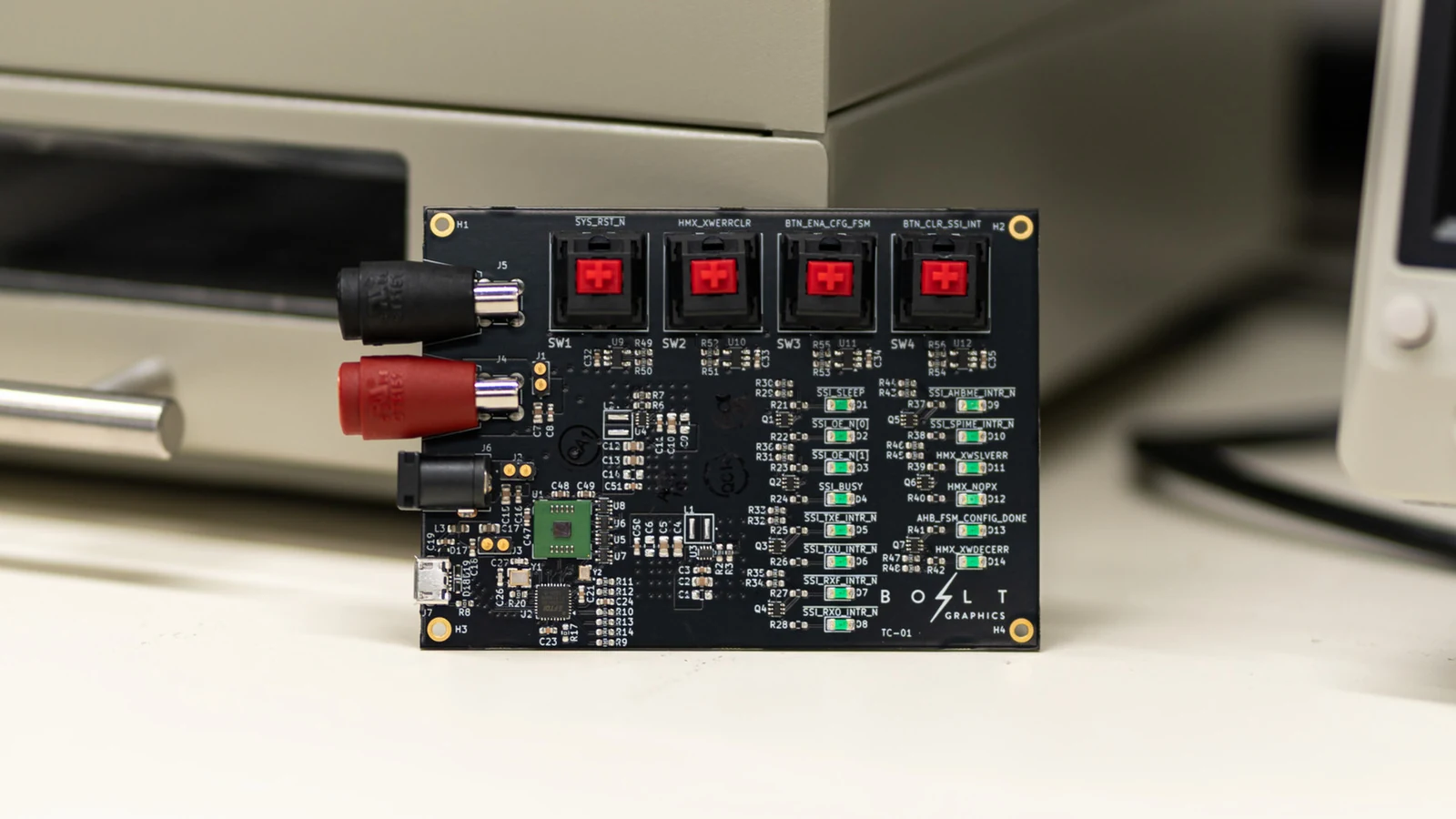
Successful Test Run for Zeus Test Chip
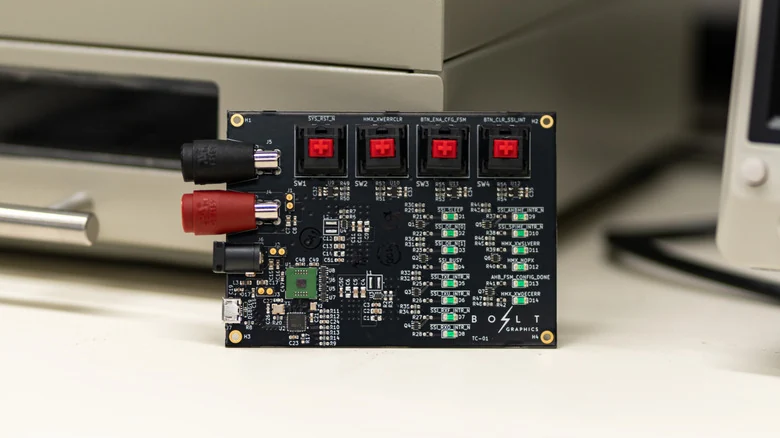
California-based startup Bolt Graphics has reached a major milestone in its hardware development by successfully powering on its first silicon for the Zeus project. The company announced that its 12nm <a href="https://www.prnewswire.com/news-releases/bolt-graphics-achieves-silicon-bring-up-of-zeus-test-chip-opens-taipei-office-302906384.html">test chip</a>, manufactured by Taiwan Semiconductor Manufacturing Company (TSMC), ran without any functional issues when switched on in mid-October.
The successful test run marks an important step forward for the simulation-centric chip project, though the hardware remains a long way from commercial availability. According to the company, the card it is building toward is not expected to reach volume production until 2028. To stay close to its manufacturing partners ahead of this timeline, Bolt also confirmed the opening of a new office in Taipei.
Specifications and Hardware Design
The tested silicon measures 6mm^2 and draws 1.4 watts of power. This is significantly lower than the 35 watts consumed by the FPGA, a reprogrammable chip used previously for prototyping the design. The primary feature of the architecture is dedicated hardware for electromagnetic simulation, aiding in the design of radar sensors and camera lenses.
Darwesh Singh, CEO and founder of Bolt Graphics, noted in an interview that the silicon demonstrates the capability to run a highly complex physics algorithm accelerated directly in hardware. While the company has not published official performance metrics, it stated that the results exceeded internal estimates.
The finalized Zeus GPU, which is a completely separate chip, will utilize TSMC's 2020-era N5P process node. Bolt selected this specific node to avoid competing with other semiconductor firms for limited wafer supplies. The architecture is built around RISC-V processor cores utilizing an open-standard instruction set, paired with the company's proprietary path-tracing hardware.
Memory Architecture and Ambitious Claims
Future Zeus PCIe cards are designed to combine soldered LPDDR5X memory with standard DDR5 SO-DIMM slots typically found in laptops. This configuration will allow users to expand the total memory capacity of the cards up to 384GB.
When Bolt initially introduced the Zeus concept, it reported lofty performance expectations, including rendering speeds and path-tracing throughput intended to surpass existing graphics hardware. For instance, the company claimed Zeus could deliver up to 10 times the path-tracing throughput—defined as how many light rays a rendering system can process per second—of <a href="https://www.engadget.com/ai/nvidia-announces-new-rtx-5090-graphics-card-that-costs-2000-at-ces-031133468.html">Nvidia's RTX 5090</a>. However, these specific performance claims have not yet been independently verified.
Market Strategy and Funding Efforts
Bolt plans to market Zeus to studios, engineers, and scientists initially, before eventually expanding into the broader consumer gaming and artificial intelligence sectors. Entering the consumer <a href="https://www.engadget.com/computing/the-gpu-market-is-built-on-a-broken-foundation-143100986.html">GPU market</a> will put the startup in direct competition with established industry leaders like Nvidia and AMD, requiring significant software support to run existing gaming libraries.
In addition to its technical milestones, financial developments have followed the hardware bring-up. Reports indicated that Bolt was seeking to raise approximately $100 million at a valuation of roughly $700 million. The company previously reported strong interest through its early access program, citing a product pipeline valued at over $500 million, though no specific commercial customers have been named publicly.
Sources
- EngadgetBolt Graphics powers on its first Zeus GPU
Continue chronologically
Related entity coverage
Related stories
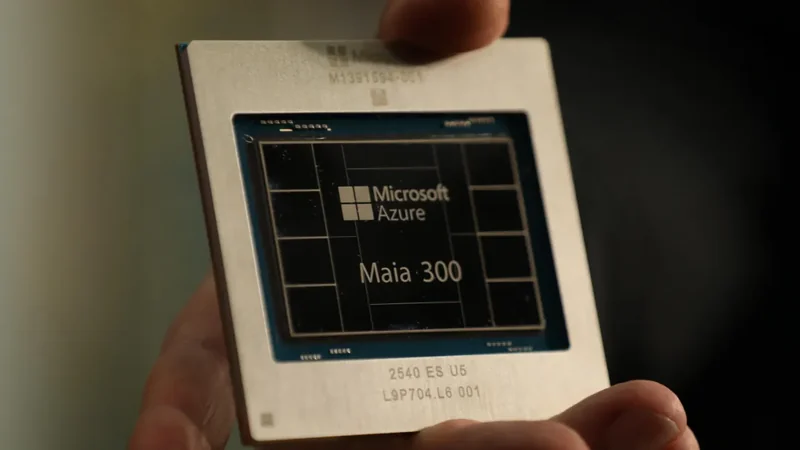
Microsoft Unveils Third-Generation Maia 300 AI Chip
Microsoft announces its third-generation Maia 300 in-house AI chip, designed to improve cloud efficiency and reduce reliance on Nvidia GPUs.
Intel's Gloomy PC Outlook Triggers $1 Trillion Chip Market Wipeout
Intel shares plunge 30% after a weak PC outlook, erasing $150 billion and sparking a wider semiconductor market bloodbath across the industry.

TSMC Weighs 20% CoWoS Price Hike Amid AI Chip Demand
TSMC is reportedly considering raising its CoWoS advanced packaging prices by up to 20% as Nvidia Blackwell and Rubin chips drive massive AI demand.

Elon Musk Confirms TSMC Discussions for Terafab Project
Elon Musk has confirmed discussions with TSMC regarding a potential collaboration for the Terafab semiconductor production initiative.