
Microsoft Unveils Third-Generation Maia 300 AI Chip
Microsoft has announced its third-generation Maia in-house AI chip, engineered to serve as the primary AI inference system across its products and services while boosting cloud efficiency.
 Radwan AbdulhadiEditor and technology writer
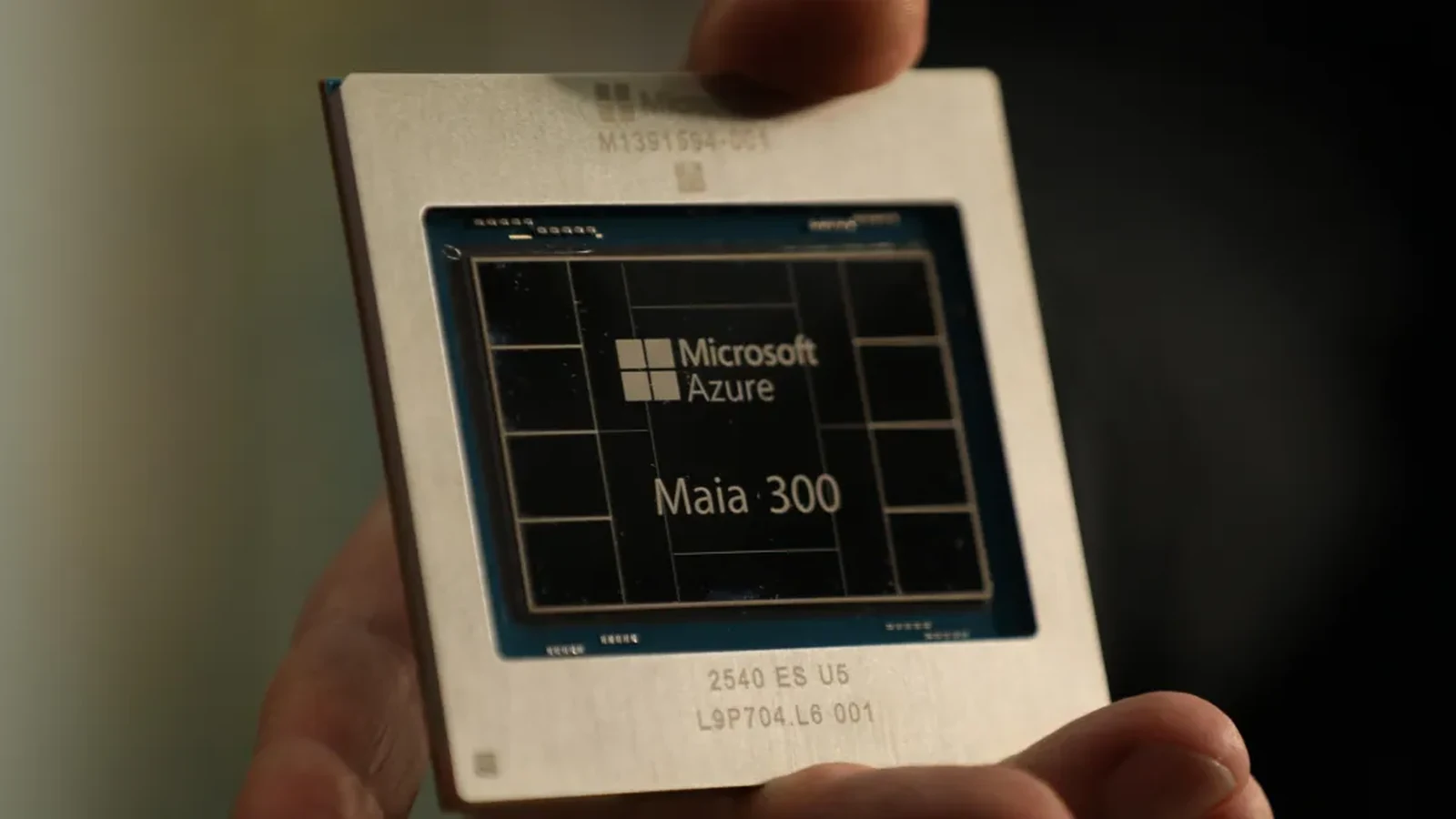
Introduction to the Maia 300 Chip
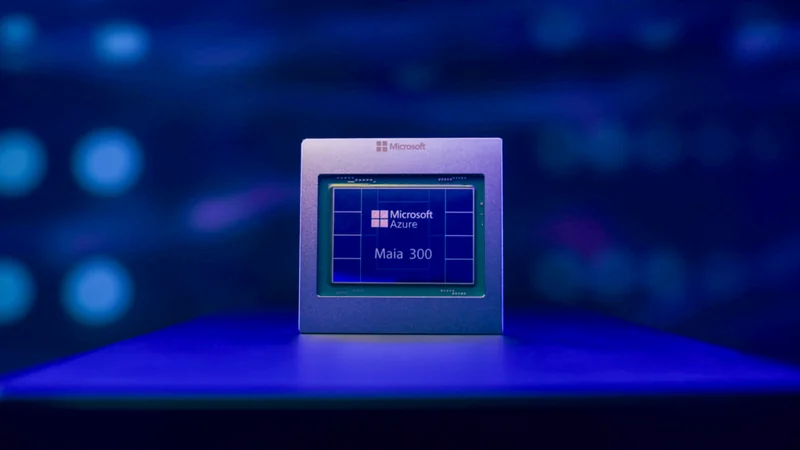
Microsoft is announcing its third-generation Maia in-house AI chip today, designed to be the "primary AI inference system" for Microsoft's products and services. The new silicon aims to improve both the cost and efficiency of running demanding cloud workloads while handling modern reasoning models and agentic tasks. Detailed further in reporting on [Microsoft is finally making custom chips — and they’re all about AI](https://www.theverge.com/2023/11/15/23960345/microsoft-cpu-gpu-ai-chips-azure-maia-cobalt-specifications-cloud-infrastructure), custom hardware has become an increasingly central strategy for major cloud providers.
The Maia 300 chip will start rolling out to production AI workloads in 2027. This generation follows the predecessor that was [announced in January](https://www.theverge.com/news/867670/microsoft-maia-200-ai-chip-announcement), marking a rapid cadence of custom silicon development by the technology giant as it races to scale its infrastructure.
Efficiency and Performance Gains
According to executive vice president of Microsoft's cloud group Scott Guthrie, the upcoming hardware will significantly outperform prior generations. As [says Scott Guthrie](https://blogs.microsoft.com/blog/2026/10/12/microsoft-to-expand-azure-maia-system-to-multi-gigawatt-deployments/), the company plans to expand its Azure Maia system to multi-gigawatt deployments starting in 2027.
The corporation expects Maia 300 to deliver 40 percent more tokens per megawatt compared to leading GPU-based systems. Furthermore, in a full 96-accelerator configuration, it delivers up to 7 times the rack-scale token throughput of the Maia 200 model. These hardware improvements are intended to help Microsoft rely primarily on its own in-house components rather than hardware from suppliers like Nvidia and AMD.
Advanced Architecture and Design
To achieve these performance boosts, Maia 300 utilizes an innovative chiplet architecture built on TSMC’s N2P process node. Rather than packing every function into a monolithic die, the architecture cleanly separates compute, memory controller, and I/O functions.
As [says the Azure hardware](https://azure.microsoft.com/en-us/blog/deep-dive-into-azure-maia-300-architecture/) and infrastructure team, this separation increases the silicon area dedicated strictly to compute performance while letting each individual function leverage the technology best suited for its specific operational role.
Supporting Emerging AI Workloads
Microsoft notes that Maia 300 is engineered specifically to handle modern, complex AI workflows that go beyond basic text generation. These emerging workloads include long-context reasoning, latency-sensitive conversational experiences, and sustained, multi-step agentic tasks.
By developing its own silicon, Microsoft seeks to advance [its goal of catching up](https://www.theverge.com/ai-artificial-intelligence/942242/microsoft-build-ai-agents-openai-competition) with key industry competitors in the competitive artificial intelligence landscape.
Ecosystem Integration and Outlook
The prior Maia 200 chip is already active across Microsoft's production AI workloads, powering services such as Microsoft Copilot, GitHub Copilot, Microsoft Foundry, and the company's proprietary AI models. Microsoft AI CEO Mustafa Suleyman emphasized that co-designing models directly alongside customized silicon is a critical focus for the engineering teams as they scale operations.
With multi-gigawatt deployments scheduled to begin rollouts in 2027, the Maia chip series stands to become a foundational component of Microsoft's cloud infrastructure strategy going forward.
Sources
- The VergeMicrosoft’s new AI chip makes it less reliant on Nvidia’s GPUs
Continue chronologically
Related entity coverage
Related stories
Intel's Gloomy PC Outlook Triggers $1 Trillion Chip Market Wipeout
Intel shares plunge 30% after a weak PC outlook, erasing $150 billion and sparking a wider semiconductor market bloodbath across the industry.

Nvidia RTX Spark Tested in Microsoft Surface Laptop Ultra
Tom's Hardware puts Nvidia's RTX Spark platform and Microsoft's Surface Laptop Ultra to the test, revealing strong local AI performance.
Nvidia GPU Driver 621.01 Adds Advanced Shader Delivery
Nvidia's latest 621.01 GPU driver introduces Microsoft's Advanced Shader Delivery technology to speed up game launches and reduce stutters.
NVIDIA Opens Vera Rubin Architecture to Scale AI Factories
NVIDIA unveiled key rack and compute tray designs for the Vera Rubin architecture at the OCP Global Summit to help scale global AI factories.