Tesla Targets 2028 Production for Redesigned Roadster
Tesla has set a new 2028 production window for its long-awaited redesigned Roadster, reviving a project that has faced years of repeated delays since its initial reveal.
 Radwan AbdulhadiEditor and technology writer
The Redesigned Roadster Reveal and Stunt
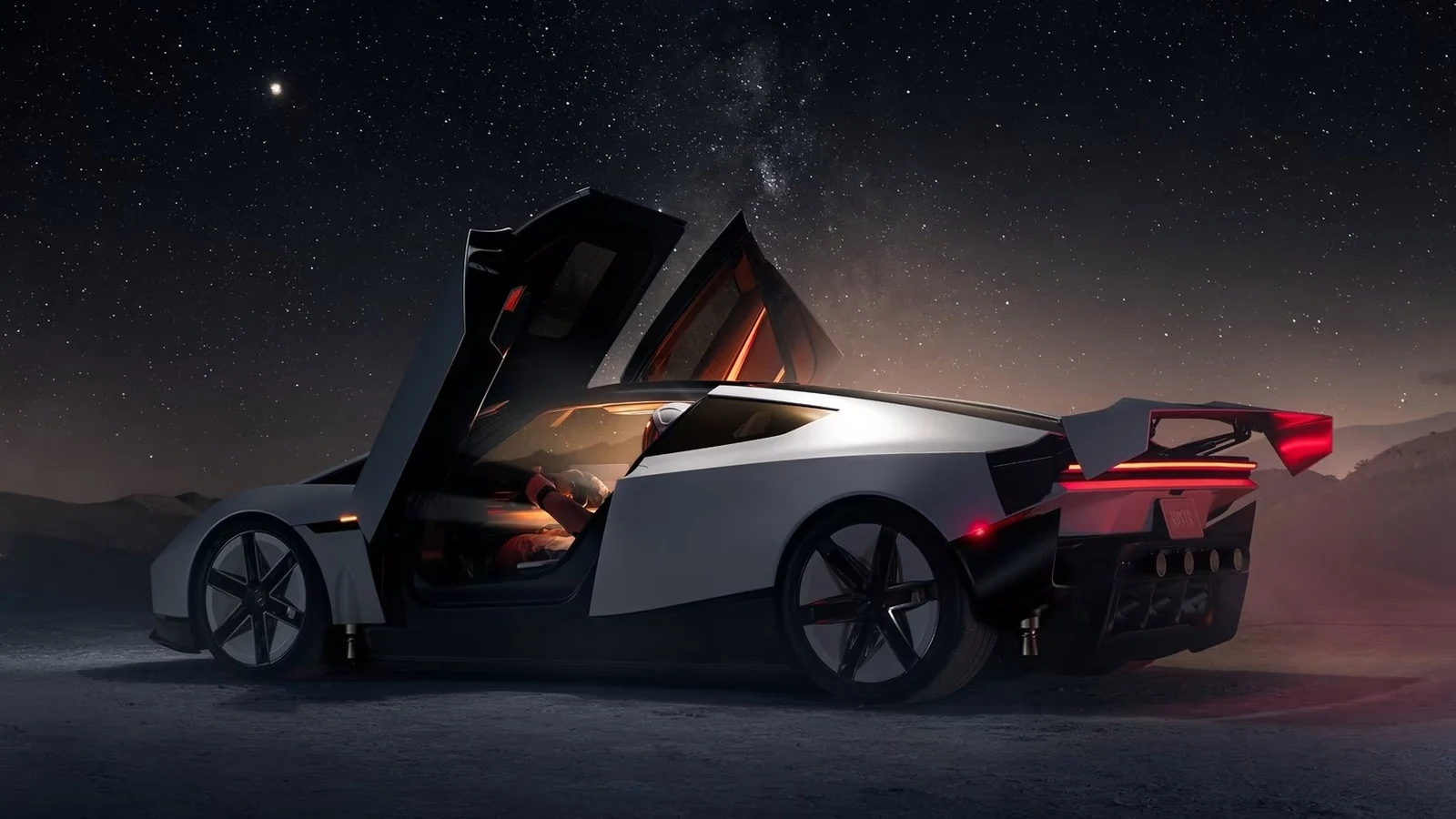
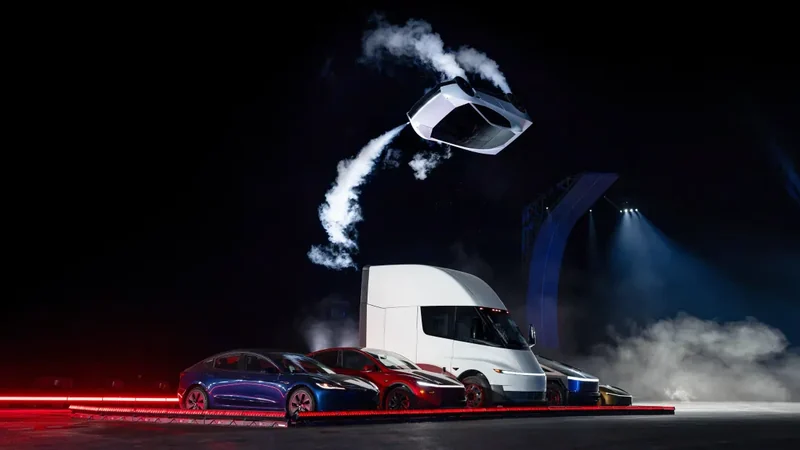
Tesla dominated headlines following an October 15 event showcasing its redesigned electric sports car alongside a dramatic stunt. During the presentation, the company drove the vehicle up a C-shaped ramp on a suction rig until it was upside-down before the Roadster floated to the ground on rocket boosters. Alongside the flashy demonstration, the automaker shared that it is targeting a 2028 production window for the vehicle. During the event, CEO Elon Musk stated that the company enters production in 2028, adding for emphasis that it would happen "actually, for real."
Prospective buyers examining the vehicle's ordering options will find the "Thrust" trim level with cold-gas thrusters available for reservation. Securing a spot for this specific performance configuration requires a hefty $250,000 reservation price, even as the broader production timeline stretches several years into the future.
A Brief History of the Tesla Roadster
The Roadster name holds significant historical importance for Tesla as a milestone from its early days of operation. Released back in 2008 and manufactured in very limited quantities, the original battery-powered sports car was initially conceived by one of Tesla's early founders, Martin Eberhard, before Elon Musk bought out Eberhard and his business partner, Marc Tarpenning. The foundational concept of the Roadster was what initially attracted Musk to the startup in 2004, prompting his initial investment and subsequent leadership over the vehicle's manufacturing process. Built within the modified chassis of a Lotus Elise, the early vehicle managed an impressive 244 miles on a single battery charge.
Years of Broken Promises and Delays
The journey toward the second-generation sports car has been defined by a lengthy sequence of postponed timelines. The redesigned model was originally unveiled in November 2017 alongside the Tesla Semi, a Class 8 electric semitruck that also subsequently stalled in production. At the time of the 2017 unveiling, Musk positioned the sports car as a direct challenge to gasoline-powered automobiles, with an intended release window set for 2020. Furthermore, Musk promised a special package that would incorporate small rocket thrusters around the car to enhance acceleration, top speed, braking, and cornering performance.
However, the initial 2020 target came and went while Tesla continued holding customer deposits starting at $50,000 and reaching up to $250,000. Subsequent updates from leadership routinely pushed the schedule further. After initial disruptions associated with the global health crisis, Musk indicated production might begin within 12 to 18 months, though he also prioritized bringing the Cybertruck to market first. Additional schedule shifts occurred throughout 2021, 2022, 2023, and 2024, leaving the sports car absent from production lines.
Broader Context and Corporate Distractions
The extended development timeline coincided with a turbulent era for Tesla and its chief executive. Over recent years, Musk transitioned from a public environmental advocate into a prominent political figure, culminating in his leadership role within the newly formed Department of Government Efficiency. Widespread federal funding cuts and policy transformations generated significant controversy, sparking international protests targeting Tesla operations globally. Coupled with personal challenges and shifting corporate priorities, vehicle development initiatives like the Roadster frequently took a backseat.
Skepticism Among Customers and Observers
By the time Tesla recommitted to advancing the Roadster project, public skepticism had reached notable heights. Long delays transformed the vehicle's development cycle into a running pop-cultural joke, with prominent tech figures and long-standing reservation holders publicly expressing frustration. High-profile vehicle owners and industry commentators frequently noted that the company had held substantial consumer deposits for nearly a decade without delivering a finished product. Consequently, industry observers emphasize that Tesla will need to substantiate its latest 2028 production claim to restore consumer confidence in the long-delayed sports car program.
Sources
- EngadgetThe Tesla Roadster should go into production in 2028, but don't get your hopes up
Continue chronologically
Related stories
Tesla Roadster Flying Stunt Highlights Prototype Reality
Tesla's recent demonstration of a flying Roadster showcased impressive engineering and cold-gas thrusters, but the vehicle is not approved for public road use.
Tesla Revives Roadster With Decades-Old Stunt Technology
Tesla is once again trying to bring back the Roadster, leaning on decades-old stunt technology and bold performance claims amid wider financial challenges.
SpaceX and Tesla Exploring Possible Merger, Musk Says
SpaceX and Tesla have formed special committees of independent directors to discuss a potential merger, though Elon Musk says it is not a certainty.
Alex Gibney's 4-Hour Musk Documentary Examines Tech Titan
Alex Gibney's four-hour documentary examines Elon Musk's rise, blending archival footage and an adversarial tone in a two-part cinematic portrait.