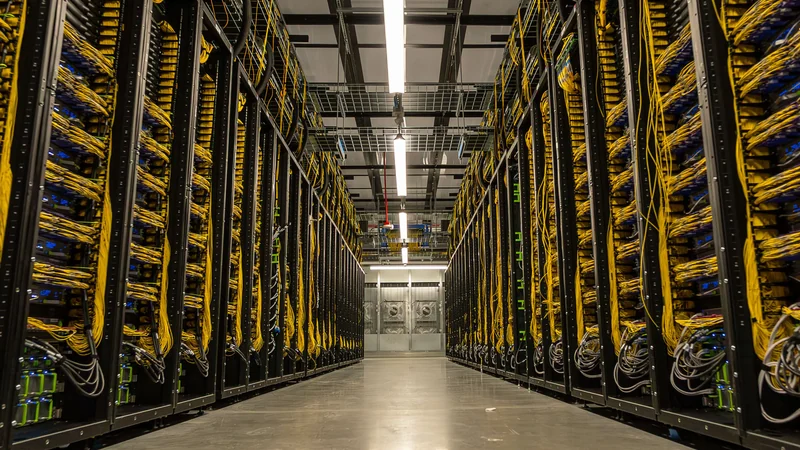
Meta Unveils Next-Gen AI Networking at OCP Summit 2026
Meta shared its next-generation open networking infrastructure at the 2026 Open Compute Project Global Summit, introducing liquid-cooled hardware, advanced scale-out fabrics, and open-source transport protocols to power massive AI workloads.
 Radwan AbdulhadiEditor and technology writer
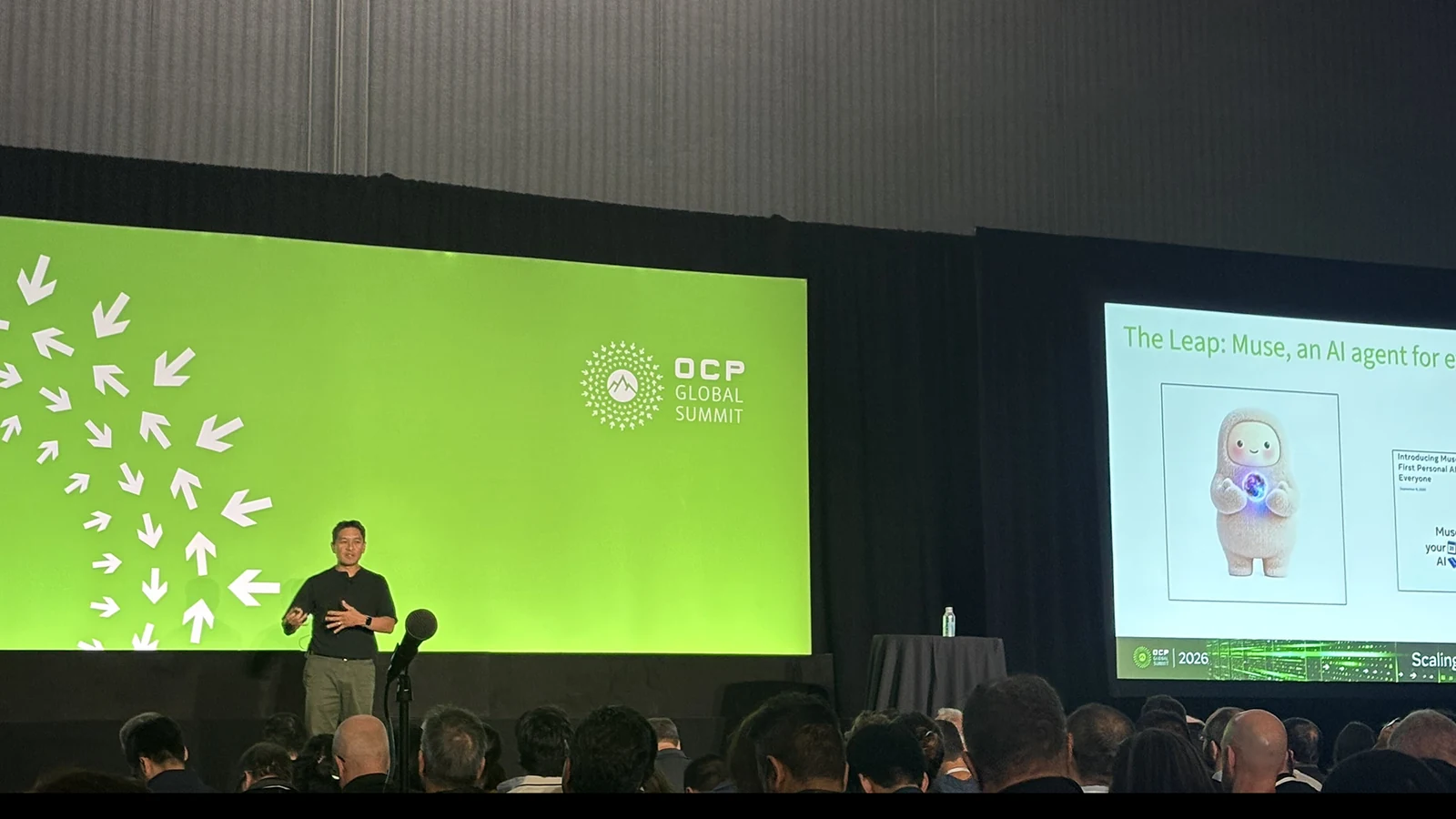
Powering AI Infrastructure with Open Innovations
At the 2026 Open Compute Project Global Summit, Meta is sharing the next generation of open networking infrastructure designed to meet the demands of modern artificial intelligence workloads. Building on years of open-source collaboration, the company detailed advancements spanning scale-up, scale-out, and scale-across networks to support large language models and other compute-intensive applications. Throughout the ongoing AI revolution, Meta has pushed the boundaries of what is possible in data center networking, noting that these developments directly support its latest workloads such as the Muse personal AI agent built for everyone.
The announcements build upon previous milestones shared by the company. At OCP 2025, Meta introduced its latest AI scale-out fabrics and helped drive the creation of the Ethernet for Scale-Up Networking initiative.
The 102.4T Generation: Liquid-Cooled Networking
As AI clusters grow toward gigawatt scale, network switches must deliver significantly more bandwidth while operating efficiently within dense power and cooling envelopes. To address this, Meta revealed the IcePack rack, which serves as the company's first-generation liquid-cooled network rack based on OCP's ORV3-HPRv1 rack standard.
Inside each IcePack rack sit IceCube switch blades, which are 102.4-Tbps fabric switches delivering 128×800G non-blocking switching capacity. The IceCube platform comes in variants built on either Broadcom's Tomahawk6C switch ASIC or NVIDIA's Spectrum-6 Switch ASIC. Both variants run Meta's open-source FBOSS network operating system leveraging the OCP Switch Abstraction Interface, representing a twofold bandwidth increase over previous 51.2T platforms.
Flattened Planar Fabric for Resilient GPU Clusters
To handle massive scale-out requirements, Meta introduced the Flattened Planar Fabric (FPF). This multiplane backend scale-out fabric fundamentally changes how GPUs connect to the network and how the network control plane operates. Instead of traditional single-plane architectures, FPF allows each GPU to connect via eight independent 100G links to eight different switches across distinct network planes.
This design enables larger non-blocking GPU clusters, transitions the network topology from a three-tier Clos to a two-tier Clos fabric to reduce hops and latency, shifts load balancing to the NIC hardware level, and introduces a combined control plane for improved fault tolerance. Meta collaborated closely with NVIDIA during development to ensure high performance even under various failure scenarios, and the companies are working with cloud partners to help standardize multiplane fabric implementations.
Scale-Across and Transport Protocols
Addressing the challenges of multi-site clusters spanning buildings, campuses, and regions, Meta highlighted its petabit-scale backend aggregation super-spine. Additionally, the company detailed how it uses SRv6 regional backbones built using FBOSS and SAI to manage long-distance traffic flows.
To facilitate reliable communication across these environments, Meta showcased MetaRoCE, its open-source RDMA transport protocol designed specifically for AI networks. Furthermore, Meta, Microsoft, and Alibaba co-led the launch of the Open Switch Platform Architecture initiative within OCP, submitting version 1.0 of the specification to standardize the switch platform layer.
Sources
- Meta EngineeringOCP Summit 2026: Powering AI with Open Innovations in Scale-Up, Scale-Out, and Scale-Across Networks
Continue chronologically


Related entity coverage
Related stories
Meta Unveils Open AI Networking Innovations at OCP Summit
Meta shared open networking innovations at the 2026 OCP Global Summit, supporting AI models like Muse Wonder and its Prometheus cluster.

NVIDIA Opens Vera Rubin Architecture to Scale AI Factories
NVIDIA unveiled key rack and compute tray designs for the Vera Rubin architecture at the OCP Global Summit to help scale global AI factories.
Microsoft Unveils Agentic AI Features and Surface Laptop Ultra
Microsoft detailed its agentic AI vision and showcased the Surface Laptop Ultra powered by NVIDIA's RTX Spark chip at a hardware and software event.

Meta Unveils Prometheus Gigawatt-Scale AI Supercluster
Meta completes the first phase of its Prometheus gigawatt-scale supercluster in Ohio, powering frontier models with hundreds of thousands of GPUs.