Meta Unveils Prometheus Gigawatt-Scale AI Supercluster
Meta has detailed the infrastructure behind its latest foundational models, revealing the completion of the first phase of Prometheus, a gigawatt-scale supercluster located in New Albany, Ohio.
 Radwan AbdulhadiEditor and technology writer
Transforming Data Center Infrastructure in Ohio
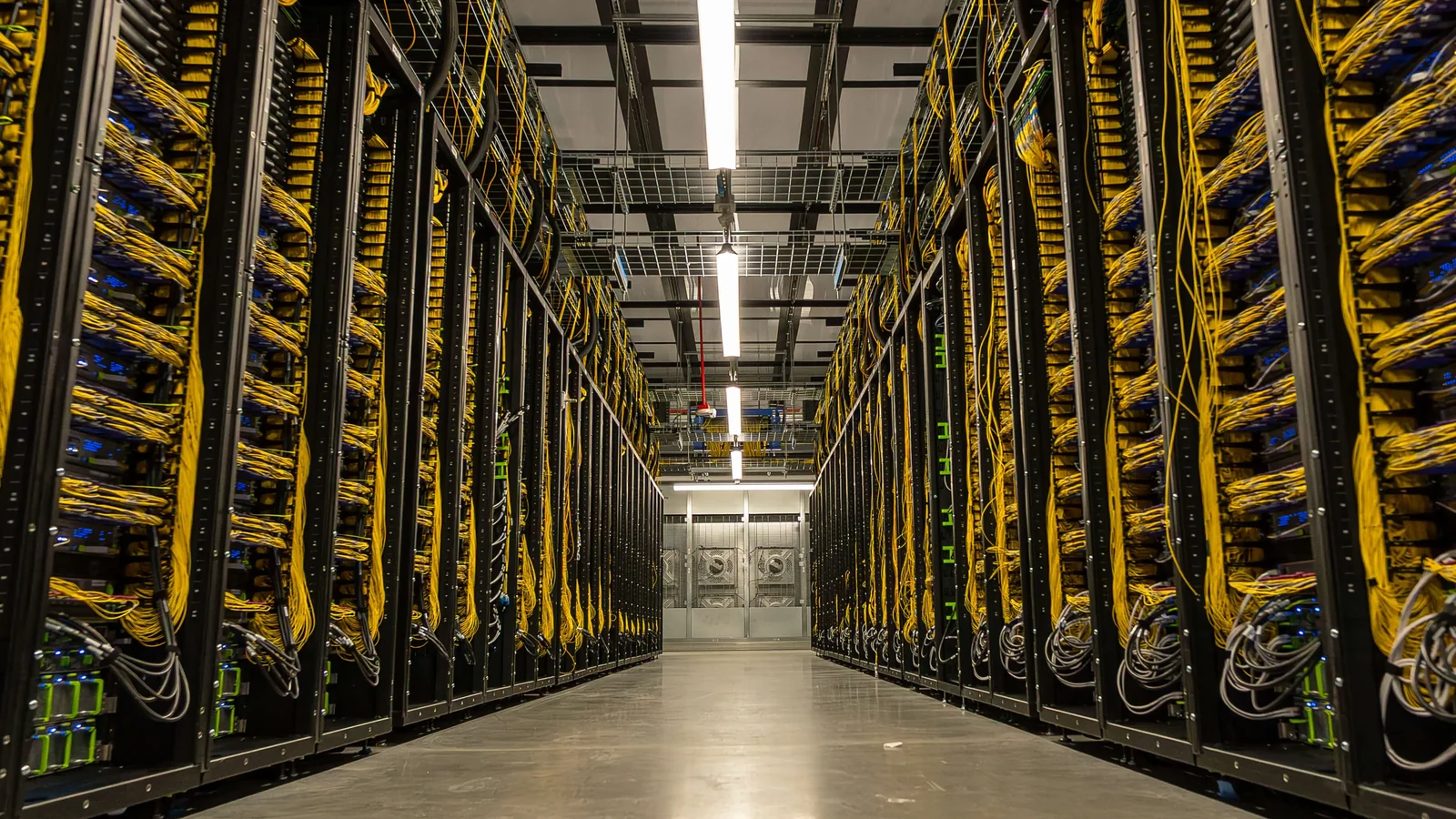
Meta is undertaking its most ambitious artificial intelligence infrastructure project to date in New Albany, Ohio, transforming a conventional data center site into a hub for training frontier models. Two years ago, the site handled traditional web traffic, but advancements in hardware, networking, and building design have converted it into the home of Prometheus, [our gigawatt-scale supercluster,](https://www.youtube.com/watch?v=lvieN3sJTUk) which features closed-loop liquid cooling to operate efficiently.
The first phase of the supercluster has already been completed. This initial capacity was utilized to train Meta's Muse foundational models, including the Muse Wonder models, which deliver state-of-the-art performance on personal and professional agentic tasks.
Scaling Toward One Million Distributed GPUs
Prometheus comprises an array of hundreds of thousands of GPUs spread across multiple interconnected buildings, encompassing traditional data centers, AI-optimized structures, and rapid deployment facilities. These facilities are tightly interconnected by miles of fiber optic cables to function as a single massive machine.
This infrastructure allows Meta to pursue larger models and significantly longer context windows than were previously practical. At its full operational scale, Prometheus is targeted to comprise roughly 1 million distributed GPUs all operating in lockstep.
Hardware Platforms: Catalina and Clemente
The supercluster currently deploys advanced NVIDIA GPU platforms, with a third architecture based on the [Vera Rubin NVL72](https://www.nvidia.com/en-us/data-center/vera-rubin-nvl72/) arriving soon. The initial platform, known as Catalina, leverages the NVIDIA GB200 NVL72 utilizing an Ariel two-rack configuration. In this setup, 36 GPUs per rack connect via NVLink to establish a unified 72-GPU domain.
The Catalina platform builds upon previous architectures like [Grand Teton H100](https://engineering.fb.com/2024/10/15/data-infrastructure/metas-open-ai-hardware-vision/) by offering substantial improvements in raw compute power and memory capacity, leveraging Meta's Open Rack V3 high-power rack structure.
In addition to Catalina, Meta employs the Clemente platform, which transitions to the NVIDIA GB300 NVL72. This subsequent platform enhances High Bandwidth Memory capacity per GPU by 50 percent, raising it from 192 GB to 288 GB while roughly doubling attention acceleration and packing the entire 72-GPU domain into a single rack.
High Performance Goodput and Training Efficiency
Large-scale AI training requires optimal performance across all components because an issue on a single host can slow down or halt an entire job. By focusing heavily on system stability and reliability, Meta achieved more than 85 percent goodput for pre-training runs and over 90 percent goodput for reinforcement learning runs of [Muse Wonder](https://research.meta.ai/blog/muse-wonder).
During these training runs, the infrastructure achieved an overall wall-clock mean time between interruptions of approximately 47,000 GPU hours. Subsequent firmware and system adjustments across the fleet have since increased this metric to more than 54,000 GPU hours.
Dedicated Back-End Network Architecture
Unlike traditional web services where data center traffic patterns are less demanding, large-scale AI training requires high bandwidth and tight synchronization across servers. Meta incorporated a dedicated Ethernet-based Back-End network several years ago, enabling direct GPU-to-GPU communication both within and across individual data center buildings.
This network hierarchy matches the data-parallel partitioning of large pre-training workloads. By closely collaborating with Meta Superintelligence Labs, engineers ensure that communication algorithms and traffic patterns minimize network bottlenecks, keeping the massive array of GPUs continuously active.
Sources
- Meta EngineeringInside Prometheus: Meta’s Journey to a Gigawatt-Scale Supercluster
Continue chronologically
Related entity coverage
Related stories
Meta Unveils Open AI Networking Innovations at OCP Summit
Meta shared open networking innovations at the 2026 OCP Global Summit, supporting AI models like Muse Wonder and its Prometheus cluster.
Meta Unveils Next-Gen AI Networking at OCP Summit 2026
At the 2026 Open Compute Project Global Summit, Meta showcased open networking innovations including the IcePack liquid-cooled rack and FPF fabric architecture.
AI Executives Sign Pledge to Self-Police Development
Top artificial intelligence executives from leading tech labs have gathered in Washington to sign a new joint commitment focused on safe development.

Meta Reportedly Builds Humanoid Robot Prototype for Chores
Meta has reportedly built a humanoid robot prototype codenamed Max designed for household chores, with work already underway on a second version.