
NVIDIA Opens Vera Rubin Architecture to Scale AI Factories
At the Open Compute Project Global Summit, NVIDIA announced major architectural contributions and partnerships aimed at scaling next-generation AI factories globally.
 Radwan AbdulhadiEditor and technology writer
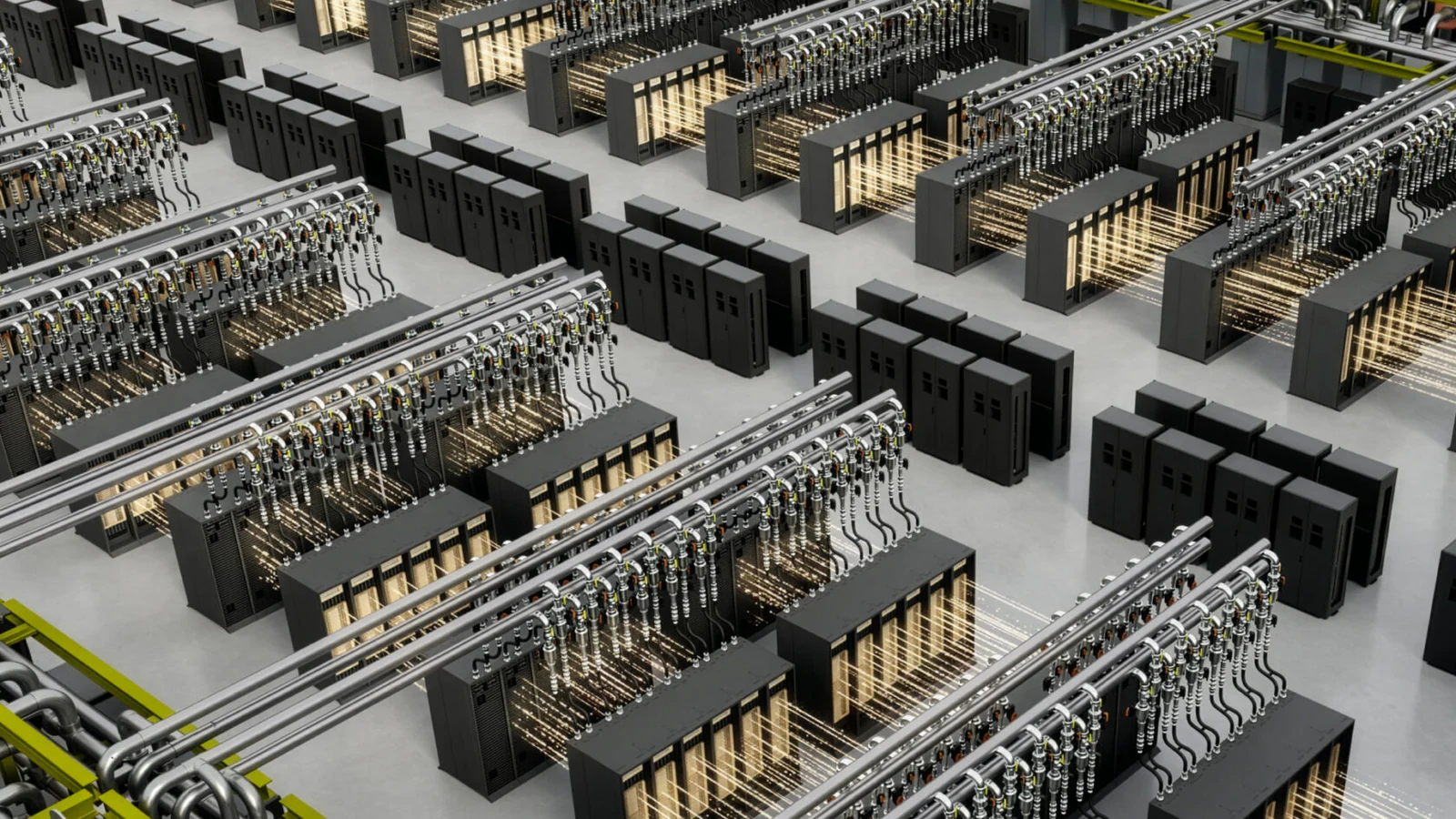
Expanding Open Standards for Gigawatt-Scale AI Factories
As modern AI factories transition from megawatts to gigawatts, building advanced infrastructure requires more than raw computing power alone. To address this scaling challenge, NVIDIA announced new partnerships and open contributions at the Open Compute Project (OCP) Global Summit held at the San Jose McEnery Convention Center. The initiative focuses on establishing a common foundation for next-generation AI infrastructure, helping system builders scale faster, more efficiently, and more reliably.
Ian Buck, vice president of hyperscale and high-performance computing at NVIDIA, emphasized to the audience that open infrastructure is becoming a critical ingredient for scaling AI factories worldwide. The announcements spotlighted how NVIDIA's approach to extreme codesign, when combined with open standards, accelerates deployments, enhances power efficiency, and drives higher tokens-per-watt performance across the ecosystem.
Vera Rubin Architecture and MGX Open Contributions
A central announcement at the summit was NVIDIA's contribution of key Vera Rubin rack and compute tray designs to OCP through the open NVIDIA MGX architecture. This gives system builders a shared foundation for developing next-generation infrastructure. More details on these technologies can be found directly through the NVIDIA Vera Rubin specifications.
NVIDIA joined industry leaders in contributing to the third-generation MGX AI data center reference design through OCP's Open DC Initiative. Combined with open liquid-cooling technologies such as MQD and MQDB, this effort transforms proven AI factory layouts into industry standards that other manufacturers can adopt and scale. The updated MGX 1.2 specification extends the open architecture for AI factories with rack-scale blind-mate liquid cooling, interoperable interconnect infrastructure, and a liquid-cooled 5,000A busbar designed for higher-power systems.
Furthermore, the Vera CPU rack design specification extends the open architecture beyond accelerated computing to provide a purpose-built platform for the agentic AI era. While the Vera Rubin NVL72 serves large-scale training and inference, the NVIDIA Vera CPU rack supports tool calling, orchestration, and sandboxed execution, helping AI agents interact smoothly with applications, data, and services in real time.
New Open Source Software for DSX AI Factories
NVIDIA expanded its software ecosystem at the summit by launching new open source components for the NVIDIA DSX AI factory platform. The DSX platform unifies computing, networking, power, cooling, facilities, and software so that AI factories operate as a single optimized system, maximizing AI output within tight infrastructure constraints. Developers looking to explore these tools can visit the DSX AI Factory Github page.
The newly introduced software components span several vital areas of infrastructure management and deployment:
NVIDIA Config Manager automates switch configurations at scale, allowing customers to deploy, validate, and maintain consistent network fabrics with minimal manual intervention. Additionally, the NVIDIA Cluster Readiness Engine helps eliminate costly job crashes by stress-testing GPU clusters with real workload simulations before training begins.
Rounding out the software releases are the NVIDIA Rack Management Service, which offers hardware abstraction and operations solutions to treat racks as first-class units, and the Cluster API Provider for NVIDIA Infrastructure Controller, which accelerates bare-metal deployment and tenant onboarding to turn raw hardware into production-ready clusters in hours.
Collaborative Open Standards Across the Industry
Beyond hardware and software contributions, NVIDIA and major hyperscalers published open standards to establish a common baseline for next-generation AI facilities. Alongside AMD, Google, and Meta, NVIDIA helped publish the Open Data Center Specification v0.7, creating a unified blueprint for facility design covering power architecture, cooling infrastructure, and physical layout.
Furthermore, an OCP Grid Resilience Specification published by Google, Meta, Microsoft, and NVIDIA established guidelines for how large-scale AI infrastructure should behave during utility grid disturbances. The standard ensures systems stay connected, respond automatically, and restore to near-full load in under two seconds. Additional updates on these initiatives can be tracked via news at OCP.
Other notable industry collaborations featured at the event included Meta and NVIDIA advancing open AI networking with Spectrum-X Ethernet SuperNIC and Spectrum-6 innovations, Visionbay introducing an 800V DC AI factory design for the Vera Rubin era, NVIDIA and Cisco launching the Ultra-Dense Small Form Factor Pluggable standard, and NVIDIA partnering with Google to announce Falcon Transport support on future networking hardware.
Sources
- NVIDIA BlogOCP Global Summit: Amid Ecosystem Adoption, NVIDIA Opens Vera Rubin Architecture to Help Scale AI Factories Worldwide
Continue chronologically

Related entity coverage
Related stories
Meta Unveils Open AI Networking Innovations at OCP Summit
Meta shared open networking innovations at the 2026 OCP Global Summit, supporting AI models like Muse Wonder and its Prometheus cluster.

Meta Unveils Next-Gen AI Networking at OCP Summit 2026
At the 2026 Open Compute Project Global Summit, Meta showcased open networking innovations including the IcePack liquid-cooled rack and FPF fabric architecture.
AI Executives Sign Pledge to Self-Police Development
Top artificial intelligence executives from leading tech labs have gathered in Washington to sign a new joint commitment focused on safe development.

Microsoft Unveils Third-Generation Maia 300 AI Chip
Microsoft announces its third-generation Maia 300 in-house AI chip, designed to improve cloud efficiency and reduce reliance on Nvidia GPUs.