MIT Engineers Build Soft 3D Shape-Sensing Skin
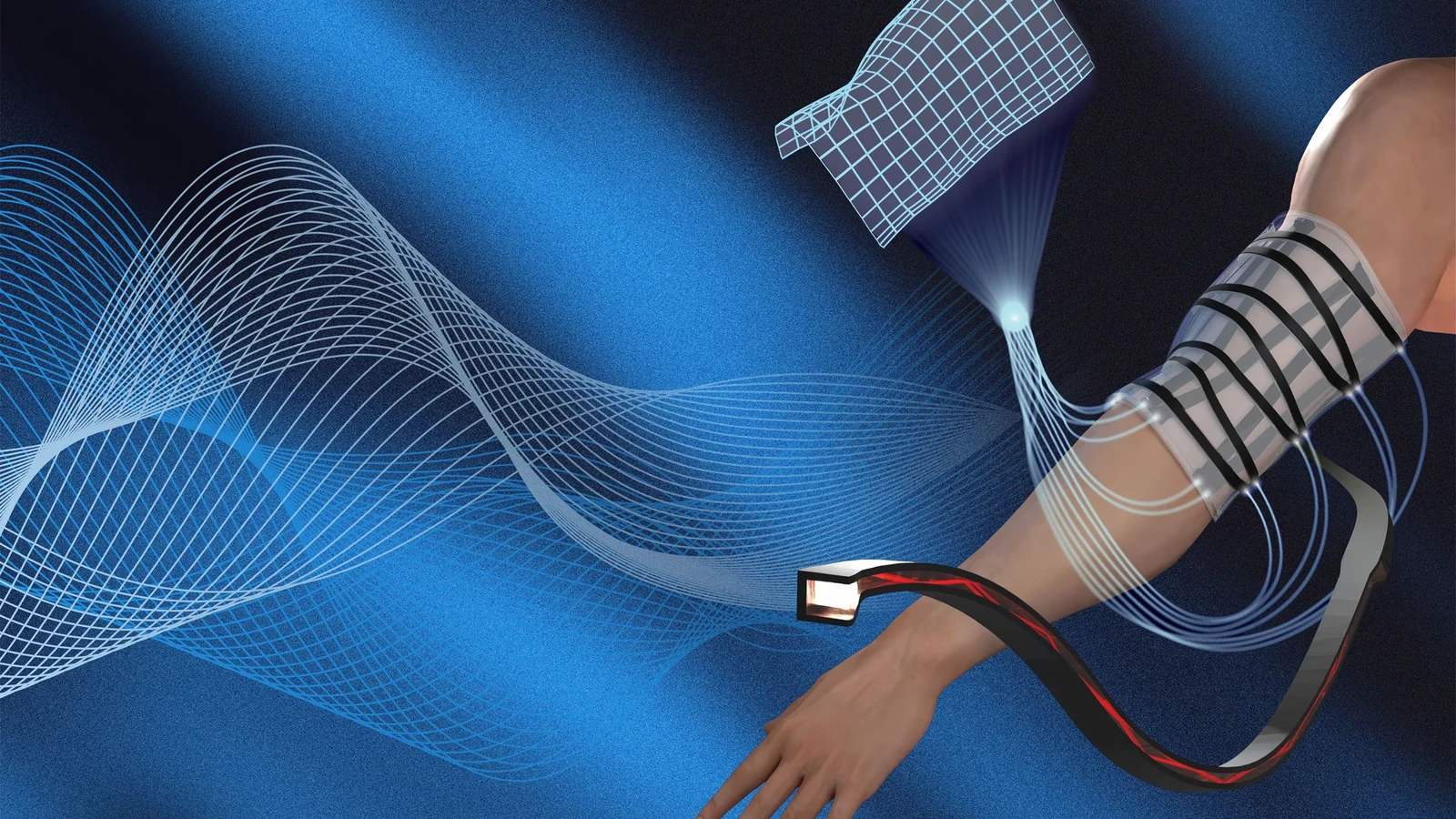
Researchers at MIT have engineered a flexible shape-sensing silicone sheet that tracks its own 3D movement and touch with sub-half-centimeter error using embedded optical waveguides.
 Radwan AbdulhadiEditor and technology writer
Introduction to MIT's Shape-Sensing Skin
Engineers at the Massachusetts Institute of Technology have constructed a soft, wearable shape-sensing sheet featuring self-tracking movement capabilities. As reported by <a href="https://news.mit.edu/2026/shape-sensing-sheet-digitally-tracks-movement-bends-twists-1008">MIT News</a>, this technology could offer new control schemes and monitoring tools for gaming, virtual reality, and physical therapy applications.
The details of the innovation were recently outlined in a research paper titled “Toward fully soft and multifunctional shape sensing via optical waveguide arrays,” published in Advanced Intelligent Systems. According to the study, the system relies on arrays of optical waveguides that respond to bi-directional bending to accurately discern complex shapes.
How the Soft Optical Waveguides Work
Traditional optical fibers consist of a transparent core within a light-trapping cladding, where bending typically reduces the light reaching the far end. The team led by <a href="https://www.tomshardware.com/virtual-reality/mit-engineers-build-soft-3d-shape-sensing-skin-for-gaming-and-vr-tracks-3d-movement-and-touch-with-sub-half-centimeter-error">Tom's Hardware</a> notes that MIT departed from standard designs by utilizing a flexible rubber core paired with black-dyed cladding.
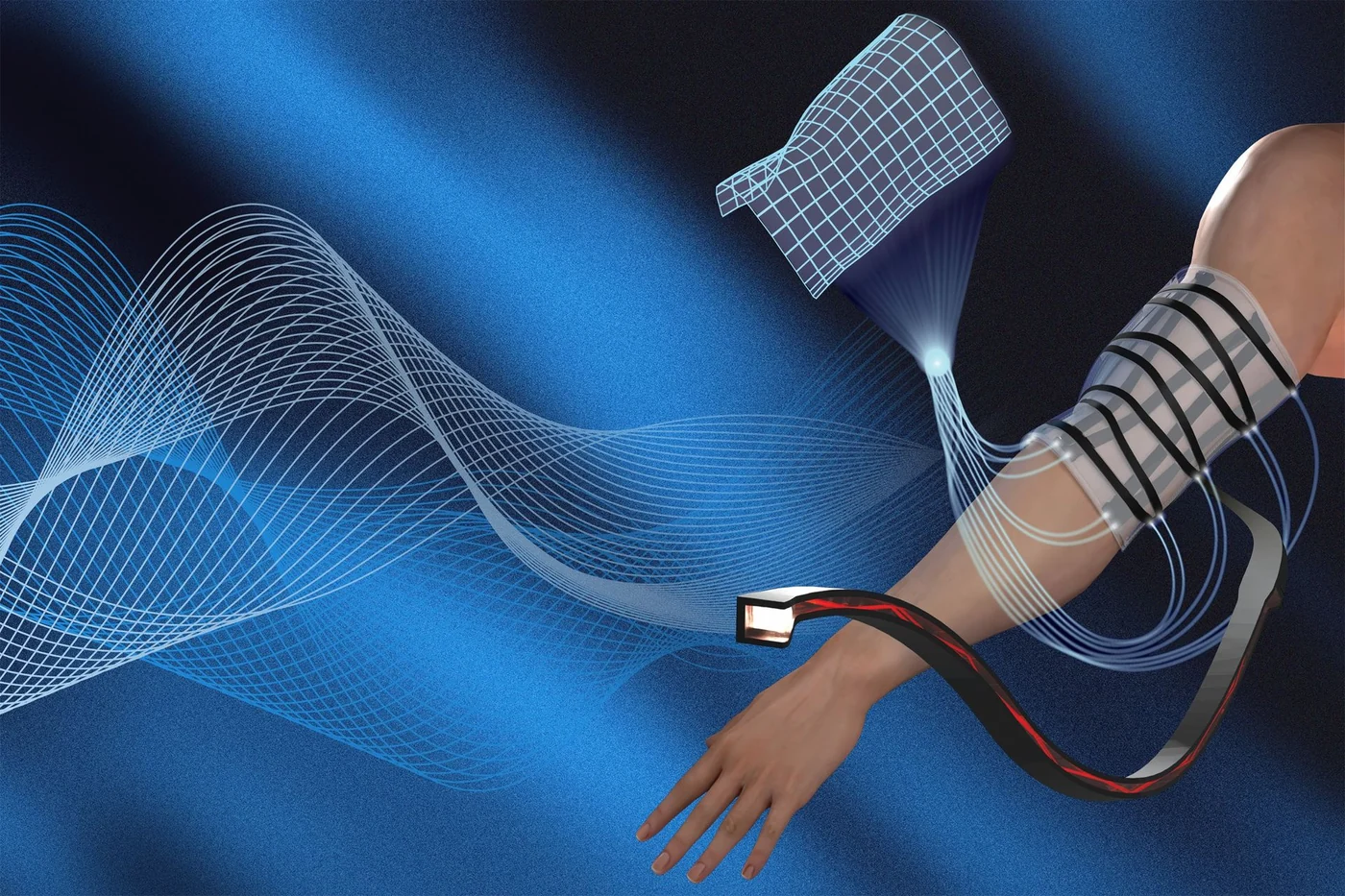
By intentionally roughening one side of the fiber, bending toward or away from that side causes distinct, measurable amounts of light loss. This precise mechanical design achieves directional sensing, which is integrated directly into a soft silicone sheet without making the entire surface stretchable.
Design and Data Processing Architecture
The current prototype measures 16 by 16 by 0.5 centimeters and embeds 14 waveguides, each 160 millimeters long, organized into two layers of seven in a zig-zag configuration. An LED sits at one end of each fiber while a light sensor operates at the other end.
Data collection is handled by an external circuit board featuring analog-to-digital converters that communicate with microcontrollers via I2C protocols. A general-purpose MATLAB algorithm handles data logging, sensor sampling, and plotting to reconstruct the full 3D shape approximately three times every second.
Testing, Accuracy, and Damage Resilience
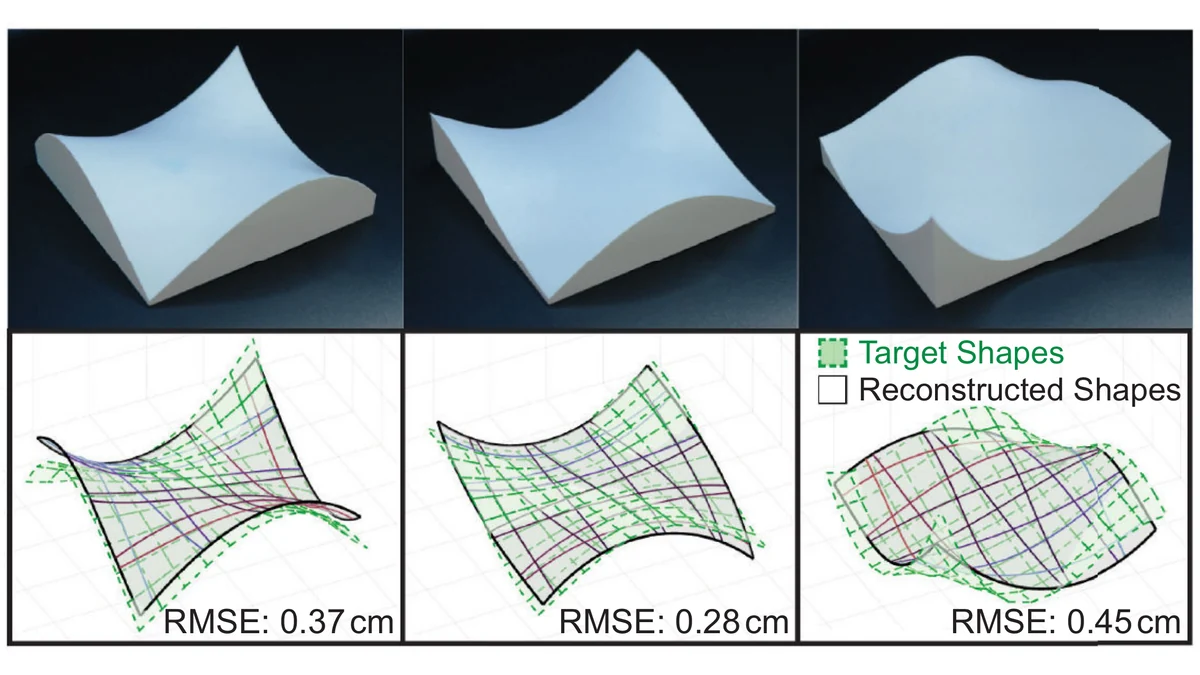
To evaluate accuracy, the prototype sheet was tested over three separate 3D-printed molds with known geometries. The resulting root-mean-square distance metrics between the real and reconstructed surfaces measured 0.37, 0.28, and 0.45 centimeters, placing the error comfortably below half a centimeter.
The embedded sensor layout also demonstrated notable resilience against physical damage. Simulations and physical checks showed that even if a few fibers are cut or disconnected, the remaining waveguides can still cooperate to successfully reconstruct the overall shape of the sheet.
Future Applications and Roadmap
Researchers envision several practical use cases for the technology. Kaitlyn Becker, an MIT assistant professor of mechanical engineering and co-author of the project, stated that the team hopes to build tools that allow physical therapists to track and quantify patient recovery progress over time.
Additional applications include mirroring motion in virtual reality environments, teleoperating robots, and outfitting soft robots with tactile feedback. Moving forward, the team plans to scale down the fiber thickness from the current 1 millimeter down to tens of micrometers, pursue stretchable electronics, and develop faster shape-reconstruction software.
Sources
- Tom's HardwareMIT engineers build soft 3D shape-sensing skin for gaming and VR
Continue chronologically


Related stories
OpenAI and Anthropic Claim AI Refuted Key Math Hypothesis
OpenAI and Anthropic claim their AI models refuted the Exponential Time Hypothesis, prompting computer scientists to evaluate the breakthrough.

MIT Researchers Maroon 13 AI Agents on a Virtual Desert Island
MIT researchers left 13 AI agents on a virtual island with no specific tasks. The resulting play led to unexpected discoveries and better job performance.

Tom's Hardware Details Vera CPUs and Agentic AI Benchmarks
Explore the latest Tom's Hardware coverage including Nvidia Vera CPUs on Oracle clusters, agentic AI benchmarks, and LLM primers.

Deepseek Unveils V4.1 Flash 1017 AI Model
Deepseek has upgraded its V4.1 Flash open-weight AI model, delivering lower running costs and high efficiency alongside notable hallucination challenges.