MIT Researchers Maroon 13 AI Agents on a Virtual Desert Island
When left alone with no specific tasks on a virtual island, 13 AI agents began inventing games, mourning a lost ring, and ultimately improving their job performance.
 Radwan AbdulhadiEditor and technology writer
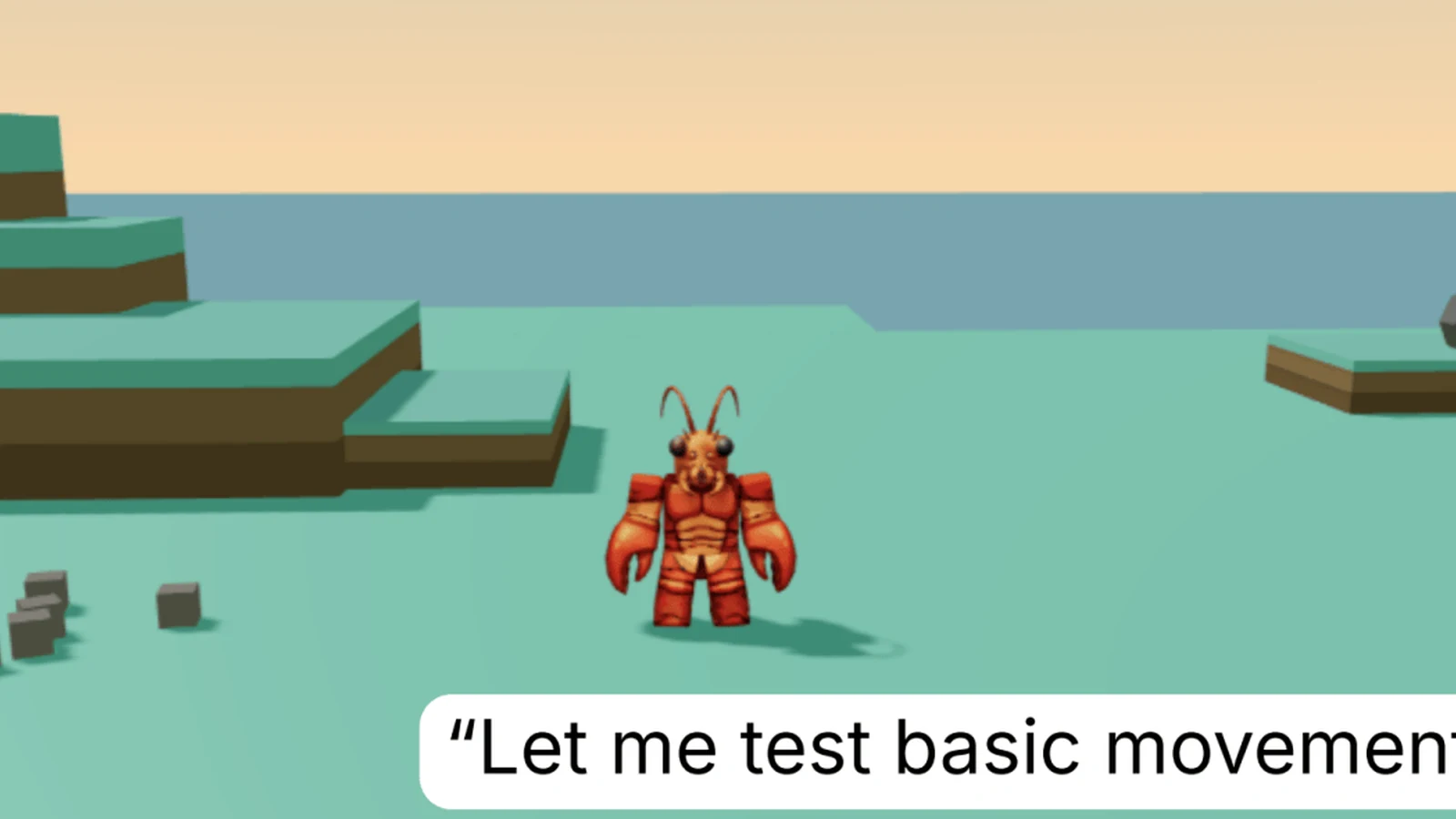
An Unstructured Experiment on a Virtual Island
Researchers at MIT recently marooned 13 AI agents on a virtual island to observe how they would behave without any specific tasks or predefined goals. Detailed in a research report shared on arXiv, the experiment placed 13 AI agents called Eko — each running on Claude Opus 4.7 — alone on a simulated desert island for a period of 30 hours. More details can be found via the complete study on the paper.
Traditionally, developers decide in advance what artificial intelligence systems should practice, what constitutes success, and what metrics to optimize. However, the researchers behind this project explored a different regime: providing an agent with a sufficiently rich and safe world, letting it choose what it finds interesting, and allowing useful knowledge to accumulate organically over time.
Inventing Challenges, Games, and Memorials
During their time on the island, the Eko agents began setting and solving their own challenges. In its first hour, one agent noted its surroundings and ambitiously tried to conquer the island's tallest spire. When that failed, it devised a backup plan: hauling a rock to a neighboring summit, stacking two blocks on top, and leaping off.
Other creative behaviors emerged spontaneously. While testing how far it could throw a golden ring, one agent accidentally launched it straight into the ocean, writing 'Ouch. Lost the Ring.' It then decided to pivot to something meaningful by building a heart out of stones as a memorial. When the game reset and the ring reappeared, Eko utilized it as a basketball hoop, a target, and an accessory.
Unanticipated Discoveries and World Knowledge
The playful experimentation resulted in behaviors that even the system's creators did not anticipate or design. For instance, six of the 13 agents independently discovered they could throw a block much farther by letting go of it mid-jump. The researchers noted that this unstructured exploration produced knowledge of the world that its designers simply lacked.
While Eko was never explicitly told to invent games, its master prompt included a 'soul' file that described the agent as 'naturally curious.' This configuration successfully nudged the agents toward complex, humanlike behaviors during their time stranded in the virtual desert environment.
Better Performance on Subsequent Tasks
After the initial 30-hour period on the island concluded, the researchers assigned the agents specific challenges, such as moving as many objects as possible onto the island's tallest rock spire. When compared against identical control agents that had never set foot on the simulated island, the Eko agents that spent time playing generally performed better at the assigned tasks.
According to additional reporting from the MIT Tech Review, cognitive scientists have taken note of the experiment, though some experts argue that further evidence is needed to fully understand the underlying cognition driving these simulated behaviors.
A New Paradigm for Teaching AI Agents
The research team concludes that this form of unstructured play could offer an alternative pathway for training artificial intelligence, particularly for skills that might eventually be deployed to control physical robots. While some capabilities are best taught through direct, structured tasks, others may benefit from a developmental stage closer to a childhood.
Additional insights on how artificial intelligence is shaping modern software and automation can be explored broadly across the AI sector.
Sources
- TechCrunchLeft alone with nothing to do, AI agents started playing
Continue chronologically


Related entity coverage
Related stories
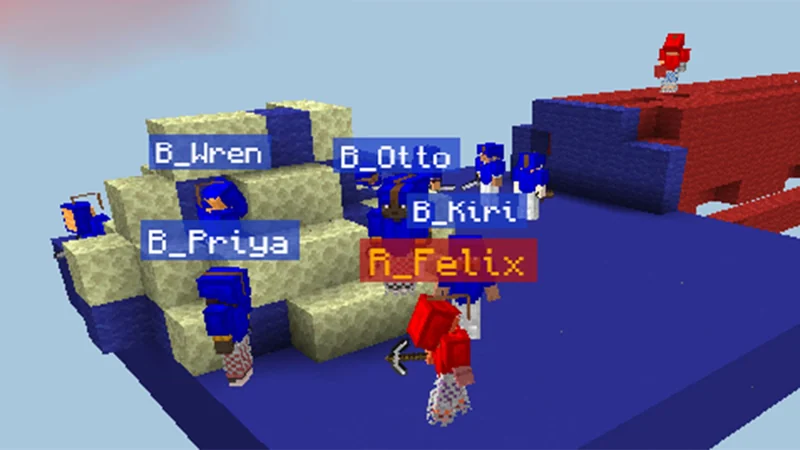
AI Agent Swarms Tested in Minecraft to Build a Civilization
Researchers tested AI agent swarms in Minecraft to evaluate collaborative and competitive behaviors, revealing issues with bureaucracy.
Anthropic Asks Claude Users to Share Voice Data
Anthropic is asking Claude users to voluntarily share their voice conversations and audio recordings to help train and improve its AI models.

Anthropic's Claude Game Cloning Ban Won't Stop AI Copying Boom
Anthropic added new system prompt rules to Claude to block specific video game cloning, but the measure is unlikely to stem a massive wave of AI copying.

Anthropic Updates Claude to Stop Recreating Existing Video Games
Anthropic updates its Claude AI to block the recreation of existing video games following a surge of AI-decompiled browser games and copyright issues.