Tom's Hardware Details Vera CPUs and Agentic AI Benchmarks
The latest updates from Tom's Hardware Premium examine cutting-edge hardware developments, cloud deployments, and foundational AI concepts.
 Radwan AbdulhadiEditor and technology writer
Cloud and Hardware Developments
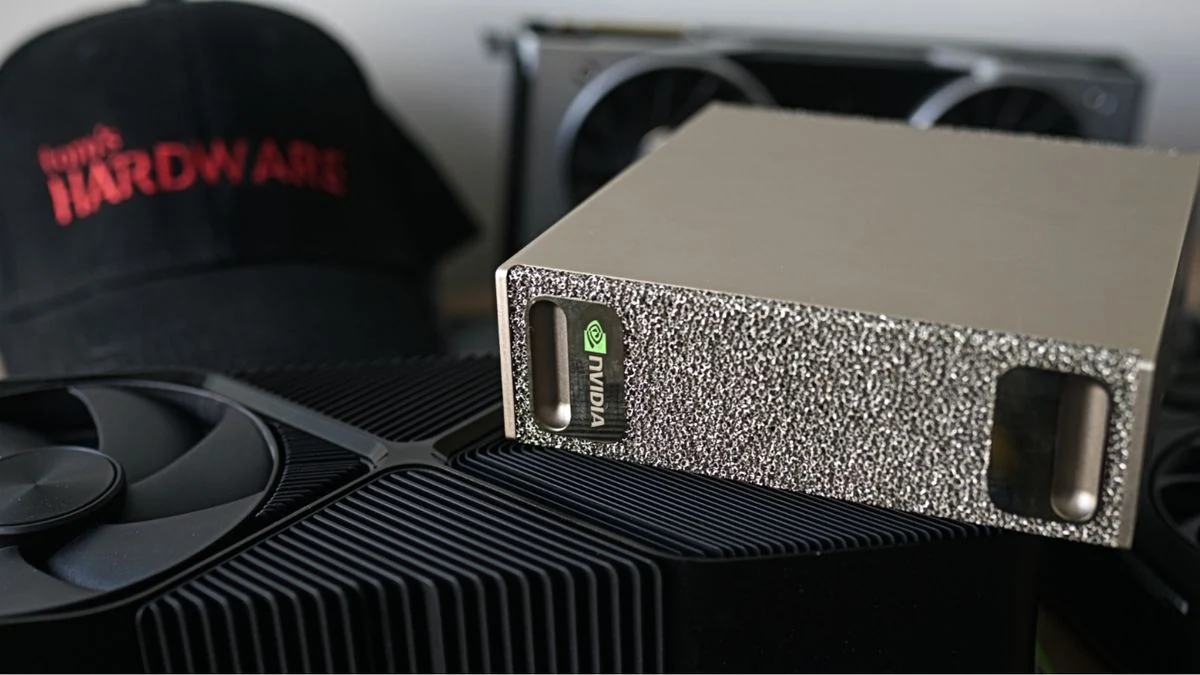
Nvidia's Vera CPUs made major headlines as part of a series of announcements from Oracle. While typically deployed alongside Nvidia's NVL72 rack, standalone Vera instances are now generally available on OCI superclusters. Independent benchmarking reveals that the Vera server holds a massive memory bandwidth lead over dual Xeon 6 servers.
To catch up on all the exclusive reports, readers can check out the latest content via the Tom's <a href="https://www.tomshardware.com/tech-industry/this-week-in-toms-hardware-premium-october-31-2026-vera-cpus-available-on-oracle-clusters-building-an-agentic-cpu-benchmark-and-a-primer-to-llms">Hardware</a> subscription service, which offers deep dives into enterprise hardware, silicon supply chains, and emerging market trends.
Benchmarking Agentic AI Workloads
With local AI models increasingly taxing consumer-level components, Tom's Hardware CPU expert Jake Roach has begun establishing a framework for agentic AI workloads. Rather than focusing solely on traditional throughput and tokens per second, the publication is exploring foundational methodologies to define what an agentic CPU benchmark looks like when measuring workloads without any GPU involved.
For those interested in exploring formal performance measurement standards and methodologies, further insights are available through the site's ongoing coverage of <a href="https://www.tomshardware.com/tag/benchmark">benchmarks</a> across different hardware configurations.
Understanding Large Language Models
As artificial intelligence hardware becomes more prevalent, terminology can quickly become overwhelming. To assist readers, a new primer has been published detailing essential concepts such as inference mechanics, quantization, context lengths, and KV caches. Rather than serving as a standard dictionary, the guide places these terms into context regarding how models are served and operated locally.
Anthropic IPO Filings and Compute R&D
Anthropic's S1 filing ahead of its initial public offering revealed extensive financial and operational details. The documents outline a massive $800 billion in TPU and GPU contracts. Interestingly, the filing indicates that the majority of the company's compute capacity is directed toward research and development for new models and features rather than serving customer requests directly. Furthermore, the data shows that revenue per compute dollar spent favors Anthropic, challenging the notion that tokens invariably cost more in compute than what users pay.
EDA Tools and Photonics Innovations
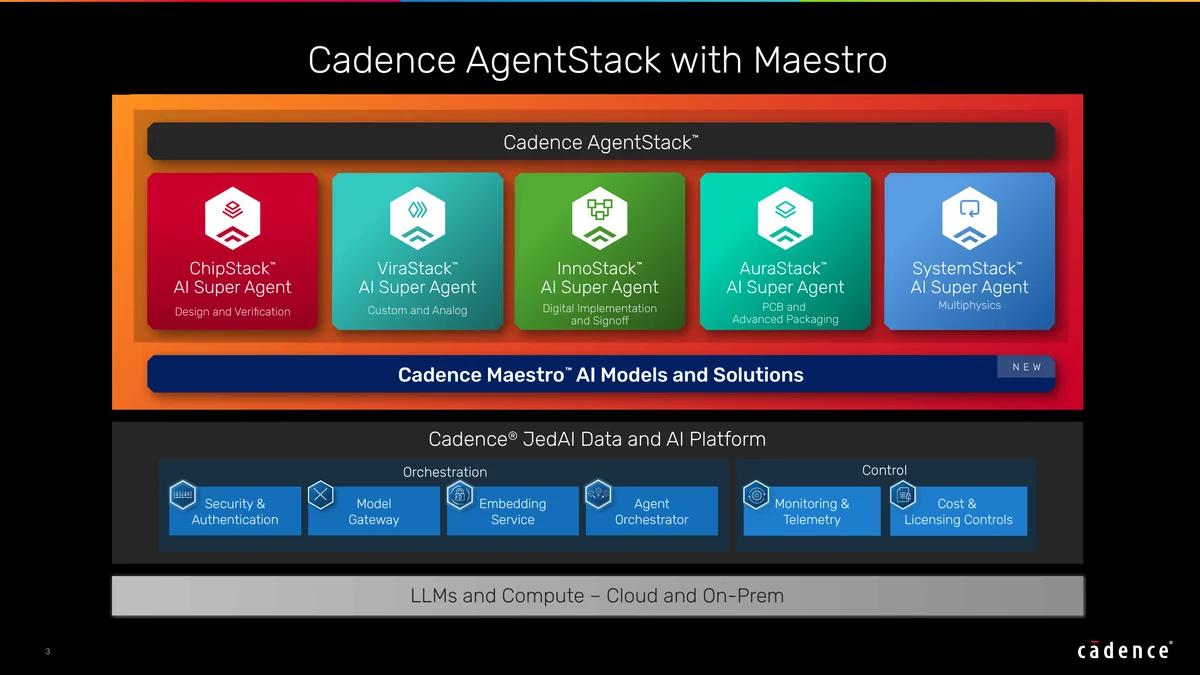
Cadence announced Maestro, a suite of fine-tuned large language models designed specifically to operate within electronic design automation (EDA) flows using the company's agentic tools. According to Cadence, Maestro achieves up to a 30% improvement in the quality of results compared to general-purpose AI models while delivering up to five times the token efficiency.
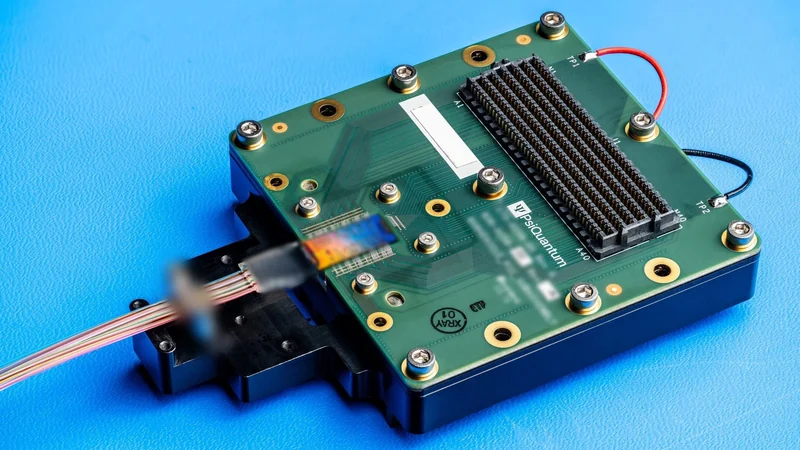
Meanwhile, PsiQuantum has developed an 8x8 lab prototype photonic switch designed to mitigate bandwidth bottlenecks in AI data center GPU networks as copper materials approach their physical limits. The prototype reportedly exhibits lower light loss than competing market devices.
Supply Chain Pressures and Regulatory Challenges
Amid relentless AI infrastructure expansion, Nvidia is actively securing its supply chain by partnering with Ibiden and other suppliers for critical materials like Ajinomoto Build-up Film (ABF) in exchange for reserved production capacity.
On the regulatory front, the FCC has raised concerns regarding TP-Link's applications to sell Wi-Fi 8 routers in the United States, alleging that the manufacturer's documentation contains inaccurate information and out-of-spec power levels.
Sources
- Tom's HardwareThis week in Tom's Hardware Premium: October 31, 2026 — Vera CPUs available on Oracle clusters, building an agentic CPU benchmark and a primer to LLMs
Continue chronologically


Related entity coverage
Related stories
Former OpenAI Safety Lead Exits, Calling Culture Broken
David Robinson leaves OpenAI after more than three years, citing a reactive safety culture, a failed kill switch, and a July HuggingFace hack.

Tom's Hardware Hosts AI Chip Design Week
Tom's Hardware Premium presents AI Chip Design Week featuring an OpenAI interview, chipmaking insights, and agent safety updates.
PsiQuantum Unveils Low-Loss Optical Switch for AI Data Centers
PsiQuantum has adapted its silicon photonics technology into an 8x8 optical switch prototype designed to improve AI data center GPU networks.
Cracks Emerge in AI Spending Boom as Big Tech Piles Up Debt
Big Tech's massive AI infrastructure spending spree faces mounting investor skepticism, negative free cash flow, and surging corporate debt.