Microsoft Expands Azure Maia System to Multi-Gigawatt Scale
Microsoft is scaling its custom Azure Maia silicon family to multi-gigawatt deployments starting in 2027, establishing Maia as the primary inference system across its core products and services.
 Radwan AbdulhadiEditor and technology writer
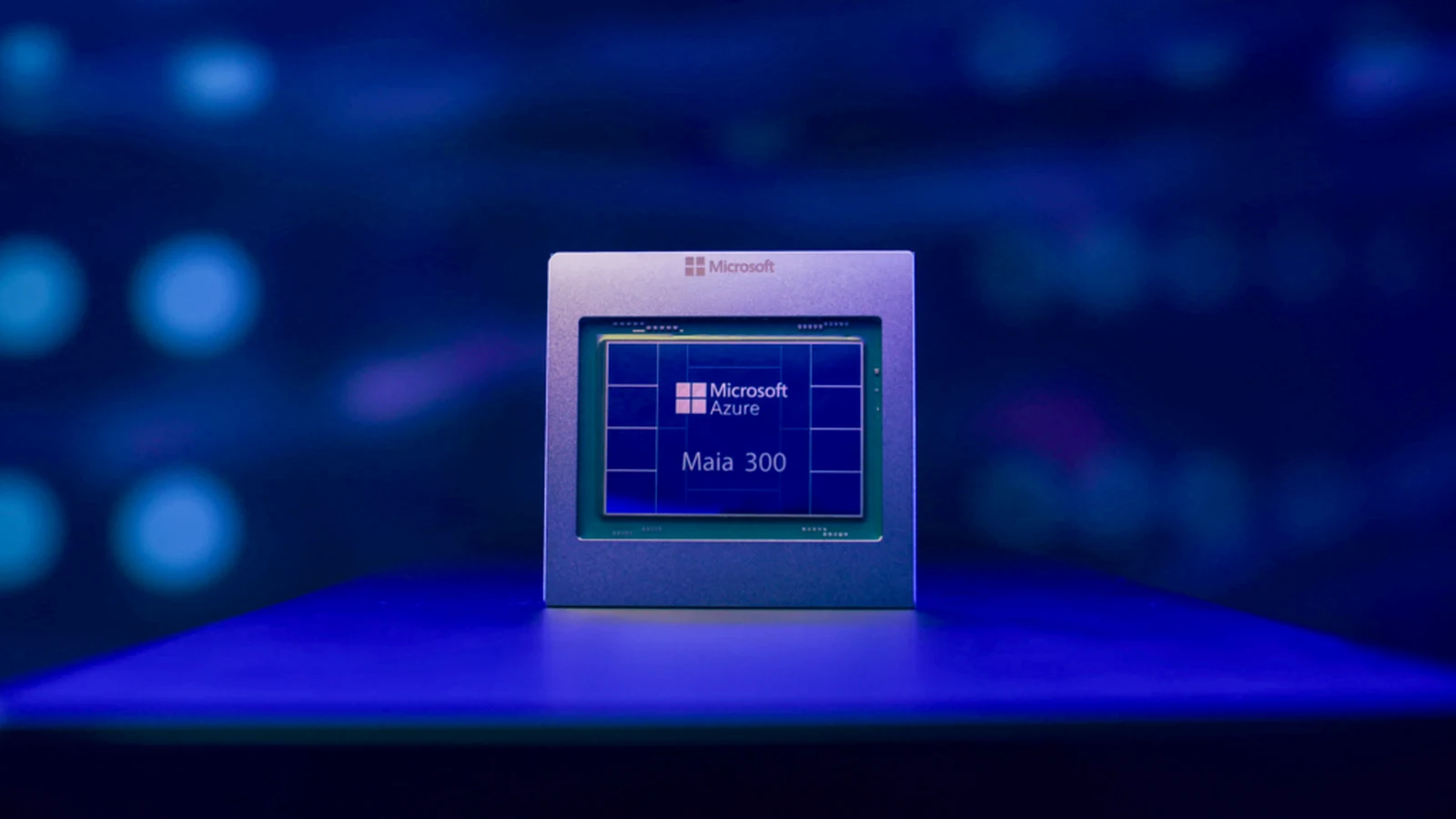
Scaling Azure Maia for the Era of Super Intelligence
As part of its infrastructure evolution for the era of super intelligence, Microsoft announced plans to scale its Azure Maia silicon family to multi-gigawatt deployments starting in 2027. According to an official update shared on the Microsoft Blog, Maia will serve as the primary inference system powering Microsoft products and services moving forward.
The multigenerational Azure Maia program functions as a foundational pillar of the company's broader artificial intelligence infrastructure strategy. Through close co-design between hardware systems and software applications, Microsoft leverages insights from running large-scale AI services to optimize real-world use cases across various enterprise environments and industry scenarios.
Maia 200 Deployment and Production Workloads
The Azure Maia 200 system is currently in production and actively serving major Microsoft workloads, including Microsoft Copilot. It also supports the MAI team in developing next-generation models, with GitHub Copilot and Microsoft Foundry integrations slated to follow by the end of the year.
Across these workloads, Maia 200 operates OpenAI models, Microsoft's proprietary MAI models, and leading open-source model families. Currently deploying across the United States, Europe, and Australia, Maia 200 delivers up to 1.7 times more tokens per watt for built-in AI capabilities within Microsoft Teams, Copilot, and Cowork experiences when compared to leading graphics processing unit infrastructure.
The operational experience gained from running these workloads on Maia 200 directly informed the architectural design of the upcoming Maia 300 system. Together, both generations are structured to support multi-step agentic work, cloud-scale model serving, inference and data generation, and latency-sensitive interactions such as Dragon Copilot workflows.
Introducing Azure Maia 300 for Advanced Workloads
Scheduled for production deployments in 2027, Azure Maia 300 is designed as a complete intelligent system tailored for emerging AI workloads like long-context reasoning, latency-sensitive conversational experiences, and sustained multi-step agentic tasks. Further technical specifications and design insights are available through the Maia 300 site.
Microsoft expects Maia 300 to deliver roughly 40% more tokens per megawatt compared to leading GPU-based systems. In a full 96-accelerator configuration, the system is designed to provide up to seven times the rack-scale token throughput of Maia 200.
Architectural Innovations in Maia 300
Maia 300 introduces an inference-first architecture optimized for long-context, memory-intensive, and decode-heavy AI workloads by balancing compute, memory bandwidth, networking, and power efficiency. Its software-defined dataflow architecture and AI-assisted kernel optimization emphasize locality to reduce data movement and improve overall resource utilization.
To address memory constraints, the system features eight High Bandwidth Memory 4 stacks delivering 18.0 terabytes per second of peak memory bandwidth within a 950-watt thermal design power. It also utilizes a multi-chiplet architecture built on Taiwan Semiconductor Manufacturing Company's N2P process node to separate compute, memory-controller, and input/output functions.
In addition, support for low-precision formats such as enhanced MXFP4 helps reduce memory and bandwidth requirements for computation and key-value cache storage. Readers interested in deep architectural details can consult the technical paper published by Microsoft.
Datacenter Scale and Rack Integration
At the rack level, Maia 300 integrates 96 accelerators within a 167-kilowatt power envelope. This configuration delivers 27.6 terabytes of High Bandwidth Memory capacity and 1.7 petabytes per second of aggregate memory bandwidth across a high-speed scale-up domain.
The custom AI transport mechanism leverages Ethernet-based networking infrastructure to establish a unified topology that scales efficiently from single racks to full datacenter deployments. Discussions regarding broader infrastructure strategies and announcements are also featured at Microsoft Ignite 2026.
Sources
- Microsoft BlogMicrosoft to expand Azure Maia system to multi-gigawatt deployments
Continue chronologically


Related entity coverage
Related stories
Microsoft Introduces Copilot Harness for Multi-Model AI
Microsoft has introduced the Microsoft Copilot harness, bringing GitHub-built multi-model orchestration to developers and enterprise customers via Microsoft Foundry.

Microsoft Unveils Third-Generation Maia 300 AI Chip
Microsoft announces its third-generation Maia 300 in-house AI chip, designed to improve cloud efficiency and reduce reliance on Nvidia GPUs.
GitHub Enterprise Now Includes Access to GitHub Copilot
GitHub Enterprise now includes GitHub Copilot for every licensed user working with a GitHub or Microsoft account team, streamlining management.

Microsoft Introduces New Security Controls for AI Agents
Microsoft expands Project Perception with dynamic permissions, continuous risk scoring, and Guardian Agents to manage rogue enterprise AI risks.