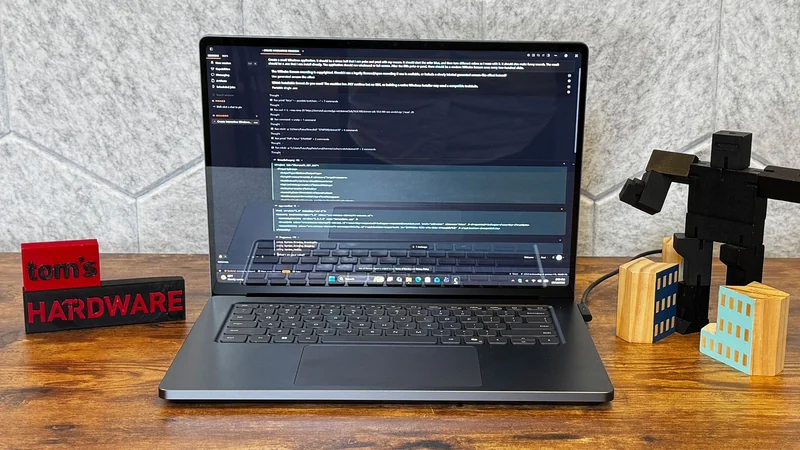
Nvidia RTX Spark Tested in Microsoft Surface Laptop Ultra
Tom's Hardware evaluates Nvidia's RTX Spark Superchip inside Microsoft's Surface Laptop Ultra, highlighting impressive local AI capabilities alongside performance challenges.
 Radwan AbdulhadiEditor and technology writer
Introduction to the RTX Spark Platform
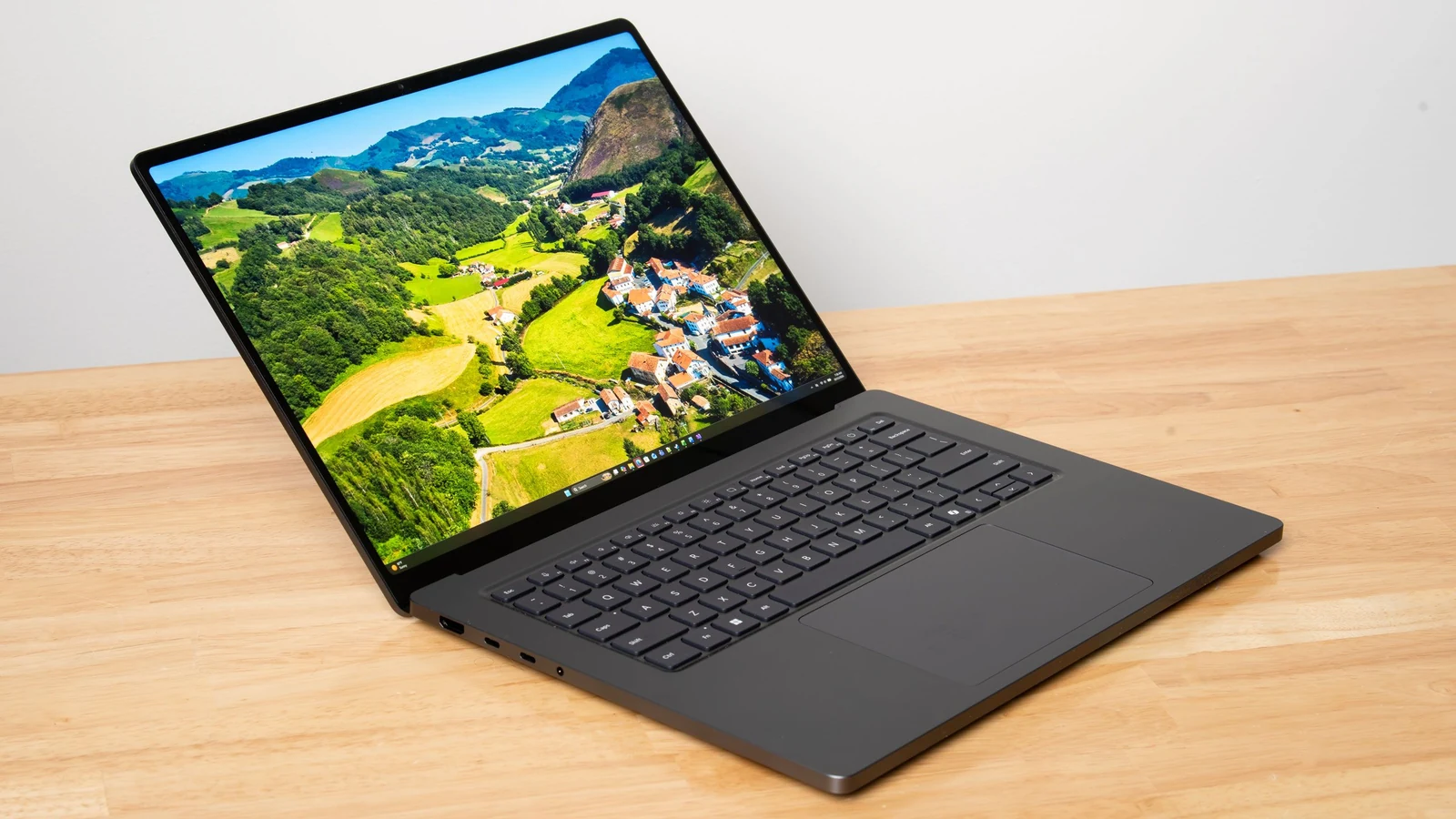
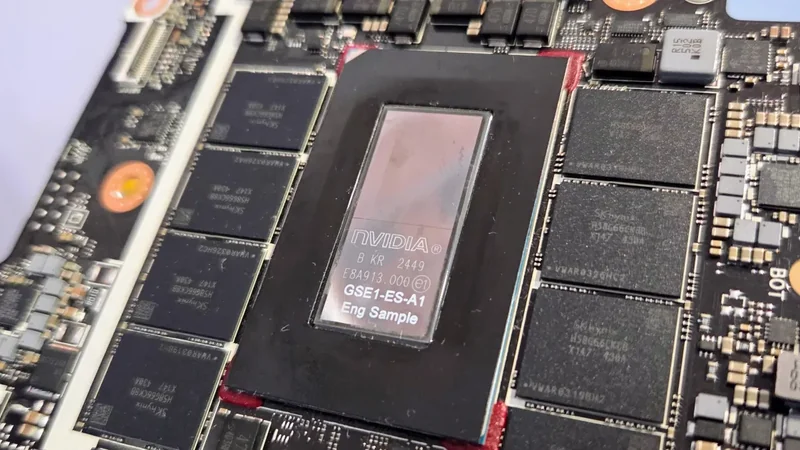
Nvidia CEO Jensen Huang originally announced the RTX Spark platform with the grand ambition to reinvent the personal computer during an appearance at Computex. By pairing the GB10 Superchip with a tailored version of Windows on Arm designed for secure and contained execution of local AI agents, major hardware partners are working to establish the PC as an active and autonomous companion.
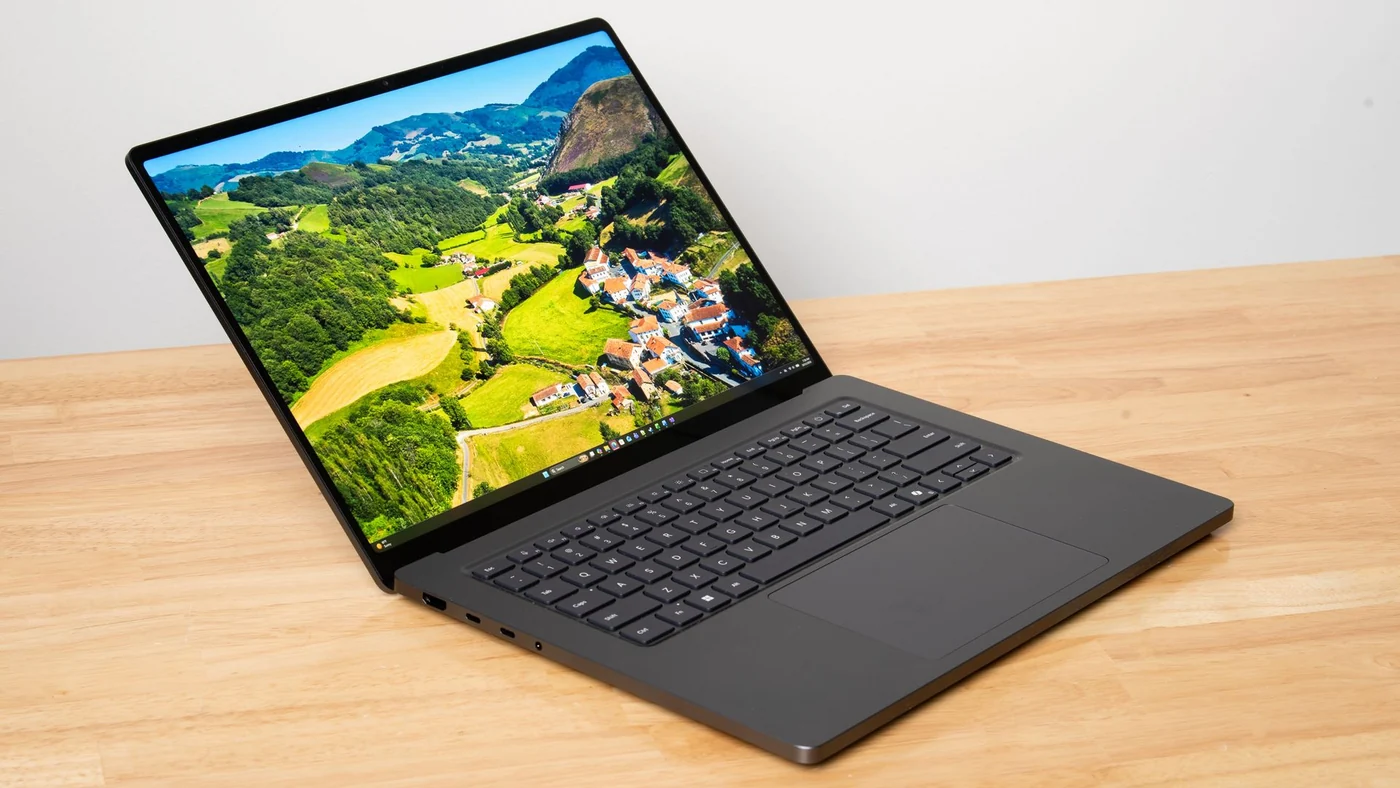
To evaluate this hardware vision, Tom's Hardware examined Microsoft's Surface Laptop Ultra in top-end configuration. The tested hardware features the full RTX Spark Superchip with 20 CPU cores, 6144 CUDA cores, and 128GB of LPDDR5X-9400 RAM.
Testing Methodology and Comparisons
Initial evaluations by Tom's Hardware focused on broad platform experiences and competitive performance rather than system-specific metrics like battery life or display quality. For comparison, testers used a 14-inch MacBook Pro powered by Apple's high-end M5 Max system-on-chip, which includes a 40-core GPU, an 18-core CPU, and 128GB of LPDDR5X RAM.
When examining raw processing power, the MediaTek Arm CPU complex on the Spark serves as a notable performance bottleneck. While the platform feels responsive during daily use, Geekbench results show that both single-core and multi-core CPU performance significantly trail Apple's M5 Max silicon.
Local AI and Agentic Benchmarking
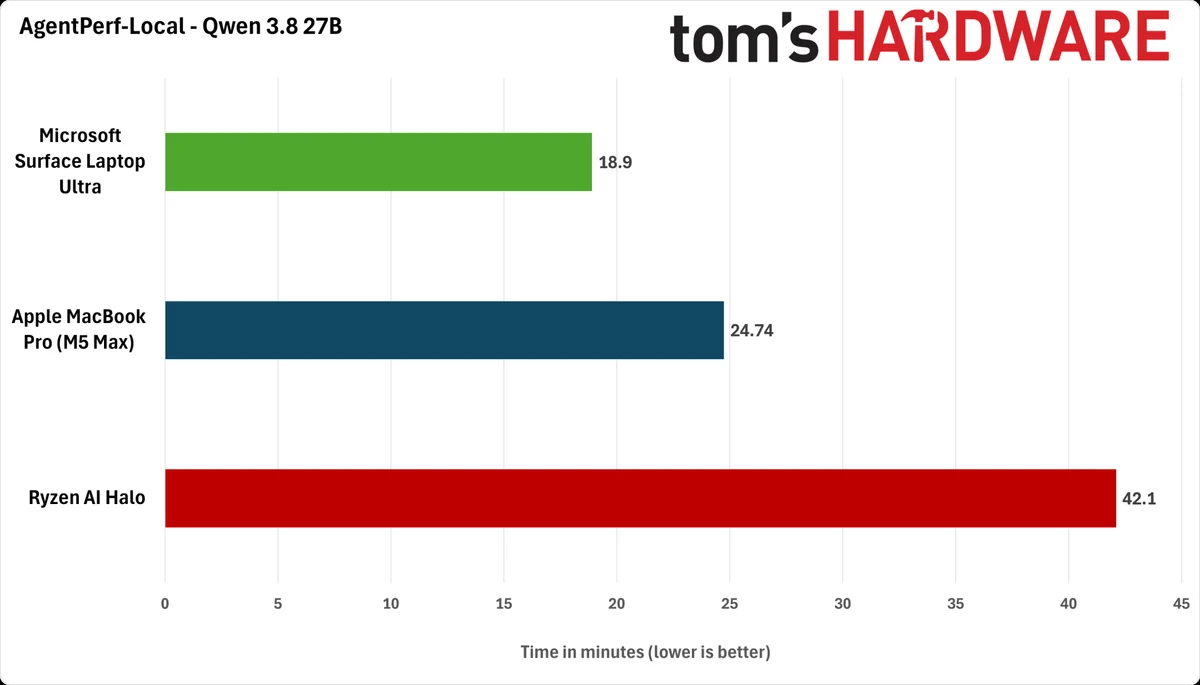
Evaluating local artificial intelligence workloads has evolved beyond simple prompt processing and token generation metrics. To better measure agentic workflows, Artificial Analysis developed a new benchmark called AgentPerf-local, which replays inference traces across multiple agentic AI tasks to track total time-to-completion.
Using compatible models such as the Qwen 3.8-27B and the Qwen 3.6 35B A3B mixture-of-experts model running on llama.cpp, the Microsoft Surface Laptop Ultra with RTX Spark demonstrated competitive speeds. In tests with the dense Qwen 3.8-27B model, the RTX Spark system finished the AgentPerf benchmark approximately 25% faster than the M5 Max MacBook Pro.
AMD's older Ryzen AI Max+ 395 system required roughly twice as long to complete the same demanding agentic test. Although AMD has emphasized the lower cost of entry for its systems, faster task completion times on higher-end hardware can translate to greater productivity for professional users over time.
Gaming Performance Challenges
Despite carrying RTX branding and featuring a powerful GPU configuration with 6144 CUDA cores and 48 streaming multiprocessors, the RTX Spark platform encounters significant hurdles in gaming workloads. Initial findings indicate that gaming is not a strong suit for Nvidia's new Windows on Arm hardware architecture, leaving room for future software and hardware optimization.
Sources
- Tom's HardwareWe test the RTX Spark Superchip in Microsoft's Surface Laptop Ultra — Nvidia's Windows on Arm platform impresses in local AI, but gaming isn't its strong suit
Continue chronologically
Related entity coverage
Related stories
Microsoft Surface Laptop Ultra Review: A New Arm-Based Pro Rival
Explore the Microsoft Surface Laptop Ultra review, featuring Nvidia RTX Spark Arm chips, local AI models, 15-inch mini-LED touchscreen, and MacBook Pro-like design.
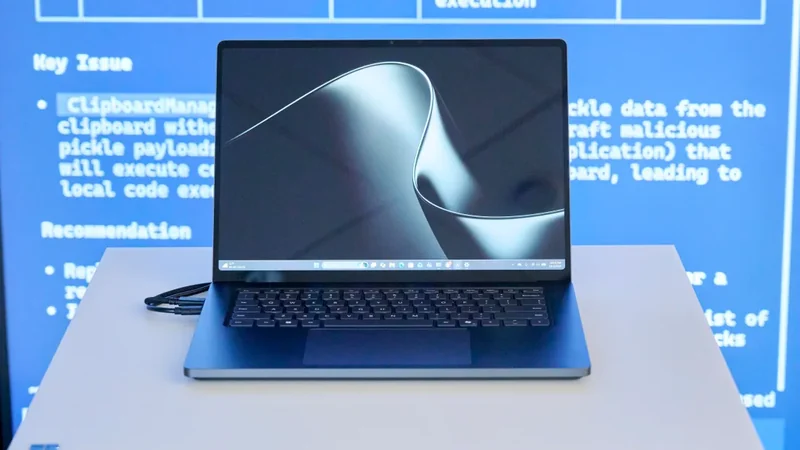
Surface Laptop Ultra: RTX Spark Hardware Meets Early Software Growing Pains
Microsoft’s new Surface Laptop Ultra enters the market as a high-end Windows competitor featuring Nvidia RTX Spark chips for local AI and gaming.
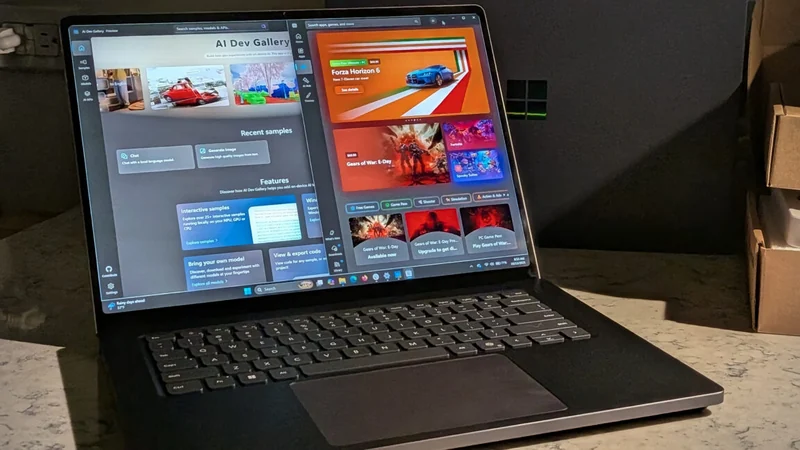
Nvidia Launches RTX Spark Laptops with Arm Windows Support
Nvidia brings Arm-powered Windows PCs to market with the new RTX Spark laptops, promising full application and game compatibility.
Microsoft Surface Laptop Ultra Review: RTX Spark Meets Design
Explore the new Microsoft Surface Laptop Ultra featuring Nvidia's RTX Spark platform, luxury design, robust ports, and Windows on Arm performance.