European Financial Firms Adopt Open Models for AI
At GTC Berlin, major European banks, payment companies, and financial data providers are showcasing production-scale intelligence built on open weight models, proprietary infrastructure, and accelerated computing.
 Radwan AbdulhadiEditor and technology writer

Rebuilding Stacks Around Foundation Models
At GTC Berlin, banks, payment companies, and financial data providers are demonstrating what production-scale intelligence looks like when built on NVIDIA accelerated computing, powered by open weight models, and running on their own infrastructure. A prime example is Revolut, which is rebuilding its technology stack on a single foundation model named PRAGMA, powered by NVIDIA accelerated computing. Using the NVIDIA cuDF toolkit and Dynamo-Triton software on NVIDIA Blackwell Ultra GPUs, Revolut is scaling PRAGMA in production to serve an initial 80 million customers, with architecture engineered to scale 3x.
"Revolut processes billions of transactions — the opportunity was always there, but the question was whether foundation models could operate at that scale and across domains. PRAGMA answers that," said Pavel Nesterov, head of AI at Revolut. "Built in collaboration with NVIDIA, it’s the clearest proof yet that the gap between a research breakthrough and a production banking system can be closed."
Sovereign Cloud Deployments and Banking Intelligence
Financial institutions across Europe are increasingly adopting sovereign cloud deployments and proprietary intelligence models. Starling Bank, recognized as the first bank to train an agentic model on U.K. sovereign cloud infrastructure, has developed "Starling Intelligence"—the intelligence layer that underpins its artificial intelligence capability—on Civo’s U.K. cloud using its own transaction data.
Similarly, Lloyds Banking Group built ATUM, a transaction foundation model designed to convert billions of banking transactions into reusable intelligence. This system is accelerated with NVIDIA RTX PRO 6000 Blackwell GPUs to improve efficiency across bank-wide use cases. Meanwhile, SBS launched a banking sovereign intelligence platform that allows banks to run generative and agentic models safely without their data leaving their own walls.
Open Weight Models Across Neobanks and Payment Operations
Open weight models offer European financial institutions a way to establish proprietary intelligence built on data they own, all while keeping costs under control. Neobank bunq’s agentic assistant Finn now runs on open weight models, deploying on Nebius with NVIDIA accelerated computing to match the quality of leading closed models at 60% of the cost per answer.
Other institutions are tailoring models for specific operational needs. NatWest is building technology designed to recognize the full range of British accents, dialects, and financial terminology using NVIDIA’s speech models, including Nemotron 3.5 ASR. Modulr is constructing specialized models for distinct parts of payment operations based on the NVIDIA Nemotron-3-Ultra-550B open model. Additionally, Santander has emerged as an early adopter of the NVIDIA Kumo family of open weight foundation models for structured financial data, deploying them to create specialized intelligence for core banking workloads.
Transforming Financial Research and Market Analysis
Beyond core banking operations, accelerated computing is transforming financial research workflows. London Stock Exchange Group (LSEG) is working with NVIDIA to help financial institutions analyze large volumes of historical tick data up to 10x faster using the Polars GPU engine, accelerated by NVIDIA cuDF on NVIDIA RTX PRO 6000 Blackwell GPUs.
Furthermore, RavenPack built a dataset generation pipeline on Bigdata.com that translates a plain-language research hypothesis into a labeled, backtest-ready dataset using a fine-tuned NVIDIA Nemotron model. Investors can leverage these generated datasets to identify, analyze, and visualize shifting market trends.
Speeding Data Pipelines for Enhanced Fraud Detection
Data processing speed remains vital for multi-terabyte-scale, siloed, and regulated financial sources. RTX PRO 6000 Blackwell Server Edition GPUs and NVIDIA cuDF help compress the timeline from raw data to actionable decisions for fraud prevention and other critical scenarios. HSBC now delivers near-real-time client insights that support customer processes and on-demand decision-making while minimizing risk and fraud, backed by 5x faster data processing utilizing Starburst Enterprise’s GPU Engine.
Stripe, a global provider of programmable financial services, reported 42x faster data pipelines and 92% cost savings for its Stripe Radar fraud-detection platform during offline testing with NVIDIA GPU-accelerated Ray Data. This level of acceleration allows Stripe Radar’s machine learning pipelines to continuously optimize model training and improve ongoing fraud detection.
Sources
- NVIDIA BlogLeading European Financial Services Organizations Embrace Open Models to Build Proprietary Intelligence
Continue chronologically


Related entity coverage
Related stories
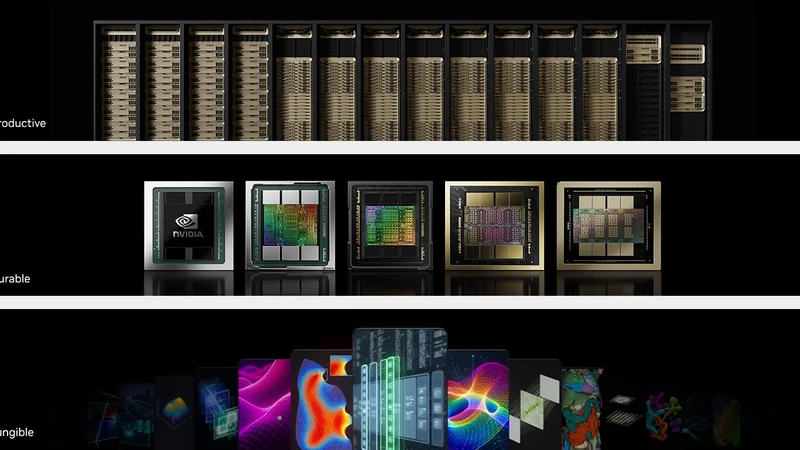
NVIDIA AI Factories Maximize ROI Through Productivity and Durability
NVIDIA details how AI factories maximize return on investment by delivering high throughput, extending hardware useful life, and supporting diverse workloads.
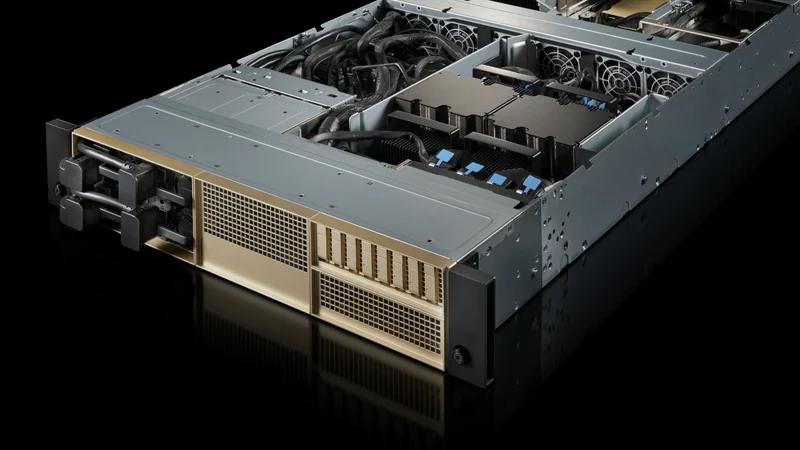
European Leaders Adopt NVIDIA Vera CPUs for Local AI Infrastructure
European cloud providers and global technology partners are adopting NVIDIA Vera CPUs to build local infrastructure and scale agentic computing workloads.
Deploying NVIDIA Nemotron 3.5 Super VL on AWS EKS and SageMaker
Learn how to deploy the NVIDIA Nemotron 3.5 Super VL mixture-of-experts model on Amazon EKS, EKS Auto Mode, and SageMaker HyperPod EKS.

Nvidia Backs Indian Startup Simplismart in $14M Funding Round
Nvidia participates in a $14 million Series B funding round for Indian startup Simplismart, supporting software that helps companies run AI models efficiently.