Volkswagen Replaces ID.4 Crossover With New ID. Tiguan EV
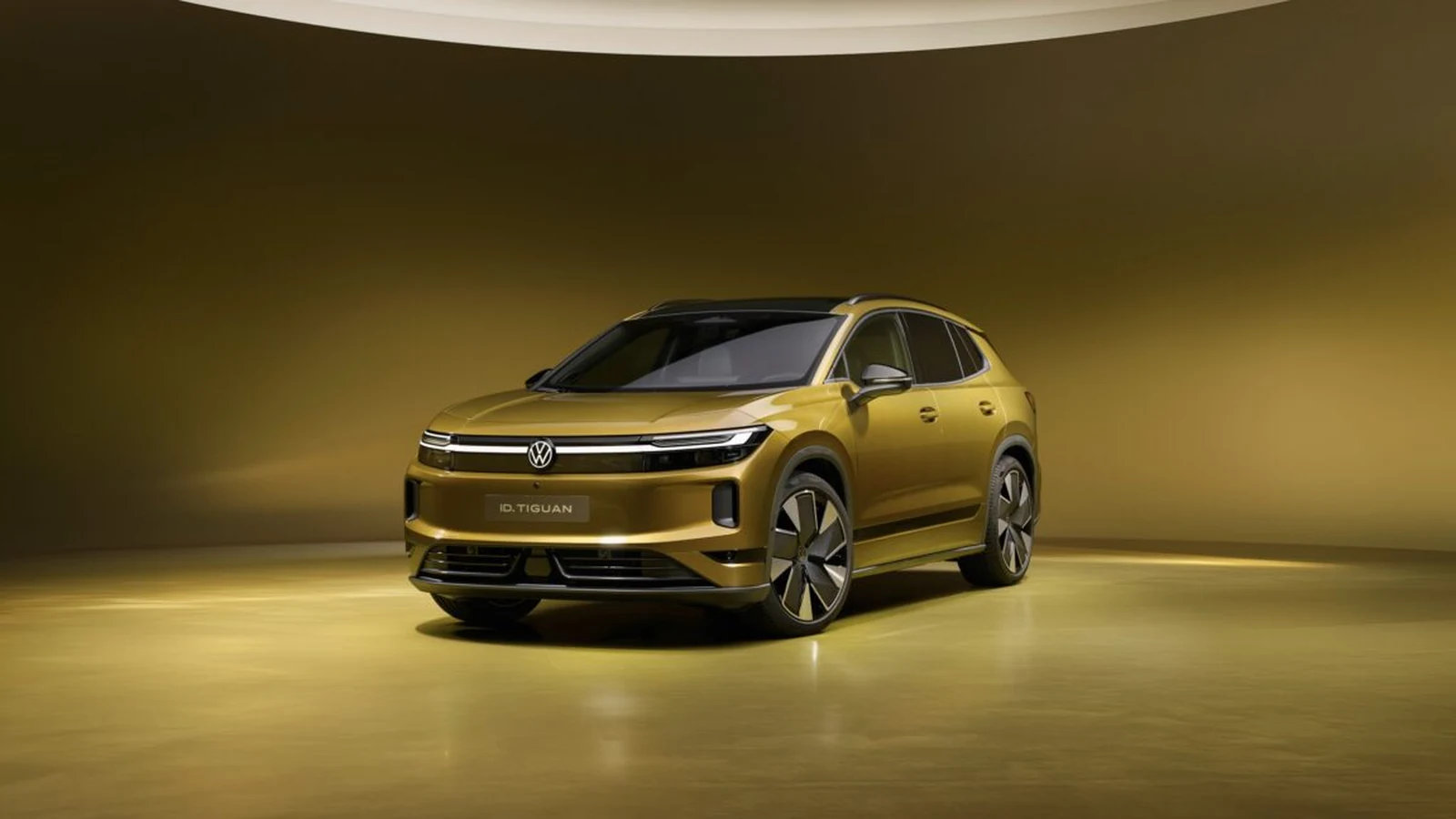
Volkswagen has officially introduced the ID. Tiguan, combining its best-selling moniker with an updated electric architecture and a range of retro design features.
 Radwan AbdulhadiEditor and technology writer
Introduction to the ID. Tiguan
Volkswagen has officially retired the ID.4 crossover, a midsize vehicle that originally <a href="https://arstechnica.com/cars/2021/02/two-days-with-a-volkswagen-id-4-heres-what-we-learned/">debited in 2021</a> as one of the automaker's earliest electric vehicles designed following the <a href="https://arstechnica.com/series/volkswagen-defeat-device-scandal/">dieselgate</a> controversy. After selling nearly a million units globally of the ID.4 and its near-identical ID.5 counterpart, the German manufacturer decided it was time for a successor. That replacement has arrived under the name ID. Tiguan.
The decision to drop numerical nomenclature in favor of Volkswagen's globally successful Tiguan moniker was intentional. According to VW brand CEO Thomas Schäfer, the Tiguan is the company's best-selling model worldwide, while the ID.4 and ID.5 rank among its most successful electric cars, making the ID. Tiguan a natural fusion of two success stories.
Platform, Battery Options, and Performance
Building upon a legacy of utilizing flexible vehicle architectures to generate various bodystyles and sizes, Volkswagen constructed the ID. Tiguan on an updated version of its mass-market EV platform, designated as MEB+. The vehicle offers buyers a choice of either 58 kWh or 77 kWh battery packs.
The smaller 58 kWh battery is exclusively paired with a 187 hp (140 kW) rear electric motor. Meanwhile, the larger 77 kWh battery can be configured with either a 281 hp (210 kW) rear-wheel-drive powertrain or a 295 hp (220 kW) all-wheel-drive version. According to European WLTP testing standards, the vehicle achieves a driving range of up to 373 miles (600 km).
Design Language and Interior Updates
Aesthetically, the ID. Tiguan aligns with a more mainstream look while remaining part of Volkswagen's new design language, officially named Pure Positive. The automaker intends for the interior and exterior of the ID. Tiguan to evoke a more premium segment feel.
Responding to customer feedback, Volkswagen incorporated several practical design changes. The vehicle features normal door handles—a shift that may have also been influenced by <a href="https://arstechnica.com/cars/2026/02/china-bans-all-retractable-car-door-handles-starting-next-year/">Chinese vehicle regulators</a>—alongside a plethora of physical controls. Drivers will find real buttons on the steering wheel, traditional switches for climate control and windows, and physical air vents rather than computer-controlled alternatives.
The cabin also houses a new 15-inch infotainment screen, complemented by an optional 12-inch front passenger display.
Retro Dials and Customization
Among the more notable technological options for the 10-inch digital main instrument display is a retro dials feature. Drivers can configure the display to replicate the dials and warning lights of classic Volkswagen models. Available classic themes include an Mk1 Golf, an Mk2 Golf Country, an Mk4 Golf, a first-generation Tiguan, a racing Touareg, and the Beetle.
Pricing and Market Availability
Pre-sales for the electric Tiguan are scheduled to begin in Europe next week, launching with a starting price in Germany of 42,695 euros ($44,716).
While Volkswagen confirmed that the ID. Tiguan will eventually arrive in the United States, the company noted that it has not yet announced specific North American timing. Following the initial European launch in early 2027, the manufacturer plans to share North American timing, offer structures, pricing, and additional market-specific details in due course.
Sources
- Ars TechnicaVolkswagen's replacement for the ID.4 crossover is here
Continue chronologically

Related stories
Rivian’s R2 SUV Becomes Its Best-Selling Vehicle in Q3
Rivian announced that its new mass-market R2 SUV is already its best-selling vehicle by volume, boosting its third-quarter performance and delivery guidance.
Microsoft Details Platform Approach to Frontier Transformation
Explore Microsoft's platform approach to Frontier Transformation, highlighting enterprise adoption stories across Volkswagen, Fujitsu, NASA, and more.

Jensen Huang Unveils Plug-In Data Centers for Europe at GTC
At Nvidia's GTC in Berlin, Jensen Huang unveiled the modular DSX Pod data center and new humanoid robotics initiatives to target Europe's AI infrastructure lag.
Infisical Valued at $600 Million Following $40 Million Raise
Secrets management firm Infisical has secured $40 million in Series B funding, pushing its valuation to $600 million to expand AI agent security.