Unusual Robotic Animals Prove Utility in Rescue and Inspection
Advanced robotic animals are moving beyond simple digital pets to solve practical, humanitarian, and industrial challenges across the globe.
 Radwan AbdulhadiEditor and technology writer
The Evolution of Robotic Animals
When people hear the word "robot," they often think of mechanical figures from science fiction. However, modern technology has evolved to include smart vacuum cleaners, voice assistants, and four-legged machines that mimic dogs. These robotic animals are much more than battery-powered toys; they are complex electronic devices infused with artificial intelligence that replicate the appearance and behavior of real or imaginary creatures.
These devices rely on internal components such as sensors, speakers, motors, and processor modules that analyze external signals and respond to mobile app controls. Manufacturers employ various engineering approaches when building them, utilizing advanced microprocessors and sensing equipment to enable emotional responses or specialized navigation.
Cyborg Cockroaches in Disaster Recovery
Leading research centers are creating insect-inspired designs to solve practical and humanitarian problems. For instance, following a building collapse tragedy in Changsha, China, researchers sought faster ways to locate missing people trapped under heavy debris. While traditional methods rely on thermal cameras and manual searches, insects can navigate tiny cracks to survey disaster areas quickly.
A team at Nanyang Technological University (NTU) in Singapore developed a solution by transforming a Madagascar cockroach into a cyborg. Equipped with a miniature backpack containing a microcomputer, sensors for dangerous gases, and a thermal infrared camera, these insects can detect bodies beneath rubble. Scientists utilize a remote control system featuring electrodes attached to the cockroach's body to steer its movement precisely, allowing it to survey up to 100 square meters.
High-Capacity Mechanical Ants and Micro-Beetles
Engineering teams are also focusing on extreme strength and micro-scale mobility. Stanford University engineers created mechanical ants capable of moving loads 2,000 times their own mass. This phenomenal lifting capacity relies on a gecko-inspired paw design that uses a special coating of microscopic rubber hairs to create a secure adhesive grip on any surface.
Similarly, researchers at the Korea Advanced Institute of Science and Technology (KAIST) have focused on developing innovations like a microrobot beetle. These miniature platforms demonstrate how biomimetic design can provide valuable utility in tight spaces and challenging environments.
Underwater and Underground Exploration
Beyond surface search and rescue, animal-inspired robots are built to prevent disasters and inspect hazardous environments. Norwegian developers have built a 5-meter robotic snake designed to service underwater oil pipelines. Equipped with manipulators, the snake can replace valves, clean deposits, and operate at depths up to 500 meters for up to six months.
Furthermore, engineers at the University of California, Berkeley, developed a robotic crab for underground exploration. Using fabric scoops on its claws to burrow into the ground, the crab collects samples and analyzes soil suitability, with future plans for lunar deployment.
Avian Deterrents and Micro-Reconnaissance Bees
Robotic animals are also deployed to protect human operations from wildlife hazards. Mechanical falcons developed at the University of Groningen in the Netherlands are utilized in Canada and Germany to frighten live birds away from airport runways, preventing dangerous plane collisions by exploiting natural predator fear.
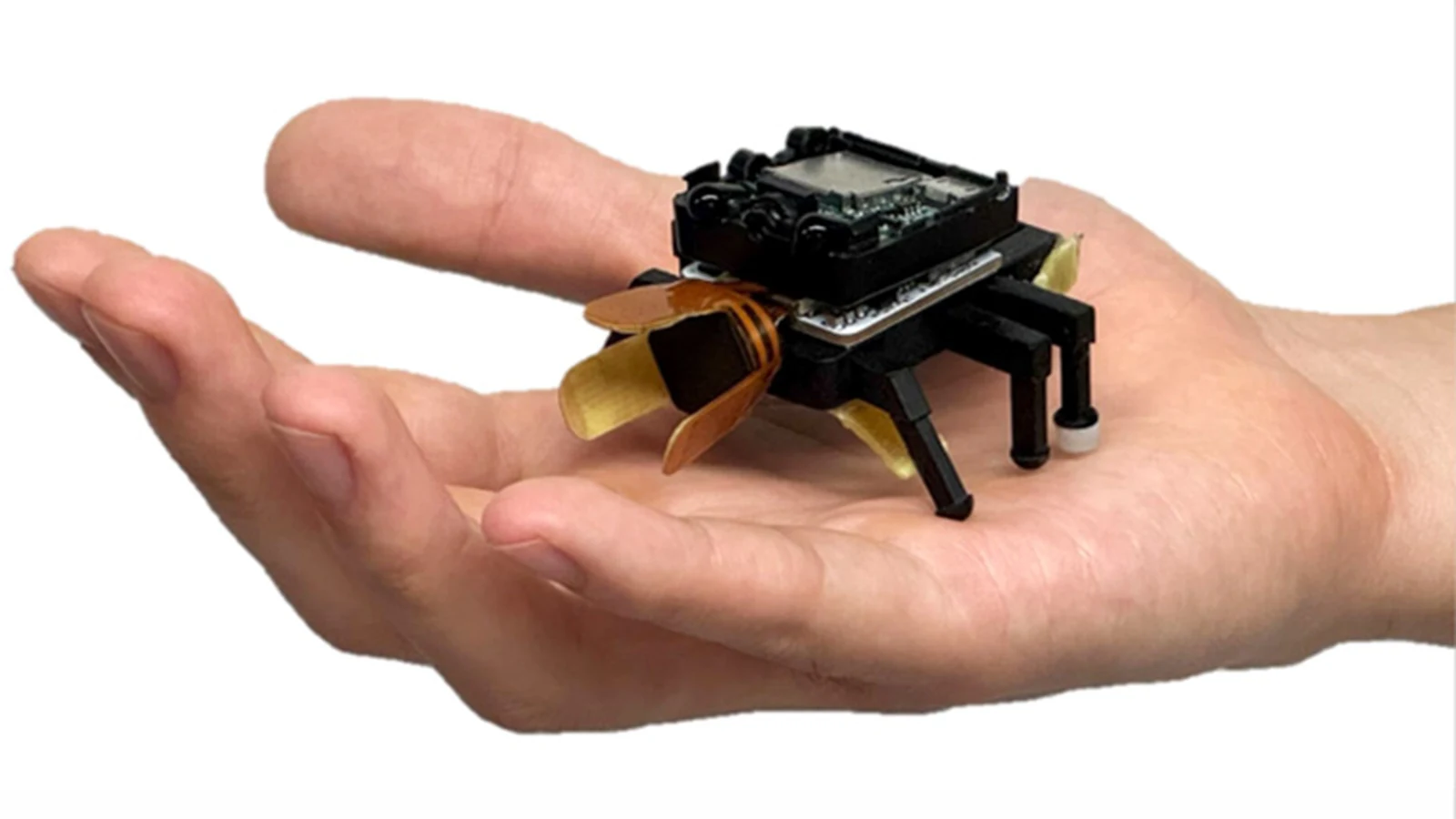
At Harvard University, researchers created a pinhead-sized robotic bee primarily intended for reconnaissance. Powered by solar energy, the micro-reconnaissance vehicle can fly, swim, and dive while transmitting three-dimensional images back to its operator, highlighting the vast operational potential of robotic animals across land, sea, and air.
Sources
- The Robot ReportUnusual robotic animals can prove their utility
Continue chronologically


Related stories
When You Should—and Shouldn’t—Use AI to Search the Web
Discover when AI chatbots excel at web searches and when traditional search engines still deliver better, more trustworthy results.

How Overhead Projectors Transformed Classrooms and Learning
Explore the history of the overhead projector, a military technology that became a ubiquitous classroom fixture, changing how students learned.
Study Finds AI Coding Agents Fail to Boost Software Output
A new study reveals that while AI coding agents generate more code, efficiency gains are absorbed by a human code review bottleneck.
Google DeepMind Unveils SynthID Bio for Proteins
Google DeepMind introduces SynthID Bio, a new watermarking technology designed to embed imperceptible signatures into synthetic proteins and structures.