
Trump Declares Foreign Robot Imports a National Security Threat
A new presidential proclamation targets foreign-made factory robots and industrial machinery, raising potential cost and operational concerns for major American manufacturing and logistics companies.
 Radwan AbdulhadiEditor and technology writer
Presidential Proclamation Targets Industrial Robotics
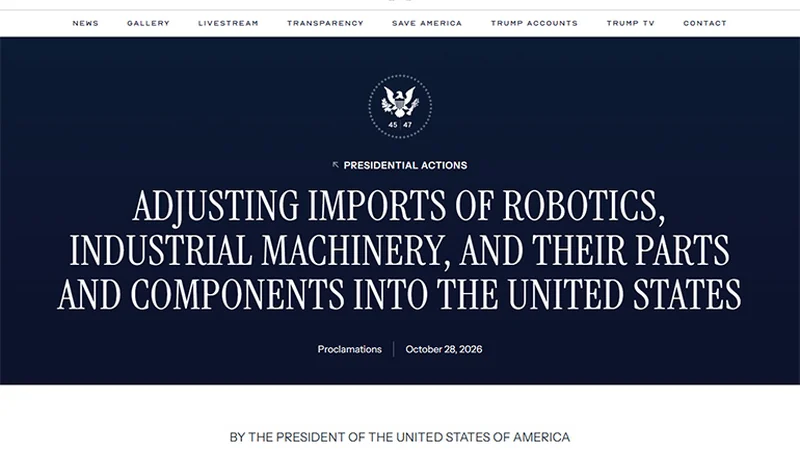
President Donald Trump has declared the imports of foreign-made factory robots to be a national security threat, setting the stage for new United States trade negotiations with international partners and the potential implementation of new tariffs. Issued via a official presidential proclamation, the directive signals heightened government scrutiny regarding foreign industrial automation equipment.
The newly announced scrutiny threatens to complicate manufacturing and logistics operations for major United States corporations that depend heavily on foreign-made automation hardware. Among the affected organizations are major Detroit automakers like General Motors, electric vehicle manufacturer Tesla, and prominent aerospace and defense contractors such as Boeing and Lockheed Martin.
Department of Commerce Investigation Findings
According to the official text, the directive stems from an investigation conducted under US Secretary of Commerce Howard Lutnick. The probe concluded that American imports of industrial robots and machinery pose distinct risks to the domestic industrial base and threaten long-term national competitiveness within a sector increasingly vital to national security.
Furthermore, the Department of Commerce investigation alleged the existence of unique security and safety risks capable of introducing significant cybersecurity vulnerabilities. These vulnerabilities, according to the findings, could ultimately result in severe consequences for the United States economy and infrastructure.
This reasoning mirrors justifications previously utilized by the Federal Communications Commission during its July 2026 actions. That agency banned new models of foreign-made robots, such as robotic vacuums, four-legged robot dogs, and humanoid models, although fixed industrial arms and stationary factory machinery were explicitly exempted at the time.
Timeline for Trade Talks and Potential Tariffs
The administration's directive instructs the United States and its trading partners to reach new agreements adjusting imports of robotics, industrial machinery, and associated components within 180 days. Should negotiations fail to produce formal agreements by the expiration of this window, the proclamation warns that additional punitive actions could follow.
President Trump may choose to impose additional measures such as tariffs, duties, quotas, and fees on incoming shipments. Because these tariffs would be paid directly by American companies importing the foreign-made hardware, the policy threatens to escalate the cost of manufacturing operations across the United States.
These potential economic hurdles arrive as the United States cements its status as the world's second-largest market for industrial robotics. Data from the International Federation of Robotics highlights nearly 38,500 new industrial robot installations across the US during 2025 alone.
Reliance on Overseas Robotics Manufacturers
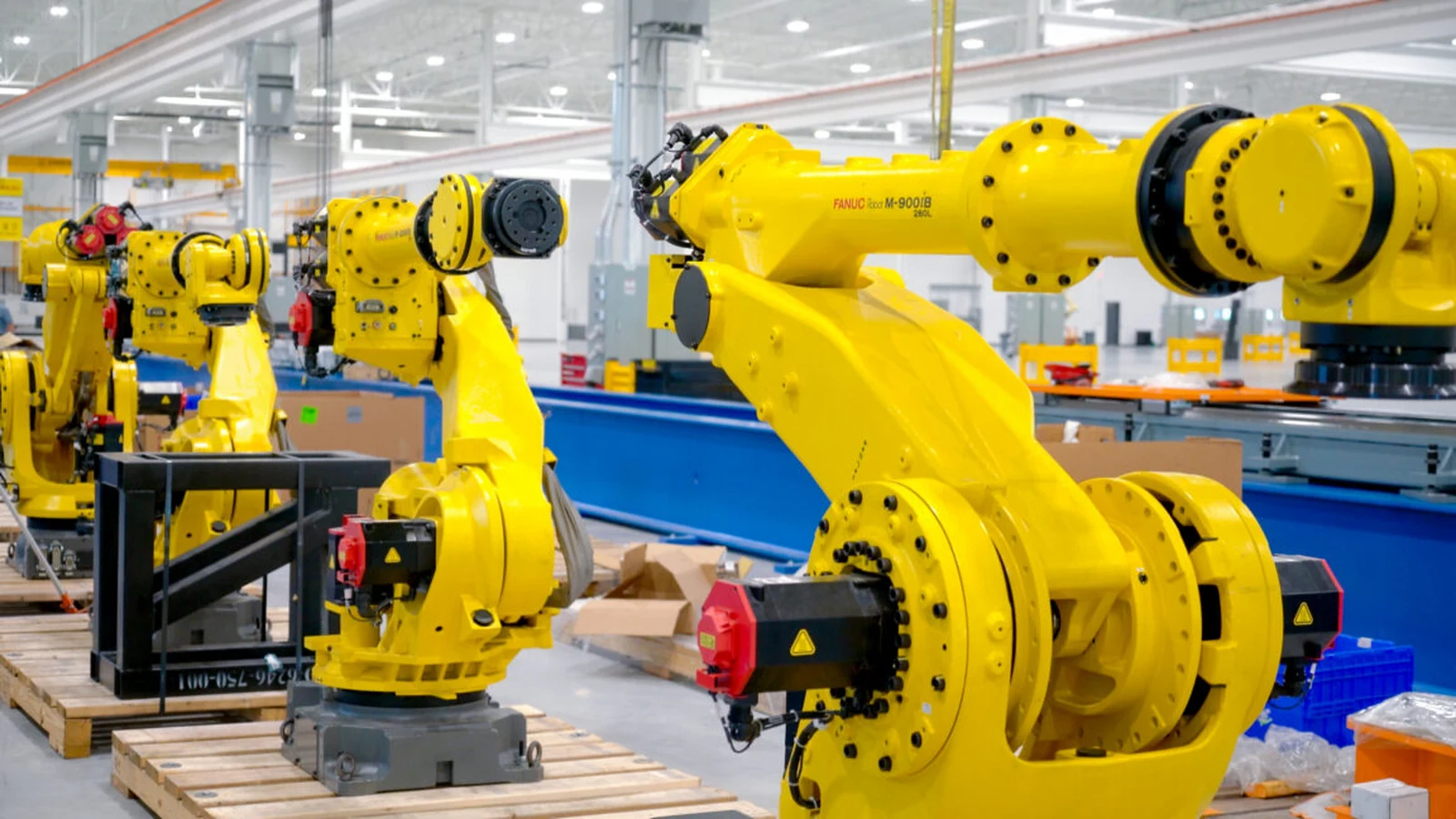
Major US automotive and aerospace corporations routinely source heavy-duty robotic arms from the industry's dominant global suppliers. Companies often referred to as the "big four"—FANUC, ABB, Yaskawa, and KUKA—maintain headquarters in Japan, Switzerland, and Germany, leaving a gap for domestic hardware alternatives.
The proclamation explicitly acknowledges that domestic US robotics enterprises do not currently manufacture enough industrial robots to satisfy national security demands. Consequently, the United States remains heavily reliant on foreign imports for the majority of industrial machinery, specialized robotics, and critical component parts.
Even major logistics giants like Amazon, which has successfully deployed more robot workers across its fulfillment centers than nearly any other organization globally, continue to utilize foreign hardware such as Japanese FANUC robotic arms. This reliance persists despite Amazon aggressively expanding its own internal automation research and developing specialized in-house robotic systems.
Waivers and Future Outlook
While potential future tariffs on foreign industrial robots could impose heavy financial burdens on manufacturers, the measures stop short of an outright legal ban on imports. Furthermore, regulatory relief remains a possibility for key industrial players operating under specific operational needs.
As demonstrated by recent policy exceptions granted to Intel, major US corporations can still successfully petition the Trump administration for official waivers. These waivers allow firms to continue importing and utilizing necessary foreign-made machinery even when nominal restrictions or bans remain in active place across the sector.
Sources
- Ars TechnicaTrump declares robot imports a national security threat
Continue chronologically
Related stories
OpenAI CEO Sam Altman Reveals New AI Agent at Developer Event
OpenAI CEO Sam Altman introduced new Dots AI agents at the annual developer conference while avoiding mention of recent security concerns.

Trump’s Data Center Push Clashes With MAGA Base Opposition
Donald Trump’s support for AI data centers faces backlash from Republican voters and MAGA supporters who oppose expansion, per WIRED analysis.
Elon Musk Confirms TSMC Discussions for Terafab Project
Elon Musk has confirmed discussions with TSMC regarding a potential collaboration for the Terafab semiconductor production initiative.

White House Issues Section 232 Ruling on Foreign Robots
The White House released a Section 232 determination declaring foreign-made robots and industrial machinery a national security risk.