Kodama Raises $7M to Bring Robotics to Forestry
Kodama Systems announced it has raised $7 million in fresh funding to expand its physical AI and automation capabilities for forestry and logging equipment.
 Radwan AbdulhadiEditor and technology writer
Funding and Growth Strategy
Kodama Systems announced today that it has raised $7 million to bring physical AI to forestry. The latest funding round was co-led by Konvoy Ventures and Breakwater Ventures, with participation from Blue Forest Asset Management, NYA Ventures, Breakthrough Energy Ventures, Congruent Ventures, Dangerous Ventures, M1C, and others. This round brings Kodama's total funding to $14 million to date.
The company stated it will use the capital to support commercial deployments, deepen OEM partnerships, and continue the development of supervised autonomy capabilities designed for complex off-road environments. Kodama initially focused on wildfire risk reduction in the western U.S., but its current operations concentrate on the timber industry in the southeastern U.S.
"Right now, we're working with different forestry companies across the southeastern U.S.," Ben Pinfield, a go-to-market associate at Kodama, told The Robot Report. "We're at a point where we're scaling, integrating into new machine types, and developing more autonomy capabilities in forestry."
Addressing Industry Labor Challenges
Forest contractors face significant operational headwinds as demand for timber, forest management, and wildfire-resilience work increases. These responsibilities require long hours at remote job sites, making recruitment and retention difficult.
"If you're a 20-something-year-old prospective logger thinking about entering the industry, you need to be on-site at 5:30 a.m., which means you're usually leaving your home at like 4:00 or 4:30 in the morning," said Merritt Jenkins, co-founder and CEO of Kodama. Workers often spend nine or ten hours a day inside a machine driving over stumps, rocks, and ruts.
According to Kodama, the physical toll leads to brutal industry turnover, with some operations burning through multiple skidder operators in a single year. As fewer workers enter the field and experienced operators retire, finding reliable talent remains a primary hurdle for forestry contractors.
Technology and Teleoperation Approach
Kodama combines supervised autonomy with teleoperation, enabling heavy machinery to handle repeatable tasks while experienced human operators remotely manage complex work and edge cases. The Sonora, California-based company reports that this hybrid methodology improves machine utilization and amplifies the capabilities of skilled personnel.
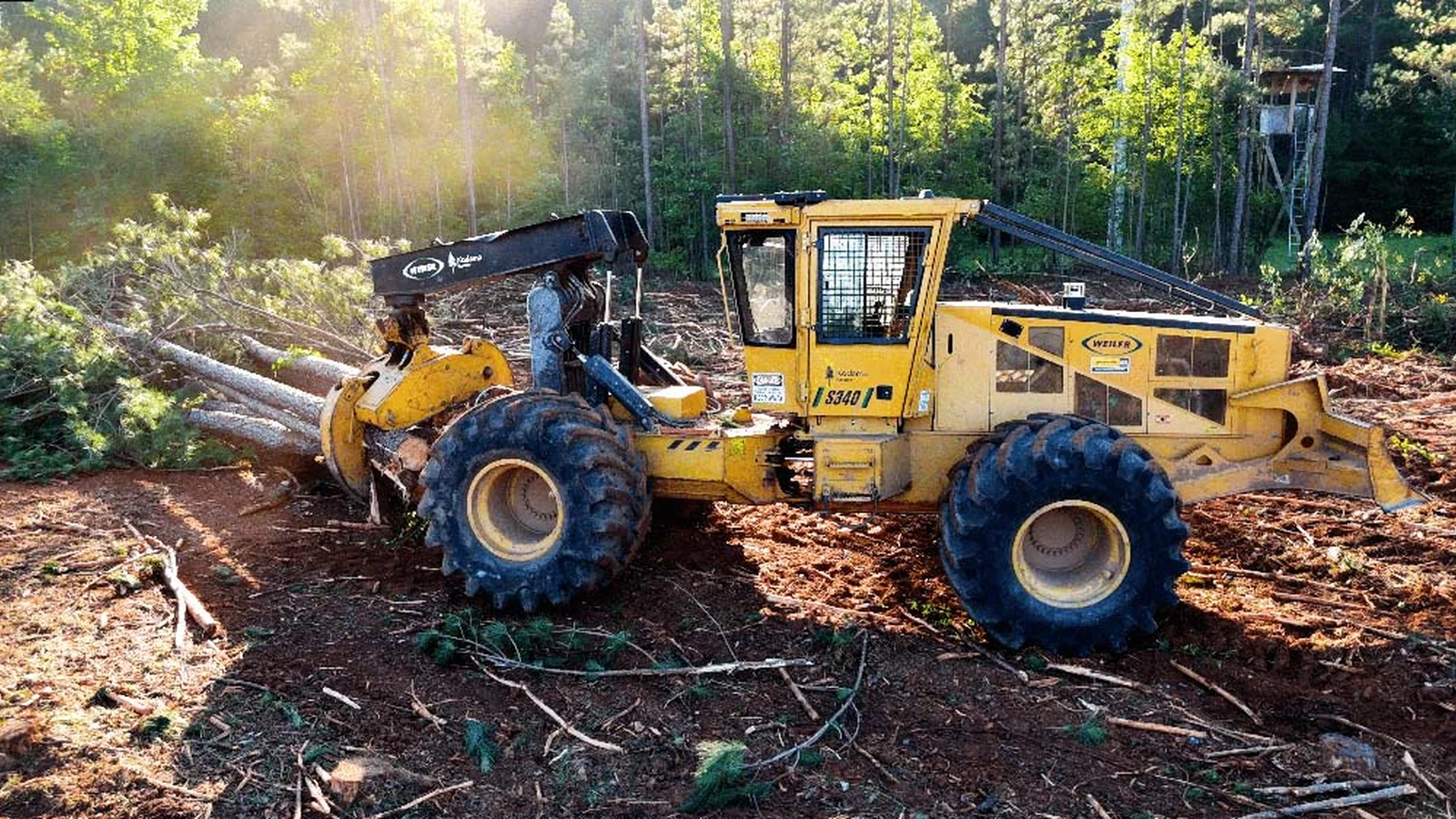
On active work sites, Kodama’s technology currently runs 10 to 14 hours a day. The firm is initially working with skidders—machines equipped with large claws called grapples that pick up cut trees and drag them to landings where they are loaded onto trucks. The long-term goal is to expand coverage to other machines in logging fleets, such as cutters and loaders.
Over the past six months alone, machines utilizing Kodama's technology have successfully moved more than 100,000 tons of timber across multiple states in the American Southeast.
OEM Integration and Data Advantage
Rather than relying exclusively on aftermarket conversion kits, Kodama builds its platform directly within the existing forestry-equipment ecosystem. Jenkins noted that the company is integrated with two of the three largest equipment manufacturers in the world, allowing customers to adopt advanced operating capabilities while preserving the value of their current machine fleets.
"It's preferable to integrate with the OEMs because you can leverage all of their knowledge and all of the sensors and fault detection that are already on the machine," Jenkins explained. This integration strategy contrasts with the construction sector, where major original equipment manufacturers often maintain closed systems.
As more machines are deployed, Kodama's data advantage compounds through a continuous learning loop across equipment, operators, worksites, and forestry workflows. The company generates approximately one terabyte of training data every day that a machine is remotely operated.
Safety Improvements and Future Expansion
In addition to mitigating labor shortages, Kodama's deployments have yielded notable safety improvements. By removing operators from the physical cab during hazardous maneuvers, the remote-controlled and autonomous systems protect workers from potential rollovers and falling timber hazards.
Looking ahead, Kodama intends to use the gathered data to further optimize job site productivity, coordinating metrics such as real-time machine locations, fuel use, and structural shock and vibration.
While plantation timber operations remain the immediate focus, Jenkins emphasized that the platform serves as a broader tool for land management, wildfire mitigation, and forest thinning applications.
Sources
- The Robot ReportKodama raises $7M to bring robotics to forestry
Continue chronologically


Related stories
Eka Robotics Raises $150M to Scale VFA Model
Cambridge-based startup Eka Robotics has secured $150 million in Series A funding to scale its vision-force-action model for robots.

VicOne Uncovers 28 Zero-Day Flaws in Physical AI Tools
VicOne researchers used AI-assisted techniques to identify 28 zero-day vulnerabilities across software supporting the Physical AI ecosystem in under two days.

Bedrock Robotics Nears $1B Total Funding With $600M Series C
Bedrock Robotics has secured $600 million in Series C funding to scale autonomous heavy equipment and combat construction labor shortages.
Generative Bionics to Build Physical AI Data Factory in Italy
Generative Bionics plans to launch a major Physical AI Data Factory in Italy by late 2027 to train humanoid robots for industrial deployment.