Generative Bionics to Build Physical AI Data Factory in Italy
Generative Bionics has announced plans to establish a proprietary, multi-site Physical AI Data Factory in Italy, aiming to accelerate the deployment of industrial humanoids.
 Radwan AbdulhadiEditor and technology writer
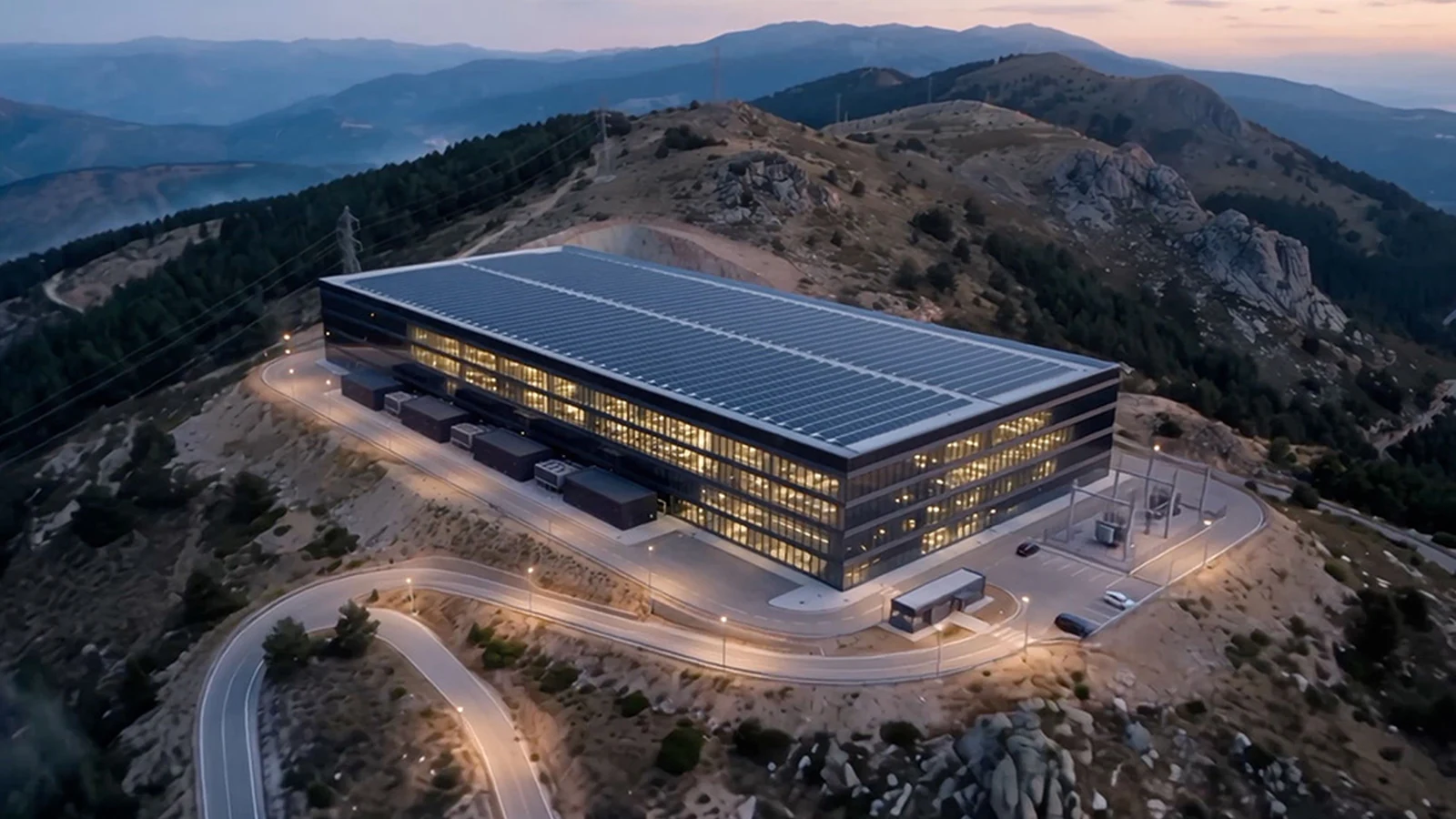
Building a Major European AI Hub
Generative Bionics announced plans this week to build a proprietary, multi-site Physical AI Data Factory in Italy. According to the company, the new 5,000-square-meter facility will help transition humanoid robotics from laboratory demonstrations to reliable industrial deployment.
The company stated that it hopes to advance European robotics sovereignty by ensuring that humanoid data, models, and know-how are generated, trained, and validated on the continent. Daniele Pucci, CEO of Generative Bionics, emphasized the strategic advantage Europe holds due to decades of established automation.
Operational Timeline and Global Expansion
The initial Data Factory hub in Italy is scheduled to become operational by the fourth quarter of 2027. Following the launch of this primary facility, the Genoa-based company plans to open a second site elsewhere in Europe and a third facility dedicated to serving global markets.
Together, these three facilities will recreate real industrial environments, generate high-fidelity physical data, and connect that information with large-scale simulation to optimize performance across various operational settings.
High-Performance Compute Infrastructure
To support the heavy computational demands of the data factory, Advanced Micro Devices Inc. will act as the official AI infrastructure partner. The network will be powered by AMD Helios, utilizing a rack-scale architecture designed to process physical and synthetic data simultaneously.
This hardware foundation will enable the system to train physical AI models effectively and run thousands of digital-twin scenario variations in parallel, bridging the gap between virtual testing and physical execution.
Testing and Validating GENE.01
The Physical AI Data Factory will connect real-world robot operations, simulation, and AI development in a continuous real-to-sim-to-real cycle. This architecture enables the configuration and validation of the GENE.01 humanoid robot for specific industrial environments prior to customer deployment.
Industrial humanoids must learn from the physical conditions they encounter on the job. Consequently, the dataset collected by the platform captures critical environmental factors including contact, force, motion, proximity, temperature, task constraints, and human interaction.
Multimodal Perception and Customization
Pucci noted that a robot relies on much more than vision and language alone. The GENE.01 platform incorporates full-body multimodal skin designed to capture vision and motion data, alongside signals reflecting position, velocity, acceleration, temperature, and contact forces.
Furthermore, Generative Bionics intends to offer the platform as a base model that can be customized across three main levels: artificial intelligence algorithms, exterior environmental resilience design, and specialized end-effector components like hands and feet, following an automotive-style manufacturing approach.
Sources
- The Robot ReportGenerative Bionics to launch Physical AI Data Factory in Italy
Continue chronologically
Related stories
Will 'Boring' Robots Win in the Real World?
Explore why physical AI and robotic form factors must follow specific industrial workflows rather than relying on viral social media demonstrations.
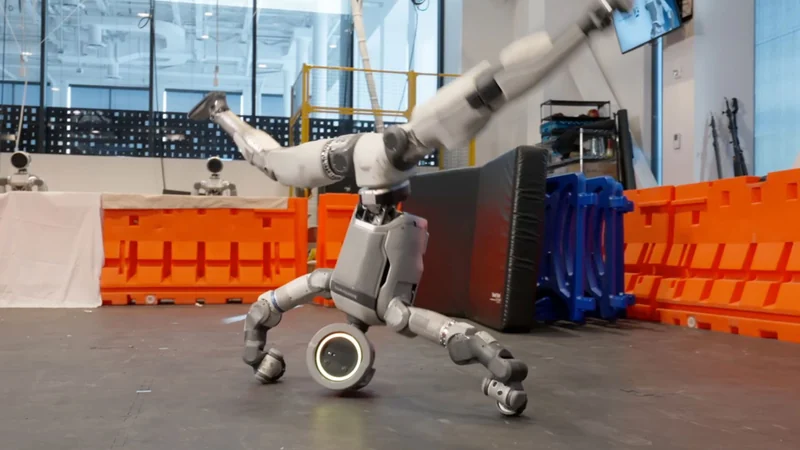
Innodata Opens Motion-Capture Lab for Robotics AI
Data engineering firm Innodata has launched a new motion-capture laboratory utilizing Vicon cameras to train humanoid robots and physical AI.
Xbox Secures Exclusive GTA 6 Streaming Rights
Xbox has landed a deal for exclusive game streaming rights for Grand Theft Auto VI, allowing cloud streaming starting in November.

VicOne Uncovers 28 Zero-Day Flaws in Physical AI Tools
VicOne researchers used AI-assisted techniques to identify 28 zero-day vulnerabilities across software supporting the Physical AI ecosystem in under two days.