Eka Robotics Raises $150M to Scale VFA Model
Cambridge-based Eka Robotics has secured $150 million in Series A funding to scale its vision-force-action model and customer deployments.
 Radwan AbdulhadiEditor and technology writer
Securing Series A Funding
Cambridge, Massachusetts-based startup Eka Robotics announced this week that it has raised $150 million in Series A funding. The fresh capital will be dedicated to scaling its technology and expanding its customer deployments. Further details are available from The Robot Report in the original source material.
The company was founded in 2024 and is building a vision-force-action, or VFA, model to develop an intuition of physics through reinforcement learning at scale, as detailed by The Robot Report. According to the company, robots using its AI can pick a wide variety of objects outside the training distribution at a speed of roughly 1,500 operations per hour.
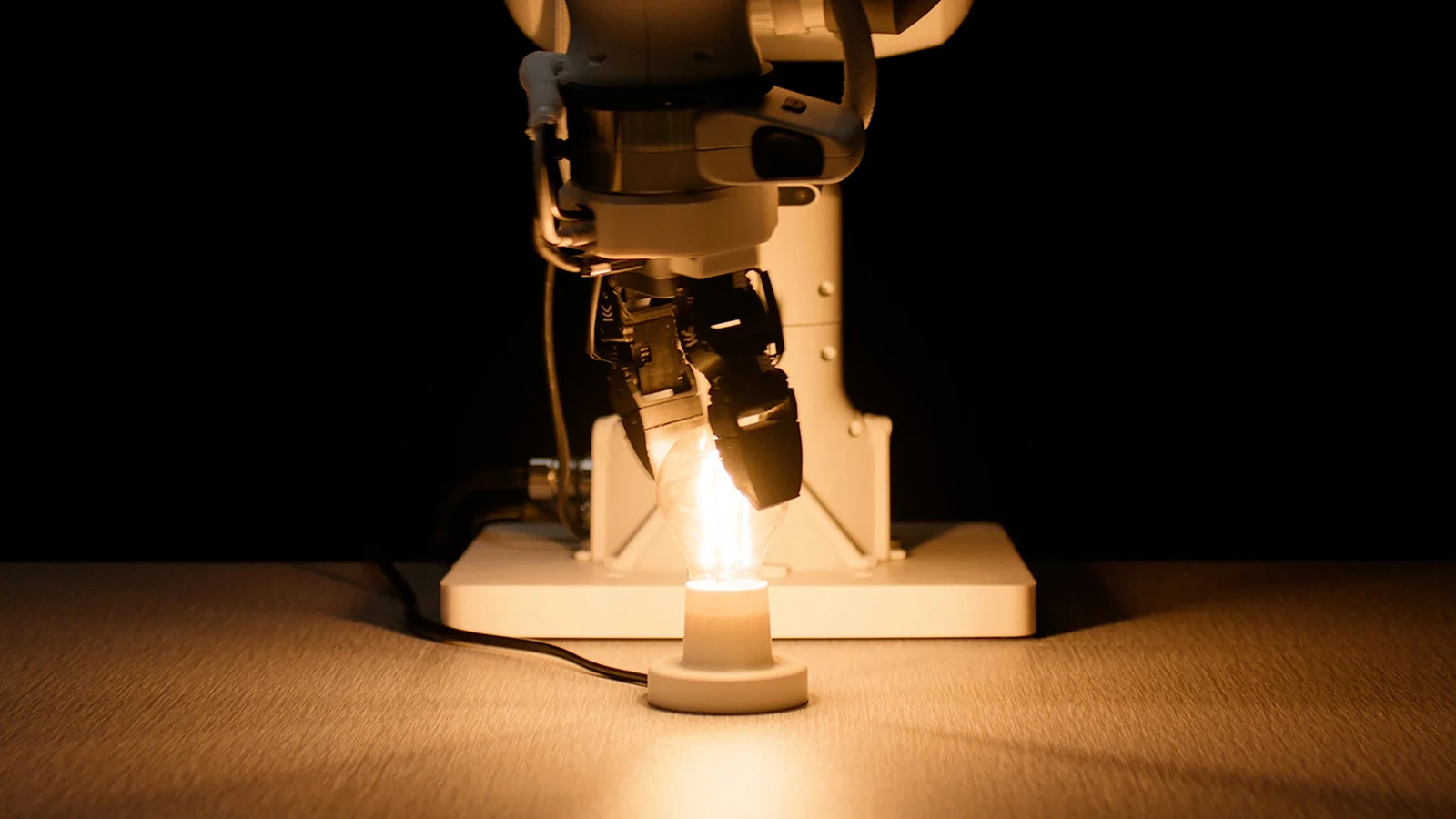
Eka asserted that the same robots are capable of performing intricate tasks such as screwing in a light bulb and inserting wires, targeting the challenging domain of dexterous manipulation.
Mastering Physics Over Human Mimicry
Eka Robotics maintains that robots should master physics rather than simply mimic human data to become truly general-purpose machines. This philosophy aims to allow robots to build an intuition for tasks in the same way humans do by jointly reasoning about vision and forces.
The company leverages simulation learning, noting that its VFA model demonstrates a shrinking sim-to-real barrier. Within a simulation environment, the team can generate thousands of hours of robot experience in minutes by varying objects, environments, and physical conditions.
Eka claimed that transferring this simulated learning to the real world provides a scalable, performant, and capital-efficient path toward a foundation model for manipulation. The firm stated that reinforcement learning at scale yields performance, while breadth of experience builds generality.
Investor Backing and Strategic Goals
The Series A funding round was jointly led by Andreessen Horowitz (a16z) and F-Prime, a venture capital fund affiliated with FMR LLC, which is the parent company of Fidelity Investments.
Raghu Raghuram, a general partner at a16z, praised the approach, stating that Eka’s Vision-Force-Action model is the first he has seen to truly solve manipulation with the necessary generality and throughput for commercial deployments.
The financing also included continued support from the lead investors of Eka's seed round, Obvious Ventures and E14 Fund. Additional participation came from MFV Partners, Bison Ventures, Glasswing Ventures, Samsung Next, and several Fortune 500 strategics.
Targeting Complex Real-World Tasks
Industry observers emphasized the importance of high success rates and speed over thousands of repetitions on factory floors. Shyam Kamadolli, a managing director at Fine Structure Ventures, noted that achieving peak performance requires a deep understanding of physics and breaking free from reliance on human demonstrations.
Kamadolli added that Eka’s VFA model tackles the most difficult problem in robotics—dexterous manipulation—in a unique way through simulation and reinforcement learning, expressing confidence that the approach will hold up in real-world deployments of complex tasks.
Sources
- The Robot ReportEka Robotics raises $150M to scale its vision-force-action model for robots
Continue chronologically


Related stories
doxx.net Secures $38M to Launch Agentic Defined Networking Platform
doxx.net has raised $38 million in Series A funding to roll out its Agentic Defined Networking platform designed to protect AI agents on the internet.

Tutor Intelligence Raises $75M to Scale Robot AI
Tutor Intelligence secures $75 million in Series B funding led by Andreessen Horowitz to scale its robot AI model training and deployments.
Ex-Palantir Execs Launch Dream with $17M to Transform Construction
Former Palantir executives have launched Dream, securing $17 million in seed funding led by Andreessen Horowitz to build AI world models for construction.

TypeSafe AI Reaches $7.5B Valuation After Launch of Jev
TypeSafe AI has raised $870 million in a funding round led by Andreessen Horowitz, valuing the startup at $7.5 billion just weeks after launch.