Robotics and Physical AI Tackle Physical Security Challenges
As cyber-physical threats rapidly evolve, organizations are increasingly turning to advanced robotics and physical AI to protect critical infrastructure and assets.
 Radwan AbdulhadiEditor and technology writer
The Convergence of Robotics and Artificial Intelligence
Robotics and artificial intelligence are deeply intertwined technologies where the former serves as the body and the latter provides the brain. Organizations continue to develop these systems from traditionally rigid machinery into smart, adaptive agents designed to enhance productivity and operational efficiency. In particular, the evolving sector of physical security can benefit from advancements in physical AI.
During 2026, over $23 billion has been invested in organizations focused on improving how robotics and artificial intelligence work together to protect people and property. With more complex risks threatening critical industry infrastructure such as data centers and manufacturing plants, organizations face new challenges in safeguarding vital assets.
Understanding Modern Physical Security Challenges
Physical security challenges in 2026 often arise from connectivity, fitting into the broader categories of cyber-physical convergence, legacy constraints, and global volatility. Understanding these primary challenges highlights where physical AI and robotics can fit into an organization's security strategy. Connected security systems including interlinked cameras and access controls can leave considerable vulnerabilities if malicious actors attack the central platform.
A notable example is the Jaguar Land Rover incident, where stolen credentials and social engineering allowed state-sponsored actors to access IT infrastructure and completely halt physical production, costing the British economy an estimated $2.5 billion. Operating older hardware and software only enables personnel to react rather than prevent events, falling short in an increasingly tense geopolitical and socioeconomic environment.
Next-Generation Security Assets at GTC Taipei 2025
At GTC Taipei 2025, robotics and physical AI companies outlined strategies centered on the responsible, real-world deployment of security technologies. Robot research and development company Foxlink presented its robot dog as a next-gen physical security asset designed to tackle core protection challenges.
The quadruped robot features integrated smart sensors that help observe patrolled areas, using physical AI to register, process, and act on anomalies. This functionality enables a scalable, proactive approach to security by utilizing robotics mobility and AI reasoning models to continuously learn and improve against complex threats.
Real-World Applications and Proactive Defense
The Foxlink and Luminys system illustrates what physical AI and robotics can achieve in solving security challenges. In scenarios involving cyber-physical convergence, advanced optics and smart sensors help identify operational anomalies and detect potential breaches early, integrating smoothly with legacy technologies.
Furthermore, large language models and generative AI for data analytics help security teams interpret high volumes of video, access-control, and sensor data. These tools surface patterns that require human review or faster operational response, with similar robotic assets already active in hospitals, shopping malls, and university campuses worldwide.
Sources
- The Robot ReportHow robotics and physical AI can responsibly tackle key physical security challenges
Continue chronologically

Related entity coverage
Related stories
NVIDIA Halos Aims to Standardize Safety for Physical AI
NVIDIA introduces the Halos safety ecosystem to address the complex requirements of deploying autonomous vehicles and robotics at scale.
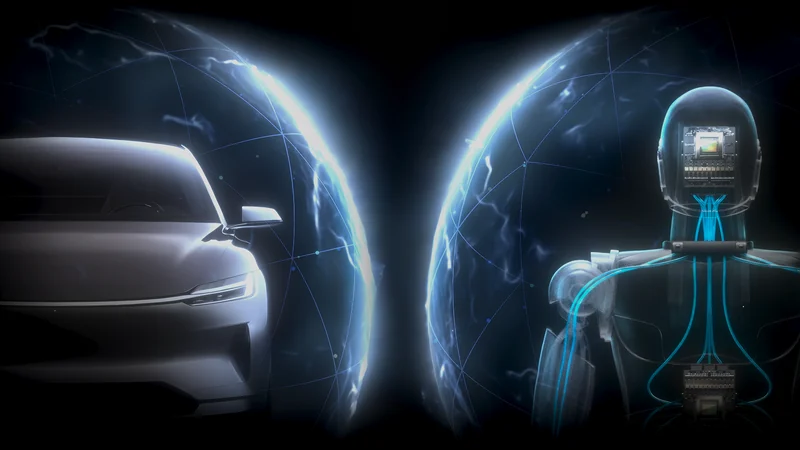
NVIDIA Launches Isaac ROS 5.0 to Advance Agentic Robotics
NVIDIA has released Isaac ROS 5.0, introducing new AI agent capabilities and open-source tools to accelerate physical AI development for robotics.
Aniimo Launches on GeForce NOW as Cloud Adventure
Pawprint Studio’s Aniimo joins GeForce NOW at launch, bringing its open-world creature-catching adventure to supported cloud-gaming devices.

Nvidia Launches 64GB DGX Spark Starting at $4,999
Nvidia introduces a more affordable 64GB version of its DGX Spark local AI workstation, featuring the GB10 Superchip and a starting price of $4,999.