
NVIDIA Halos Aims to Standardize Safety for Physical AI
As autonomous systems move into shared human environments, NVIDIA is launching a full-stack safety framework to ensure reliable machine operation from development through deployment.
 Radwan AbdulhadiEditor and technology writer
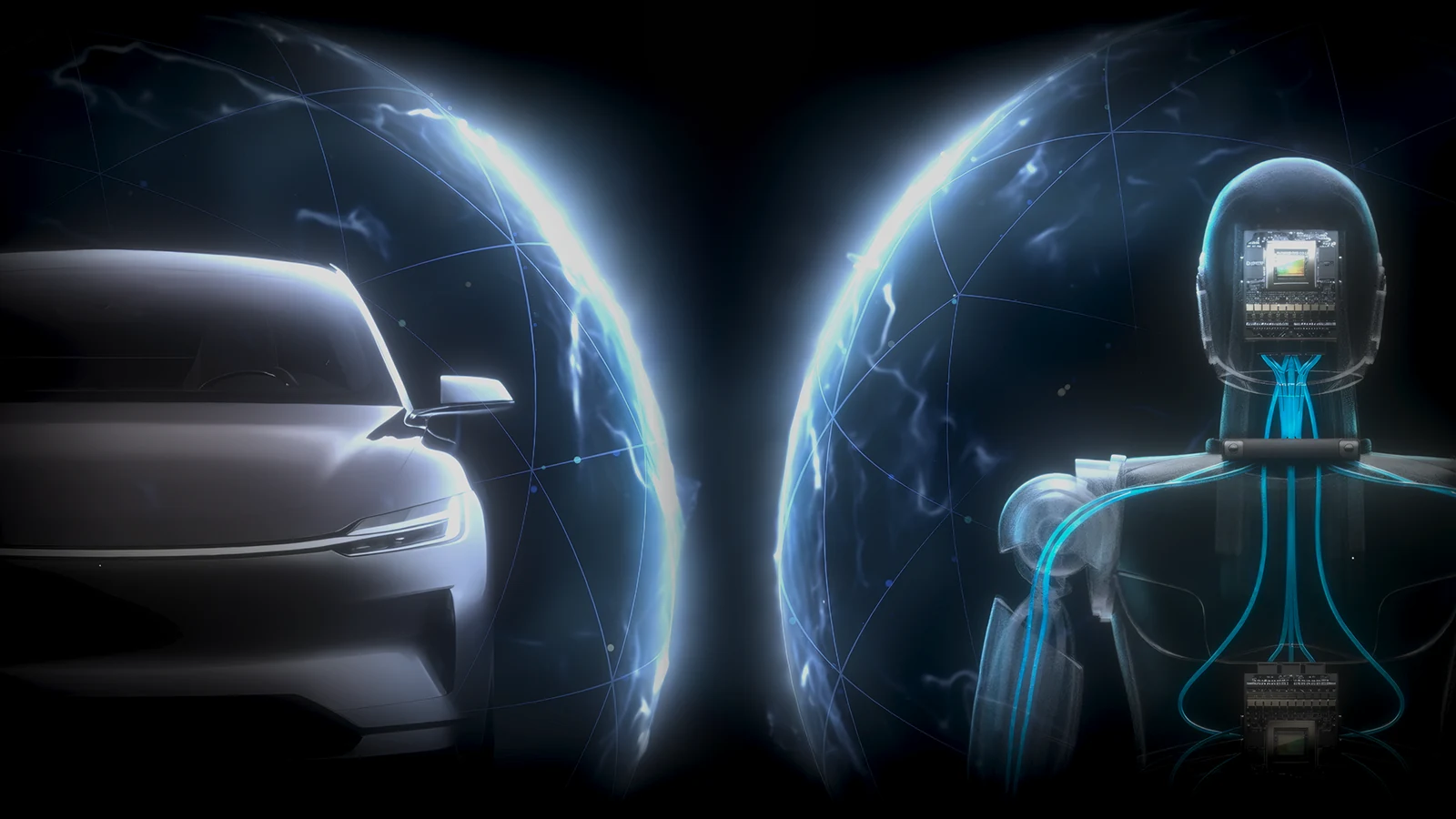
The Escalating Need for Physical AI Safety
The transition of Physical AI from research labs to real-world deployment is accelerating at an unprecedented pace. As these machines—ranging from autonomous vehicles (AVs) to humanoid robots—begin to operate in environments shared with people, such as warehouses, factories, and public roads, the requirement for safety must scale alongside their adoption. According to projections from ABI Research, the installed base of level 3-5 AVs is expected to reach 49 million units by 2035, while Omdia anticipates the deployment of approximately 60 million industrial robots in the decade leading up to 2035.
True safety in this context goes beyond a one-time validation check. It requires proving that machines can behave predictably when their digital decisions translate into physical actions. This necessitates a multilayered approach covering hardware, AI-specific behavior, and the surrounding operating environment. As developers move toward this new safety model, they must account for dynamic conditions that cannot be managed by static barriers alone, requiring autonomous systems to perceive, adapt, and reach safe states during unexpected events.
Introducing NVIDIA Halos: A Full-Stack Approach
To address these multifaceted challenges, NVIDIA has developed NVIDIA Halos, described as the first full-stack safety system designed specifically for physical AI. This framework integrates over a decade of expertise in functional safety, sensor fusion, and AI behavioral assurance. By providing tools for every layer—from the underlying silicon to the final system deployment—the ecosystem helps developers engineer safety consistently across both autonomous driving and robotics domains.
Hardware and Software Foundations for AVs
For the automotive sector, the safety infrastructure relies on robust hardware and specialized operating software. Central to this is the NVIDIA DRIVE AGX Thor, an accelerated compute platform designed for safety-critical applications. This is complemented by the NVIDIA Hyperion reference architecture, which provides the necessary foundation for level 4 autonomous vehicle development. To unify these components, the ecosystem utilizes Halos OS, which is built upon the ASIL-D certified DriveOS to ensure deterministic communication and system isolation.
Expanding Safety Standards in Robotics
The robotics industry is following a similar path as autonomous machines become common in industrial workspaces. NVIDIA addresses this with the NVIDIA IGX Thor, an industrial-grade platform that combines accelerated computing with a dedicated Functional Safety Island. This hardware is built to comply with international standards such as IEC 61508 and ISO 13849. To ensure these machines can handle complex tasks, developers are increasingly integrating sophisticated humanoid robots that require rigorous safety validation.
Validation at this scale relies heavily on simulation. By using platforms like NVIDIA Isaac Lab and NVIDIA Omniverse, developers can test robot behavior across thousands of edge cases that would be difficult or dangerous to replicate in the real world. This simulation-based approach is supported by the 'Outside-In Safety Blueprint,' which utilizes external cameras and vision agents to monitor environments and support higher-level facility safety.
An Evolving Ecosystem
The adoption of these frameworks is growing, with a wide array of industry players contributing to the safety ecosystem. In the automotive space, major manufacturers like Geely, Isuzu, and Nissan are utilizing these safety tools, while mobility providers including Uber, Lyft, and Grab are leveraging the technology to scale their robotaxi operations. Robotics companies, such as Agility, are integrating these safety foundations into platforms like the Digit 5 humanoid robot to ensure safe interaction with human coworkers.
As the industry progresses, the focus remains on operationalizing safety across the entire product lifecycle. Through continuous collaboration between certification bodies, silicon providers, and software developers, the initiative aims to turn complex safety requirements into repeatable, inspectable processes, as detailed further in the NVIDIA Blog.
Sources
- NVIDIA BlogWhy Deploying Physical AI at Scale Demands Safety at Every Layer