
GitHub Expands Enforcement of Advanced Security Settings
GitHub has expanded its enforcement controls for Advanced Security configurations, allowing enterprise administrators to apply settings across their organizations. The change is designed to help security and compliance teams maintain consistent policies throughout an enterprise.
 Radwan AbdulhadiEditor and technology writer
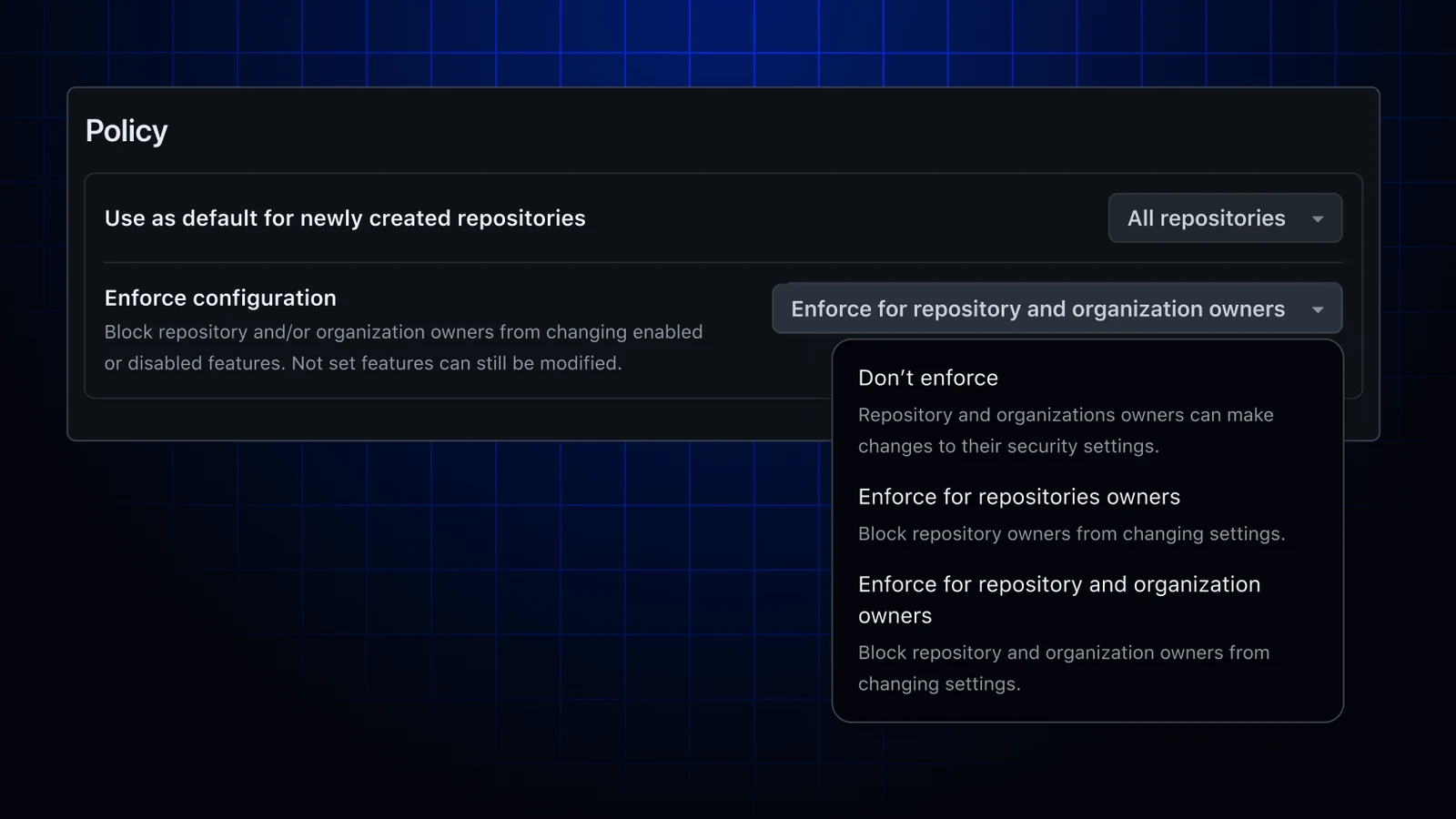
Enterprise-level enforcement expands
GitHub says enterprise administrators can now enforce GitHub Advanced Security configurations across their organizations. The update gives administrators at the enterprise level a way to apply defined security settings consistently across the organizations under their control.
Under the expanded model, both organization administrators and repository administrators can be prevented from overriding settings established at the enterprise level. GitHub presents the change as a way for security and compliance teams to apply consistent policies across an enterprise rather than relying on separate decisions at lower administrative levels.
A change from the previous model
Previously, GitHub’s enforcement capability only prevented repository owners from changing these settings. The new option extends that protection to organization administrators, closing the ability for either organization or repository administrators to override configurations enforced by the enterprise.
The distinction affects how security configurations are governed across different administrative layers. Enterprise administrators can define the applicable policy, while the selected enforcement level determines which lower-level administrators are restricted from changing it.
Three enforcement choices
GitHub provides three choices in the Enforcement dropdown within a security configuration. Administrators can select “Don’t enforce,” “Enforce for repository owners,” or “Enforce for repository and organization owners.”
The first option leaves the configuration unenforced. The second prevents repository owners from changing the relevant settings, matching the earlier enforcement scope described by GitHub. The third extends the restriction to organization owners as well as repository owners, giving enterprise administrators the broadest control identified in the announcement.
Consistent security and compliance policies
The change is aimed at enterprises that need Advanced Security configurations to remain consistent across multiple organizations. By preventing lower-level overrides, the enforcement controls can help ensure that settings selected at the enterprise level continue to govern the repositories and organizations covered by those configurations.
GitHub specifically connects the capability with the work of security and compliance teams. The company says the expanded controls help those teams apply consistent policies across their enterprise, reducing the scope for administrator-level changes that conflict with centrally defined settings.
How administrators configure enforcement
To configure the behavior, enterprise administrators select an enforcement level from the Enforcement dropdown in a security configuration. The available choices allow an organization to decide whether settings should remain changeable, be protected from repository owners, or be protected from both repository and organization owners.
GitHub directs administrators to its documentation for more information about security configurations. The company’s announcement does not specify additional changes to the configurations themselves; it focuses on who can override them and how enterprise administrators choose the enforcement scope.
Sources
- GitHub ChangelogEnforce GitHub Advanced Security configurations