
Google's Googlebooks Aim to Bridge Android Phones and Laptops
Google's first Googlebooks are up for pre-order and arrive October 4, bringing a new Android-based platform designed to integrate tightly with Android phones. The devices were showcased at a New York City press event where Google outlined its vision for the platform.
 Radwan AbdulhadiEditor and technology writer
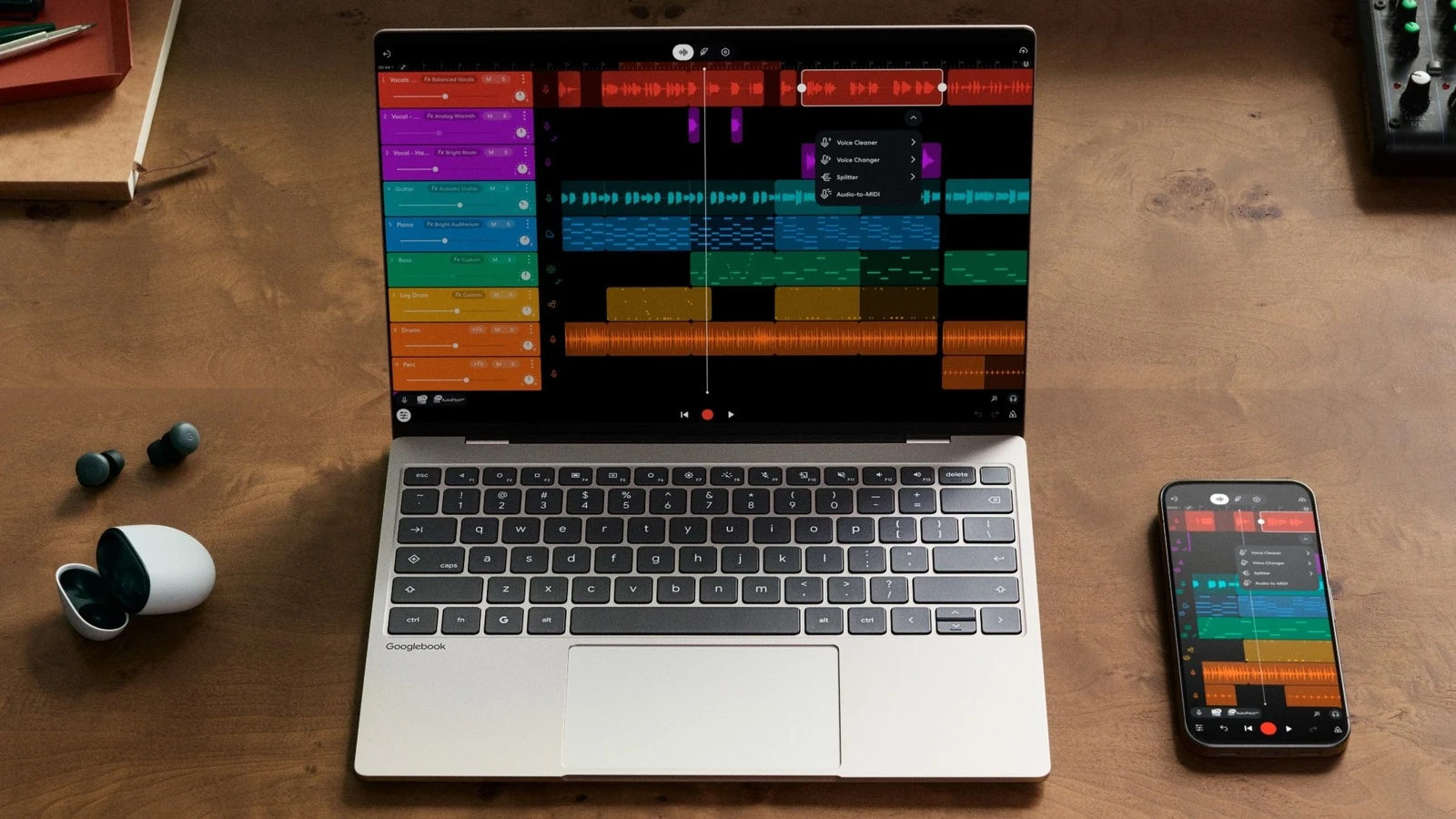
Googlebooks Enter Pre-Order
Google's first Googlebooks are now up for pre-order, with the Android-based laptops scheduled to arrive on October 4. The platform traces back to when Google formally announced Googlebooks as the Android-based evolution of ChromeOS and Chromebooks. After months of anticipation and hardware leaks, Google has begun revealing the details of both the operating system and its hardware roadmap. At a press event in New York City, Google and its previously announced partners showed off five new laptops, offering the most comprehensive look yet at the platform's direction. [Googlebooks](https://www.engadget.com/2263649/googlebooks-a-laptop-that-works-better-with-your-android-phone/) [Google formally announced Googlebooks](https://www.engadget.com/2170814/googlebooks-are-the-android-based-evolution-of-the-chromebook/) [showed off five new laptops](https://www.engadget.com/2263652/i-tried-every-new-googlebook-announced-today/)
A Laptop Built for Android Phones
Google's central pitch for Googlebooks is making a laptop that works as seamlessly with an Android phone as a Mac does with an iPhone. Sameer Samat, president of Android, framed the initiative at the top of his presentation, stating that no existing laptop platform was built to work seamlessly with Android phones. He also noted that laptops have been around for over 30 years and were largely designed before mobile devices existed, arguing that there is an opportunity to rethink the experience for how people get things done today. The shared codebase between Googlebooks and Android should make developing for both platforms simpler, according to Google. [Google](https://www.engadget.com/category/google/)
Tighter Phone Integration
Google demonstrated numerous examples of tighter integration between Googlebooks and Android phones. Logging into a new device with a Google account now pulls in saved passwords, Wi-Fi networks, and message history automatically. The "continue on" feature allows users to hand off apps from their phone to a Googlebook, keeping everything intact. During a demo, the cloud-based music-making app BandLab transferred a project with multiple tracks from an Android phone to a nearby Googlebook almost instantly. Google also showed that Gmail could open its web interface on the Googlebook even when launched from the Android app on a phone. A new Files app further integrates the phone, displaying it alongside the laptop and Google Drive for easy file transfers. An icon in the dock also allows users to cast and stream Android apps directly to the Googlebook.
AI-Powered Features and the Magic Cursor
AI is a core component of the Googlebook experience. [Laptop-specific Gemini features](https://www.engadget.com/google-is-bringing-a-slew-of-ai-powered-software-features-to-chromebook-plus-laptops-130049652.html) have been part of ChromeOS for several years, including tools like the "quick insert" menu and a dedicated hardware key [announced in late 2024](https://www.engadget.com/computing/laptops/samsungs-latest-premium-chromebook-combines-a-big-screen-with-a-thin-and-light-body-130012477.html). An evolved version of these capabilities is present in Googlebooks, but the standout feature is the Magic Cursor, an AI-powered cursor Google first teased in the spring. The Magic Cursor allows users to select anything on screen by wiggling a finger across the trackpad. The standard cursor transforms into a Gemini-enabled tool capable of detecting specific elements such as images, paragraphs of text, or entire windows. Selected items are added to a Gemini queue, enabling users to work with multiple elements simultaneously. Google demonstrated the feature by selecting items related to running training data, including metrics and notes. Google has also been developing a [natural language transcription tool](https://www.engadget.com/2244799/google-gemini-latest-transcription-model-can-turn-ramblings-into-structured-text/) as part of its Gemini suite.
Under the Hood
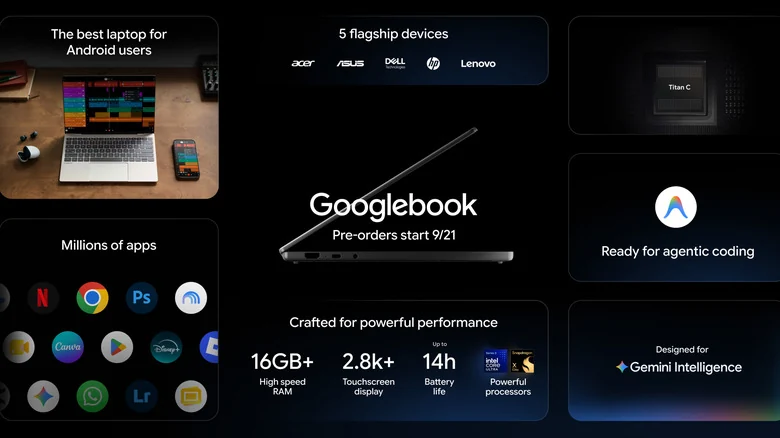
While the Googlebook interface will feel familiar to ChromeOS users, the underlying operating system is fundamentally different. Android powers the platform, though Google points out that developers also have access to an isolated Linux environment with a full Terminal. The platform retains the same Titan hardware security chip and built-in malware protection found on Chromebooks. Google emphasized that the shared codebase with Android phones means connections between devices should be faster and more robust than what ChromeOS currently offers. The platform still supports the Chrome browser and can install Android apps from the Play Store.
Competition and Outlook
Whether Googlebooks can attract users away from established platforms remains an open question. Microsoft has long offered a "Link to Windows" app that provides phone-mirroring features, and it has accumulated over a billion downloads from the Play Store. App streaming from Android to Chromebooks already exists and functions well, making it difficult to pinpoint a single differentiating feature. Google will need to demonstrate that its deeper integration and AI-driven tools are compelling enough to convince Windows and Mac users to consider a new platform. The success of Googlebooks may ultimately depend on whether the Android-phone connection proves indispensable to everyday workflows. [Big Tech](https://www.engadget.com/category/big-tech/)
Sources
- EngadgetGoogle's pitch for Googlebooks: A laptop that works better with your Android phone