Google Rolls Out New AI Defenses on Android Against Scams
Google has announced a new suite of AI-powered security features for Android designed to counter sophisticated mobile scams and voice-cloning threats.
 Radwan AbdulhadiEditor and technology writer

Evolving Mobile Scams Target Android Users
Google announced new AI-powered defenses against scam messages and call-forwarding abuse on Android, which are currently rolling out to eligible devices. According to the tech giant, mobile threats have advanced significantly beyond basic robocalls and standard phishing texts.
Modern mobile scams frequently incorporate spoofed numbers, fraudulent bank alerts, and AI voice cloning to deceive victims. Because these operations are increasingly complex, Google notes that it has become nearly impossible for ordinary users to catch every single red flag on their own.
While existing Phone and Messages scam detection features already flag more than 5 million suspected scam calls and texts on a monthly basis, these newly introduced measures are designed to intercept an even higher volume of threats.
Cloud and On-Device Gemini Protections in Messages
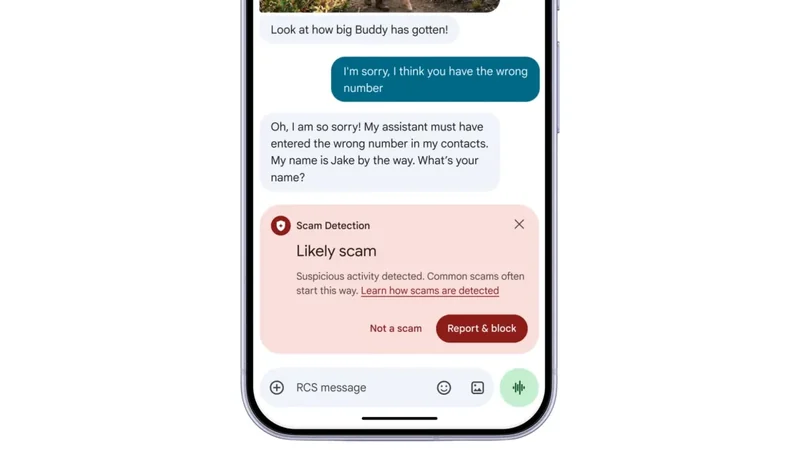
The primary focus of the new security updates centers on Google Messages, utilizing cloud-based Gemini-backed analysis to scrutinize complex conversations for indicators of fraud. To safeguard user privacy, these conversation analyses with unknown senders occur inside an encrypted Private AI Compute environment.
Additionally, the system incorporates on-device Gemini Nano checking capabilities to evaluate unfamiliar links using real-time web signals. Users will also encounter much clearer warnings before attempting to open links sent from unsaved numbers.
Google has configured these new cloud-based protections to be disabled by default, giving users the choice to activate them according to their preferences.
Expanding Chat Notifications and Privacy Controls
Beyond Google Messages, the security enhancements span multiple facets of the Android operating system. On-device scam detection for chat notifications, which was previously launched on Pixel, is scheduled to reach hundreds of millions of additional users through Android device partners later this year.
Android's existing sensitive-information masking capabilities are also broadening their reach. This feature now expands to Chrome and Android WebView, ensuring that login fields and payment screens are hidden during live screen sharing sessions.
Targeting Call-Forwarding Abuse and Bank Spoofing
To counter telecom-based abuse, Android now actively blocks applications from silently enabling call forwarding in the background. Furthermore, the system issues warnings to users before manually entered MMI forwarding codes can take effect.
Google is also expanding its verified bank calls system, introduced earlier this year, by adding financial institutions from more regions. This mechanism determines whether an incoming call originated from a genuine bank call center or if it represents a spoofing attempt.
If verification fails, Android automatically terminates the call. Google reports that since June, this specific mechanism has successfully blocked over 3 million fraudulent calls for Banco do Brasil and Itaú Unibanco alone, with support also extending to Revolut and other global financial institutions.
Recommended Security Best Practices
As mobile threat vectors continue to evolve, Android users are advised to upgrade their devices to the latest software release and keep all applications thoroughly updated.
Furthermore, users should always independently verify caller and sender identities whenever they receive unexpected requests for account-related actions or sensitive personal information.
Sources
- BleepingComputerAndroid gets AI defenses against messaging scams, fake calls
Continue chronologically


Related entity coverage
Related stories
Google Messages Adds Enhanced Protection Mode for Android
Google is introducing an enhanced protection mode in Google Messages and new Android security features for Cybersecurity Awareness Month.
Google Messages Rolls Out Enhanced Protection Against Scams
Google Messages for Android is rolling out an Enhanced Protection mode featuring cloud Gemini models and Private AI Compute to counter scams.

Gemini for Android Rolls Out Side Panel and Settings Redesign
The Gemini app for Android has rolled out fresh redesigns for both its side panel and settings menu following previous updates.
Google's Googlebooks Aim to Bridge Android Phones and Laptops
Google's first Googlebooks go on pre-order October 4, promising deeper Android phone integration, AI tools, and a new Android-based foundation.