TrashBench Cools PC With Scrapped AC Radiator
An Australian hardware enthusiast has taken unconventional PC cooling to extremes by repurposing a discarded outdoor unit from a split air-conditioning system into a massive water-cooling radiator.
 Radwan AbdulhadiEditor and technology writer
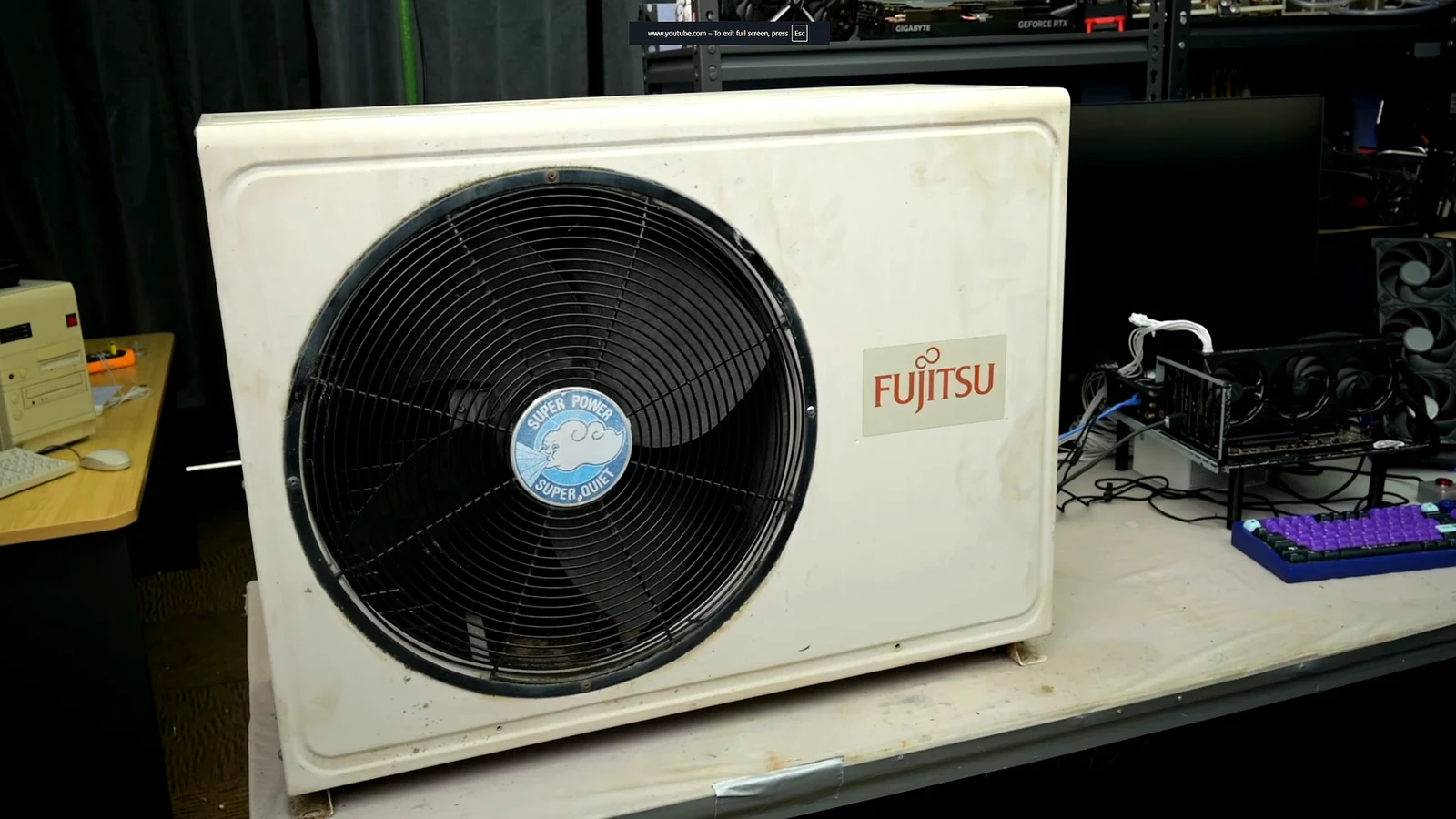
Repurposing Air Conditioning Hardware for PC Cooling
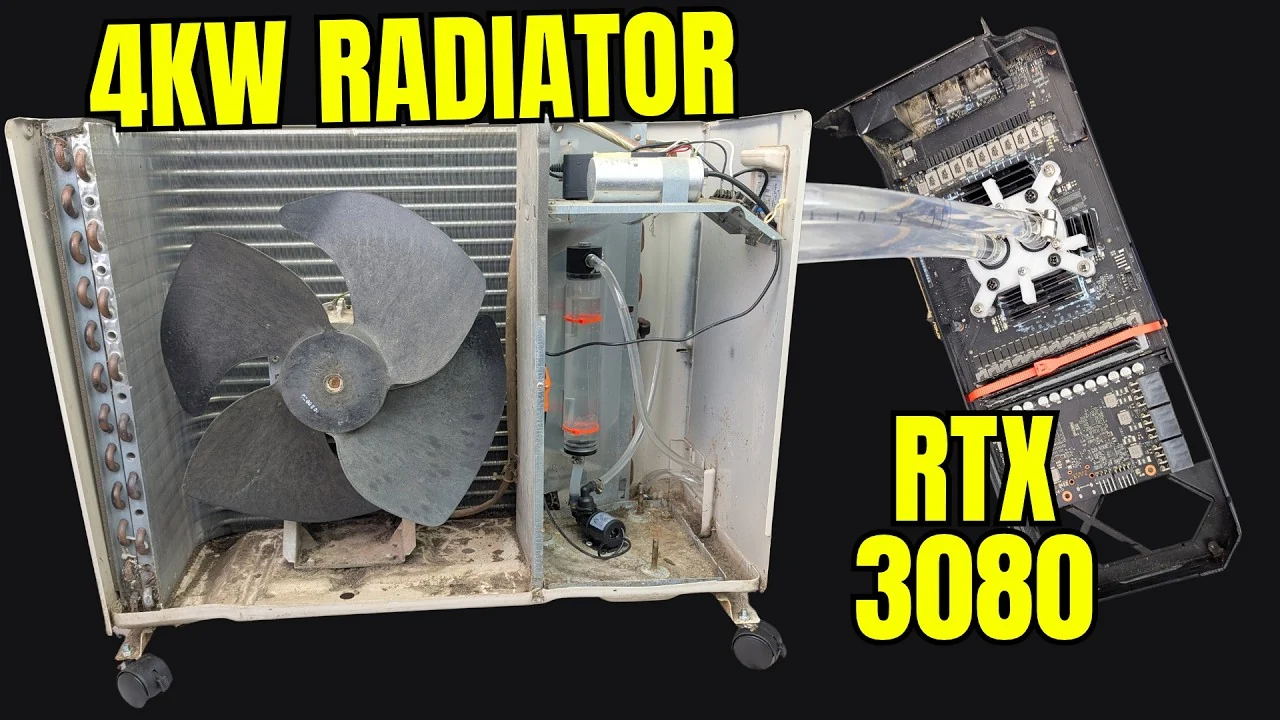
PC hardware experimentation often leads builders down unconventional paths, and Australian hardware examiner TrashBench has recently showcased one of the most extreme cooling setups yet. Known previously for [putting a graphics card] in unusual configurations to optimize airflow, TrashBench turned his attention toward heavy-duty HVAC equipment. He acquired an old outdoor radiator-fan unit rated at 4 kilowatts from a split air-conditioning setup, stripped away the unnecessary internal components and gas, and [hooked it up] to a custom water-cooling loop to evaluate its thermal dissipation limits.
The modified unit retained only the core radiator, fan, and an integrated pump system. To make the bulky hardware easier to manage in a workshop environment, casters were added to the base of the main enclosure. Meanwhile, a standard water reservoir was incorporated into the assembly to feed the loop. On the computer side of the project, TrashBench modified plumbing components like T-joints into Y-joints using applied heat and force, while crafting custom 3D-printed mounting brackets to secure the various cold plates to test hardware.
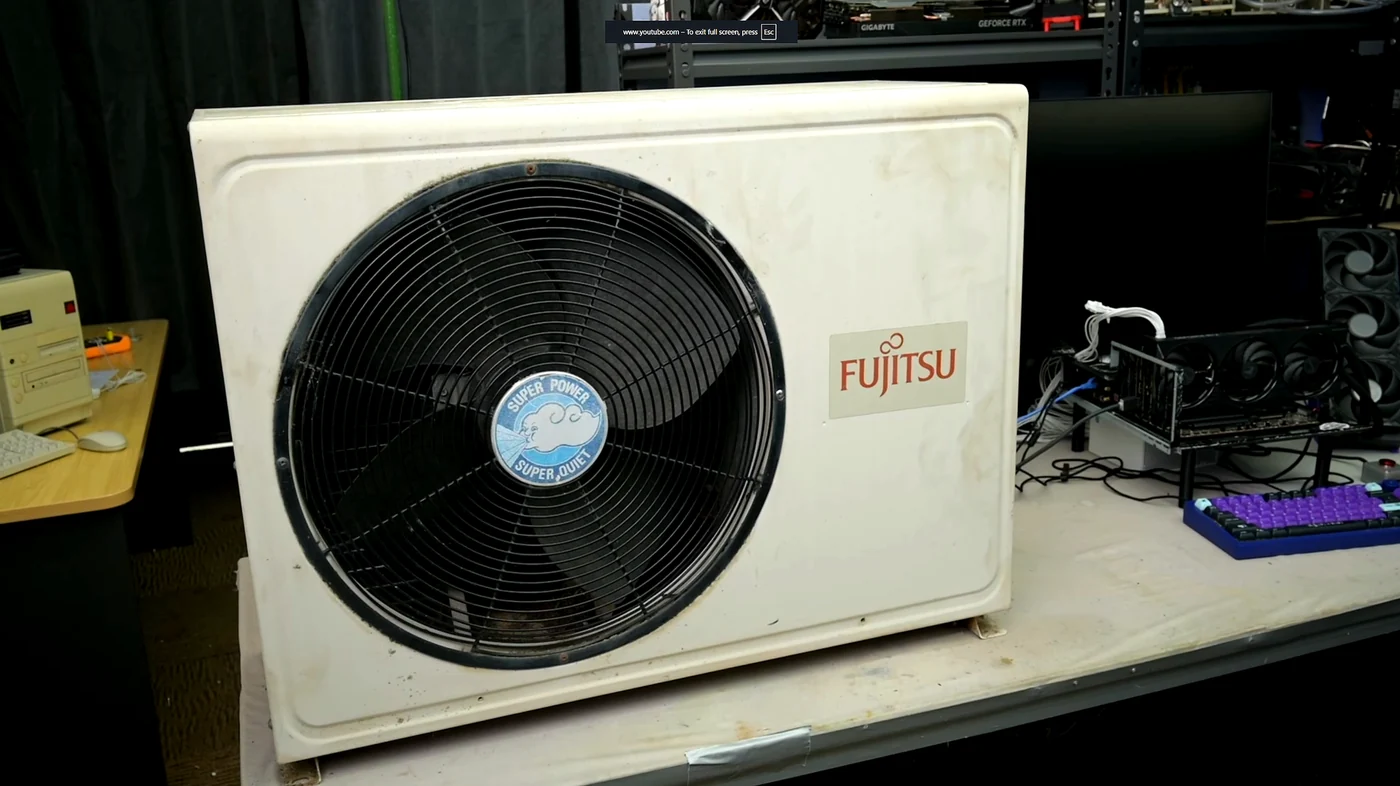
Testing Efficiency on Modern Nvidia Graphics Cards
With the makeshift HVAC cooling system fully operational, testing began using a pair of distinct graphics cards: a power-efficient Nvidia RTX 5060 and a much more demanding, higher-wattage Nvidia RTX 3080. The RTX 5060 initially ran at a modest 52 degrees Celsius under its standard stock cooler. Once connected to the massive four-kilowatt radiator loop, the GPU temperature plummeted to a mere 33 degrees Celsius—roughly the temperature of lukewarm water—representing a significant 16-degree Celsius reduction overall.
Capitalizing on the substantial thermal headroom, TrashBench attempted aggressive overclocking on the RTX 5060. The boost clock target was pushed significantly higher from 2902 MHz up to 3300 MHz. Despite achieving a notable 14 percent increase in raw clock speed, the resulting average frames-per-second output in games saw a modest 3 percent uplift. This performance delta underscored just how tightly optimized Nvidia's stock power and performance curves have remained since the RTX 2000 hardware generations.
Pushing the RTX 3080 to Ambient-Level Temperatures
Following the efficient lower-tier GPU evaluation, the testing regimen moved to the much more power-hungry Nvidia RTX 3080. Under typical operating conditions, this card generates substantial heat and serves as a strenuous test for any cooling apparatus. However, the repurposed Fujitsu-based air conditioning radiator easily handled the thermal load.
During testing, the heavy-duty cooling loop successfully dropped the RTX 3080's operating temperature from 65 degrees Celsius down to an astonishing 28 degrees Celsius. This put the graphics card's operating temperature very close to the ambient room temperature. Similar to the previous experiment, attempts to further overclock the RTX 3080 yielded only a marginal 3 percent improvement in frame rates, proving that the hardware bottleneck shifted away from thermal constraints to architectural limitations.
Handling Combined CPU and GPU Loads
The final phase of the experiment tested whether the repurposed air conditioning radiator could handle a combined load featuring both a high-end graphics card and a notoriously difficult processor. The CPU chosen for the trial was the Intel Core i9 14900K, widely recognized as one of the most thermally challenging consumer desktop chips on the market due to its high power draw and immense heat output under full load.
When subjected to the combined stress test, the AC radiator loop lowered the Intel Core i9 14900K processor's operating temperatures by 18 degrees Celsius, bringing it down to 76 degrees Celsius. For a consumer processor running outside of specialized liquid nitrogen cooling setups, this was an impressive feat. Notably, the graphics card's thermal sensor did not move at all during the combined workload, indicating that the massive four-kilowatt cooling apparatus possessed vastly more thermal dissipation headroom than the tested PC hardware could saturate.
Sources
- Tom's HardwareTrashBench repurposes a trash 4-kW air conditioner radiator for his test bench to see how well it can cool a PC — achieves a shocking 28C on an Nvidia RTX 3080
Continue chronologically


Related entity coverage
Related stories
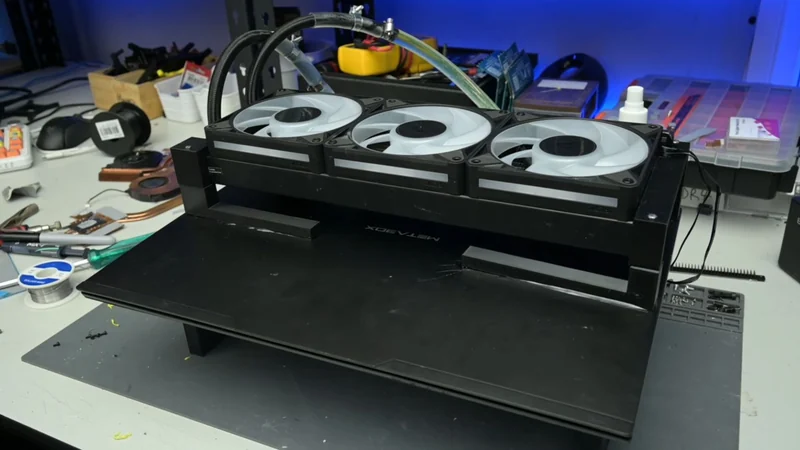
Modder Straps 360mm AIO to Laptop to Drop Temps Below 40°C
A hardware modder has successfully attached a 360mm AIO radiator to a laptop, dropping temperatures below 40°C and boosting performance.
Nvidia Vera CPU Benchmarked Against AMD and Intel
Nvidia's Vera data center CPU is benchmarked against AMD EPYC Turin and Intel Granite Rapids-AP, showcasing strong Python performance and bandwidth.
YouTuber Recreates 1996 PC to Escape Modern AI Tech Market
Exhausted by the modern AI-driven tech market and hardware shortages, technology YouTuber TrashBench recreated his very first 1996 PC build.
Tom's Hardware Hosts AI Chip Design Week
Tom's Hardware Premium presents AI Chip Design Week featuring an OpenAI interview, chipmaking insights, and agent safety updates.