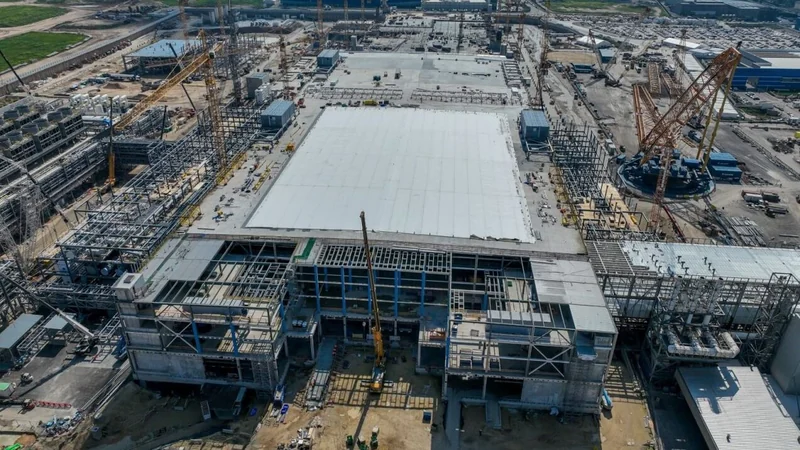
Intel Shifts Production to Server CPUs Amid AI Demand
Facing unprecedented AI demand and significant supply shortages, Intel is reallocating production capacity away from consumer hardware to prioritize high-performance server processors.
 Radwan AbdulhadiEditor and technology writer
Reallocating Capacity to Meet AI Demand
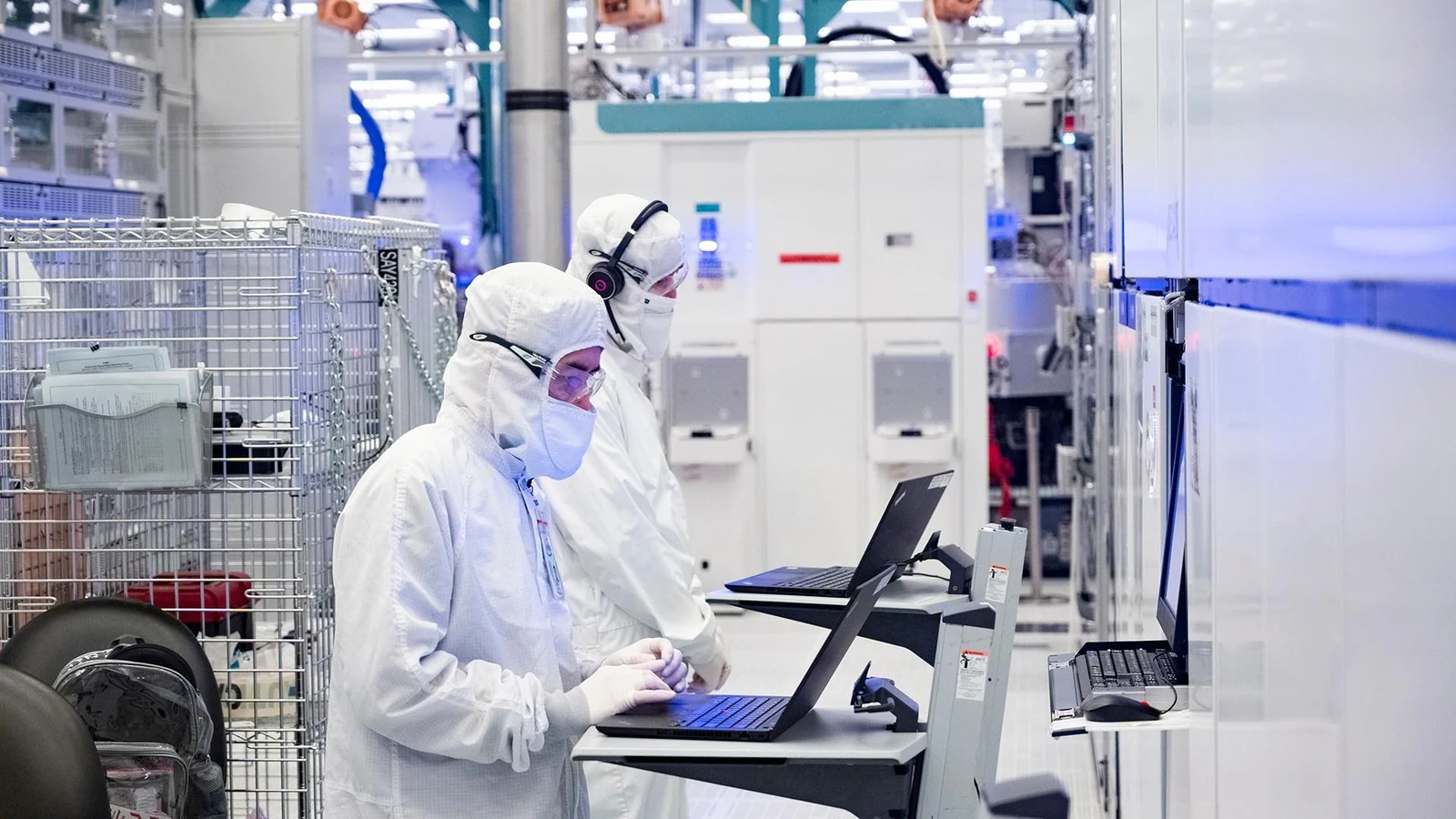
Intel is actively shifting its chipmaking and advanced packaging capacity to counter persistent supply constraints while capitalizing on massive interest from the artificial intelligence sector. Although the consumer PC market is shrinking and will continue to shrink in the coming quarters, company leadership remains confident that overwhelming data center demand will offset client declines. To address this shift, Intel is reallocating resources from client architectures toward data center processors like its Xeon lineup. Further details are available from Tom's Hardware in the original source material.
Chief Executive Lip-Bu Tan addressed the company's manufacturing direction during a recent earnings call, describing the current landscape as one of the most significant supply shortages in industry history. The boom is heavily fueled by unprecedented demand for super intelligence applications, prompting Intel to expand operations across the United States, Ireland, and Malaysia to scale up its server supply throughout future quarters.
Financial Performance and Data Center Growth
Intel's strategic focus on the enterprise market is already reflected in its financial statements. The company's Data Center and AI business unit brought in $7.3 billion in revenue during the third quarter of 2026, registering a 17 percent sequential increase and a nearly 80 percent surge year-over-year.
Management expects demand for data center CPUs to maintain its aggressive momentum through 2027 and 2028 as infrastructure operators continue deploying complex agentic and inference workloads. To support these deployments, Intel is ramping up output for its Xeon 6 'Granite Rapids' processor family, which utilizes the company's Intel 3 process technology.
Shifting Oregon and Ireland Manufacturing Lines
To keep pace with Xeon requirements, Intel is expanding production capacity at its Fab 24 manufacturing complex located near Leixlip, Ireland, though this facility's expanded output is not projected to come online until late 2027. In the interim, the company is implementing structural manufacturing adjustments domestically.
Intel plans to convert several manufacturing resources at its Oregon facilities from the Intel 18A process to Intel 3. Chief Financial Officer Dave Zinsner noted that these specific Oregon resources were originally slated to manufacture Panther Lake client processors. However, weaker overall personal computer demand has given Intel the flexibility to pivot that manufacturing capacity toward higher-demand data center wafers, with production expected to start in the second half of 2027.
Scaling Arizona Facilities and Advanced Packaging
Beyond Intel 3 updates, the technology giant is accelerating leading-edge manufacturing operations in Arizona. Equipment installation inside Fab 62 has moved ahead of schedule, with the site destined to serve as a high-volume manufacturing facility for 18A, 18A-P, and derivative technologies. These lines will support future products, including upcoming server CPUs and consumer parts like the Core Ultra 400-series 'Nova Lake' processors.
However, producing more silicon wafers alone does not entirely solve Intel's inventory bottlenecks. The corporation is also navigating critical shortages of advanced organic substrates required for multi-chiplet packaging technologies. Intel anticipates a roughly 40 percent increase in substrate availability by the second half of 2027 through collaborative supplier agreements.
Simultaneously, advanced packaging operations in New Mexico and Malaysia are undergoing rapid expansion. These facilities utilize complex system-in-package architectures, including EMIB, EMIB-T, and Foveros 3D stacking techniques, to assemble multi-die configurations for both internal product groups and external clients.
Sources
- Tom's HardwareIntel shifts production capacity from consumer to server CPUs in face of 'unprecedented' AI demand — company navigating 'one of the most significant supply shortages in history'
Continue chronologically
Related stories
Intel Fab 28 Shutdown to Cost $600M Following Explosion
Intel expects a $600 million financial impact and severe server chip disruptions following a deadly facility explosion and two-week shutdown.

Intel Confirms Nova Lake Processors to Use Advanced 18A-P Node
Intel CEO Lip-Bu Tan confirms next-gen Nova Lake desktop CPUs will use the enhanced 18A-P node, with further details expected at CES in January.

Microsoft adds Intel APX support to Windows 11 Insider
Microsoft is preparing for future processors by introducing an early Advanced Performance Extensions setting for Windows 11 Insiders.

Two Dead in Explosion at Intel's Chip Plant in Israel
An explosion at Intel's Kiryat Gat chip plant in southern Israel leaves two workers dead and another seriously injured, with police suspecting a gas cylinder malfunction.