Nordic Tech Ecosystem Accelerates Advanced Computing
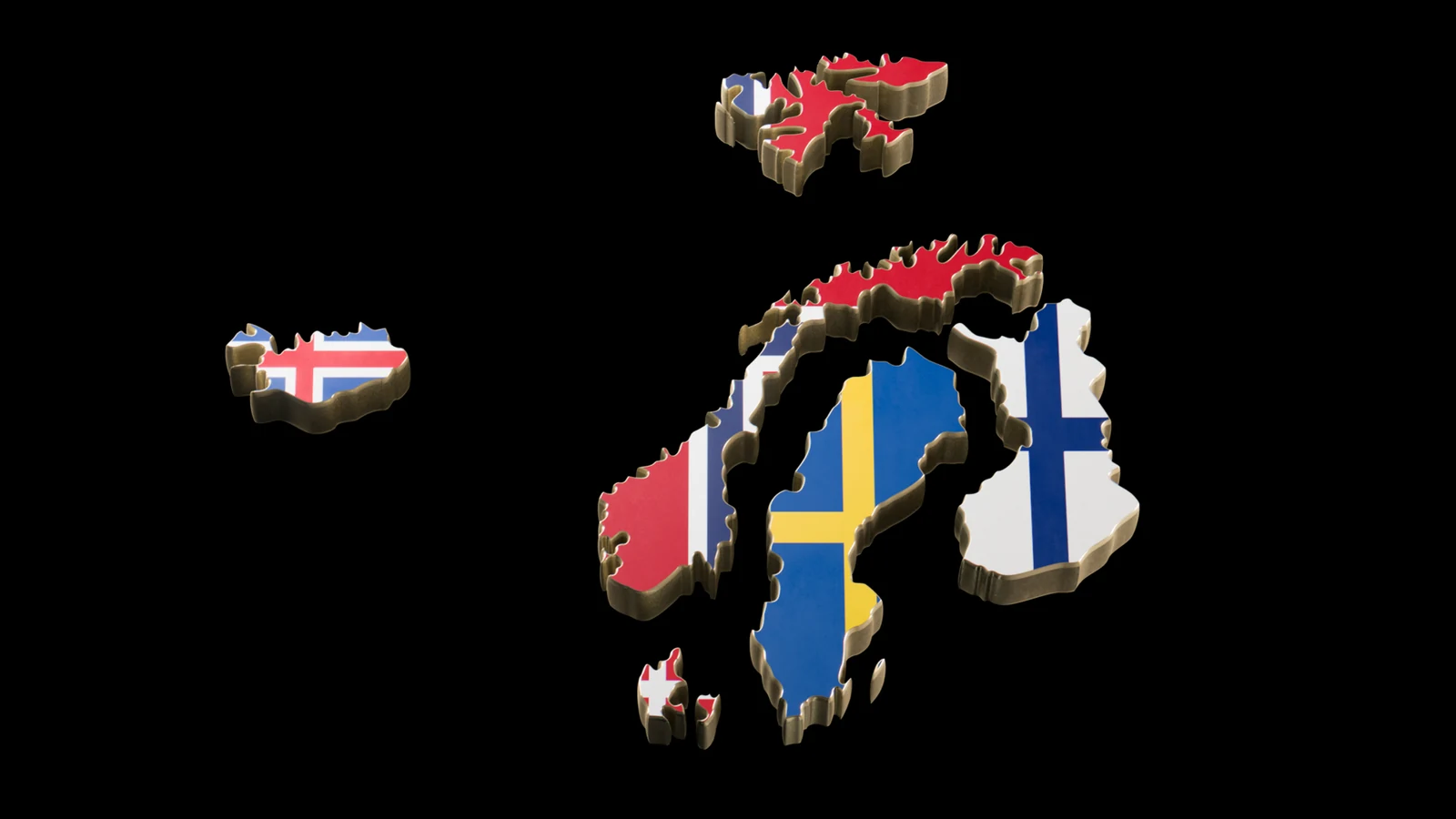
The Nordic region is emerging as a prominent European technology powerhouse, leveraging abundant renewable energy and robust infrastructure to scale advanced computing and AI developments.
 Radwan AbdulhadiEditor and technology writer
Infrastructure Growth and Sovereign Capabilities
The Nordic countries have established themselves as European leaders in unicorn startup density, producing the most emerging companies valued at $1 billion or more per capita on the continent. A new chapter for the region is currently unfolding as countries race to build one of Europe’s most consequential technology ecosystems, moving from ambition to practical application.
The foundation for this technological expansion relies on structural advantages including abundant renewable energy, rigorous data governance, and a strong research tradition bridging academia and industry. AI clouds are rapidly expanding throughout the region, with a projected 1 gigawatt of capacity expected to be deployed by the end of 2027 by cloud providers such as Bitdeer, CoreWeave, Crusoe, Hyperstack, Nscale, Verda, and Volta.
Supercomputing and Proprietary Enterprise Intelligence
In Sweden, a consortium anchored by Ericsson, AstraZeneca, Saab, SEB, and Wallenberg Investments, alongside SKF as a strategic partner, launched Sferical One. This shared supercomputer runs on two NVIDIA DGX SuperPODs equipped with 16 racks of NVIDIA DGX GB300 systems and 1,152 GPUs. The consortium intends to build services utilizing open models that allow researchers to securely customize and deploy their work.
Major regional technology companies are similarly building proprietary intelligence on accelerated hardware. Spotify leverages inference software to run audio recommendations faster and more efficiently at scale. Meanwhile, ABB Robotics developed RobotStudio HyperReality using simulation libraries to bridge the gap between robot simulations and real-world performance, achieving up to 99 percent simulation accuracy and reducing commissioning time by up to 80 percent.
In Finland, telecom company Elisa is introducing a beta of Moontalk AIRI, a real-time enterprise agentic assistant built on foundational architectures and distributed infrastructure to capture insights and document decisions during calls.
Startup Ecosystem and Open Models
Sweden’s startup ecosystem raised $2.8 billion in the first half of 2026 and is projected to reach $5 billion for the year. This rising generation of companies is building rapidly on open models to scale operations previously considered out of reach.
Stockholm-based startup Stilta is reinventing how companies protect intellectual property by post-training open models to scale patent analysis across large industrial portfolios. Concurrently, ConfidentialMind has deployed specialized query-adaptation tools, while Agaton utilizes rapid language model variants to speed up real-time customer conversation analysis on live sales calls.
Other Swedish ventures like Klang have fine-tuned speech models to lower transcription error rates drastically, while Gothenburg-based Embedl partnered with Space Cargo Unlimited to unveil an onboard prototype monitoring protein crystallization on a single module without continuous ground connectivity.
Autonomous Machines on Roads and Factory Floors
Advanced computing throughout the Nordic region extends directly into physical machinery and transport networks. Autonomous freight company Einride is actively building its next-generation Einride Driver for freight trucks utilizing advanced safety systems and open world models.
Additionally, Toyota Material Handling Europe is deploying autonomous machines to factory floors. By adopting a simulation-first approach in collaboration with partners, the material handling leader has cut solution deployment time by up to 50 percent across its global engineering, manufacturing, and innovation teams.
Frontier Research and Quantum Computing
Regional innovation also encompasses frontier domains such as quantum research. Stockholm-based FirstQFM utilized accelerated computing to train a model that reduces the execution time of quantum processors by 33 percent without sacrificing performance, successfully validating the optimization on a QuantWare quantum processor unit.
Further expanding collaborative research frameworks, the Sweden AI Factory has announced partnerships to open its high-performance infrastructure and technical expertise to startups and small- to medium-sized enterprises across life sciences, material sciences, autonomous systems, and gaming industries.
Sources
- NVIDIA BlogThe Nordics and NVIDIA Show What’s Possible When a Region Commits to Advanced Computing
Continue chronologically

Related entity coverage
Related stories
NVIDIA Expands Advanced Tech Access for European Science
NVIDIA deepens its commitment to Europe's scientific community through open learning resources, collaborations, and accelerated compute support.

France’s Tech Ecosystem Deploys NVIDIA Agentic Computing
Discover how France's technology ecosystem is scaling agentic computing across space, finance, retail, and public sectors using NVIDIA infrastructure.

Egypt’s AI Ecosystem Transitions from Enablement to Execution
Egypt’s AI sector achieves production-scale growth as developers and enterprises leverage new local infrastructure and increased regional investment.

Nvidia Backs Indian Startup Simplismart in $14M Funding Round
Nvidia participates in a $14 million Series B funding round for Indian startup Simplismart, supporting software that helps companies run AI models efficiently.