
Egypt’s AI Ecosystem Transitions from Enablement to Execution
A gathering at the Grand Egyptian Museum highlighted Egypt's maturing AI ecosystem, showcasing a shift from theoretical potential to practical, industrial-scale application.
 Radwan AbdulhadiEditor and technology writer
Scaling AI Infrastructure in Egypt
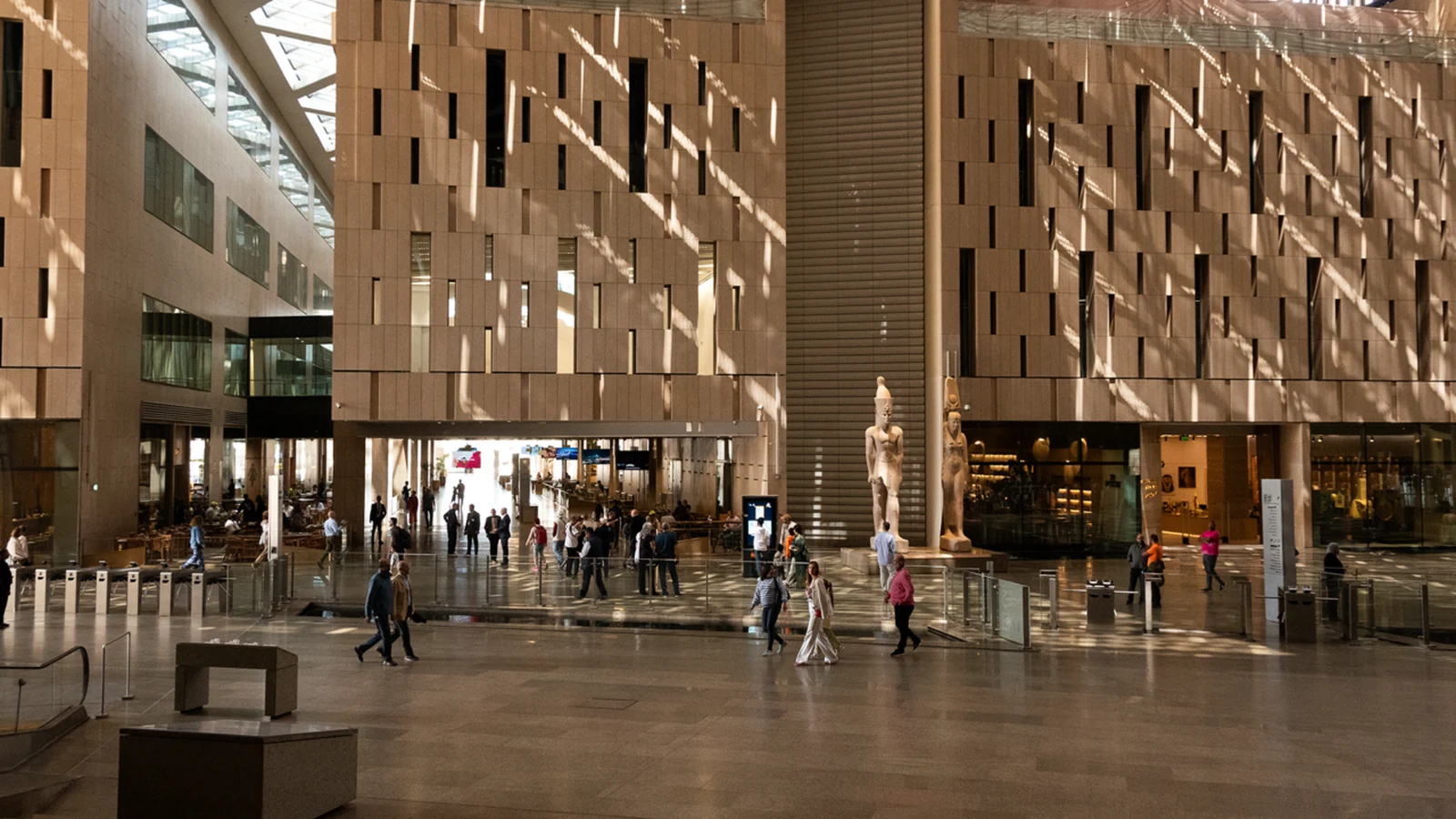
The Grand Egyptian Museum recently hosted a landmark reception for Egypt's AI builders, underscoring the nation's transition into a production-scale AI hub. The event featured insights from NVIDIA’s EMEA leadership, highlighting how the ecosystem—encompassing startups, researchers, and enterprises—is moving beyond early-stage exploration. A critical driver of this growth is the expansion of local data center capabilities. In June, the National Telecommunications Regulatory Authority of Egypt licensed Hassan Allam Data Centers to operate locally, leading to a $400 million development project spearheaded by Hassan Allam Utilities and the investment firm A15.
The momentum is supported by the widespread adoption of professional resources. The NVIDIA Deep Learning Institute has seen its Egyptian learner base increase more than tenfold in just one year, reflecting a surge in technical expertise. To further drive this transformation, the nation has welcomed significant initiatives like the [announced an AI factory initiative] between Cassava Technologies and Vodafone Egypt, which aims to provide government and business entities with GPU-as-a-service infrastructure.
A Growing Startup Landscape
A diverse array of startups is currently leveraging the [NVIDIA Inception] program to scale their operations across various sectors. Companies such as Aidera are deploying enterprise intelligence systems, while Intella focuses on Arabic speech intelligence for the financial and telecommunications industries. Other notable participants include Marses Robotics, which is advancing industrial automation, and Proteinea, which applies AI to protein design for medicine development. These innovators are being supported by a robust network of venture capital partners, including A15, M Empire, Algebra Ventures, and regional platforms like Flat6Labs.
Broadening Africa’s Compute Horizon
While Egypt serves as a focal point, the broader African continent is seeing a structural shift in how AI is developed and deployed. For years, the conversation was limited to theoretical potential, but the emergence of specialized AI factories is changing the landscape. Cassava Technologies has emerged as a key player, serving as Africa’s first [NVIDIA Cloud Partner] with ongoing investments that could reach $720 million across the continent, including deployments in Morocco, Nigeria, Kenya, and South Africa.
Strategic investments are addressing the critical need for locally-hosted compute. For instance, the [Nexus AI factory] in Morocco represents a $1.2 billion initial investment, designed to power advanced models with Blackwell accelerated computing. These projects are essential, as Africa currently accounts for a significant portion of global human capital but holds less than 1% of the world's data center capacity. By establishing these sovereign capabilities, the continent is enabling its developers to train and fine-tune models closer to where the data is actually created.
Building Capacity for the Future
The demand for high-performance infrastructure continues to climb. While current data center capacity is estimated at [0.4 gigawatts today], industry forecasts suggest this will rise significantly by 2030, necessitating an investment of up to $20 billion. Parallel to physical construction, human capital development remains a top priority. NVIDIA has already trained over 85,000 developers across Africa, with the goal of reaching 100,000 within three years, positioning the region as one of the fastest-growing markets for professional AI skill acquisition globally.
Sources
- NVIDIA BlogFrom Enablement to Execution, Egypt’s AI Ecosystem Reaches Production Scale