
Sakeena Fiza Drives NVIDIA Hardware Success at Scale
Validation engineers at NVIDIA operate at the critical intersection of firmware, hardware, and software to ensure complex systems succeed at scale.
 Radwan AbdulhadiEditor and technology writer
The Detective Work of Validation Engineering
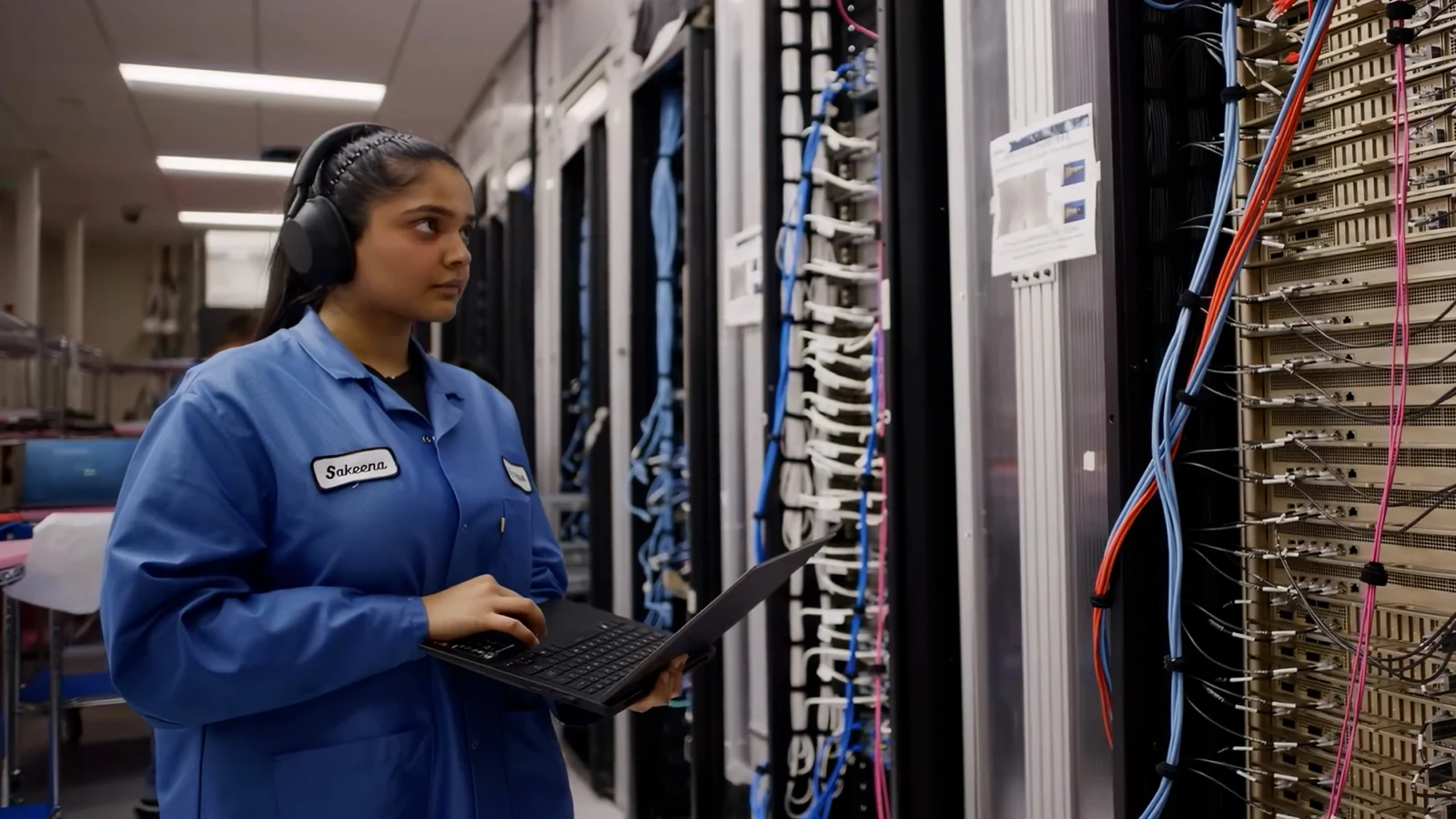
When Sakeena Fiza describes her work as a validation engineer at NVIDIA, she compares the process to a detective story. Rather than simply confirming that a system works, validation teams actively search for flaws and weaknesses before mass production begins. According to details shared in the <a href="https://blogs.nvidia.com/blog/nvidia-life-sakeena-fiza/">NVIDIA Blog</a>, their primary mindset upon receiving a new system is determining how it might break.
Fiza approaches every troubleshooting challenge as a mystery to solve. Operating within the data center systems engineering lab, her team investigates the core engines powering the modern AI era. This critical evaluation begins in the lab before the public even knows a product exists, right when a newly assembled system first receives power.
From Lab Bring-Up to System-Level Success
The initial bring-up process involves integrating boards one by one as firmware and software teams collaborate to watch for the first signs of life. One of Fiza's most enduring memories at the company involves seeing the <a href="https://www.nvidia.com/en-us/data-center/technologies/rubin/">NVIDIA Rubin GPU</a> function successfully for the first time at a system level.
When the hardware successfully enumerated at a system level, the room broke out in celebration. These electric moments mark only the beginning of a long journey, as the system must subsequently be made resilient across trays, racks, clusters, and customer AI factories. Additional discussions surrounding <a href="https://blogs.nvidia.com/blog/tag/nvidia-rubin/">NVIDIA Rubin</a> highlight the ongoing evolution of these next-generation data center deployments.
Building Resilient Infrastructure for Modern AI
Validation engineers effectively act as the first customers for a product, pushing physical hardware to its absolute limits under various real-world conditions. Fiza notes that the ultimate goal is always to catch issues internally before any customer encounters them in the field. This foundational testing helps ensure dependable <a href="https://blogs.nvidia.com/blog/category/enterprise/">AI Infrastructure</a> can operate reliably at massive scale.
Fiza's journey to NVIDIA began after she earned her bachelor's degree in computer science and engineering from the University of California, Irvine. Growing up in Dubai, she was introduced to programming through the Logo programming language, which eventually led to building Mars rovers at high school robotics camps and working on unmanned aerial vehicles during college.
An Interdisciplinary Approach to Hardware
What initially drew Fiza to data center systems was the unique opportunity to work with the entire machine. Within NVIDIA, validation sits directly at the intersection of firmware, hardware, software, mechanical design, thermal behavior, manufacturing, and customer experience. This allows engineers to span multiple disciplines depending on the demands of the current project.
The failures that validation engineers pursue can range from microscopic to immense. A rack-scale issue might involve high-speed signaling, thermal margins, or power integrity, while another might stem from a minor detail like an overly tightened screw or dust levels in a facility. Fiza emphasizes the incredible complexity required to build the <a href="https://blogs.nvidia.com/blog/category/enterprise/hardware/">Hardware</a> necessary to run modern artificial intelligence workloads effectively.
Solving Complex Hardware Puzzles
When diagnostic logs reveal a failure, the validation team's job is to uncover the exact root cause. They reproduce the issue, vary operating conditions, investigate firmware, remove mechanical variables, probe signals, and study scope shots to narrow down potential origins. Because a single board can house tens of thousands of components and a rack can approach half a million, these parts must function cohesively under intense stress.
Fiza compares the bring-up phase to the Avengers assembling, with architects, designers, software engineers, firmware engineers, and validation engineers all gathered in one room to pursue a working system. Looking ahead, she expresses deep excitement for the products currently in the pipeline that are poised to make significant impacts.
Sources
- NVIDIA BlogSakeena Fiza Helps NVIDIA Hardware Succeed at Scale