SpaceX Declines Space Force Missions Amid Industry Capacity Pressures
Recent developments in the global aerospace industry highlight shifting launch dynamics, ranging from SpaceX declining military contracts to upcoming rocket programs in Spain and Canada.
 Radwan AbdulhadiEditor and technology writer
SpaceX Declines US Space Force Contracts
The United States space program recently encountered a notable hurdle when SpaceX turned down an offer to book rides for three future satellite missions from the US Space Force, as [Politico reports](https://www.politico.com/news/2026/10/22/space-force-spacex-rocket-musk-01131131). According to reports, no other rocket companies offered to take on the missions either.
Brig. Gen. Eric Zarybnisky, the acting portfolio acquisition executive and a top Space Force official, acknowledged growing pains for both the government and the broader space industry as demand for rocket capabilities continues to climb. He noted that there are temporary operational gaps to work through while new providers come online. Two of the unfulfilled missions were intended for the Space Development Agency, a branch tasked with building a massive low-Earth orbit satellite network for data services, missile warnings, and tracking capabilities under the National Security Space Launch initiative.
Other major launch providers, such as United Launch Alliance and Blue Origin, are currently working through technical setbacks with their respective launch vehicles. Despite these temporary hurdles, industry officials remain hopeful that alternative competitors and established contractors will resolve their technical challenges and scale up operations in time.
PLD Space Prepares Miura 5 for Integration
On the civil and international launch front, European developers are making significant strides. [Aviation Week reports](https://aviationweek.com/space/launch-vehicles-propulsion/pld-space-miura-5-inaugural-launcher-nears-final-integration) that PLD Space is nearing final integration for its Miura 5 rocket ahead of an inaugural launch scheduled for next year.
According to CEO Raúl Torres, the vehicle is one of three Miura 5 rockets already manufactured by the company. The other two units are specifically designed to qualify key system elements. PLD Space is currently targeting a first flight for the small-lift vehicle before mid-2027. Manufacturing multiple vehicles simultaneously has enabled engineering teams to continuously apply lessons learned across production and integration campaigns.
Furthermore, a Miura 5 second stage is fully integrated to initiate rigorous system-level testing under representative operating conditions. Another second stage has been delivered to PLD Space's Teruel test facility to execute a comprehensive qualification campaign, which features a wet dress rehearsal and a static hot-fire test.
Reaction Dynamics Seeks Funding for Canadian Launch Goals
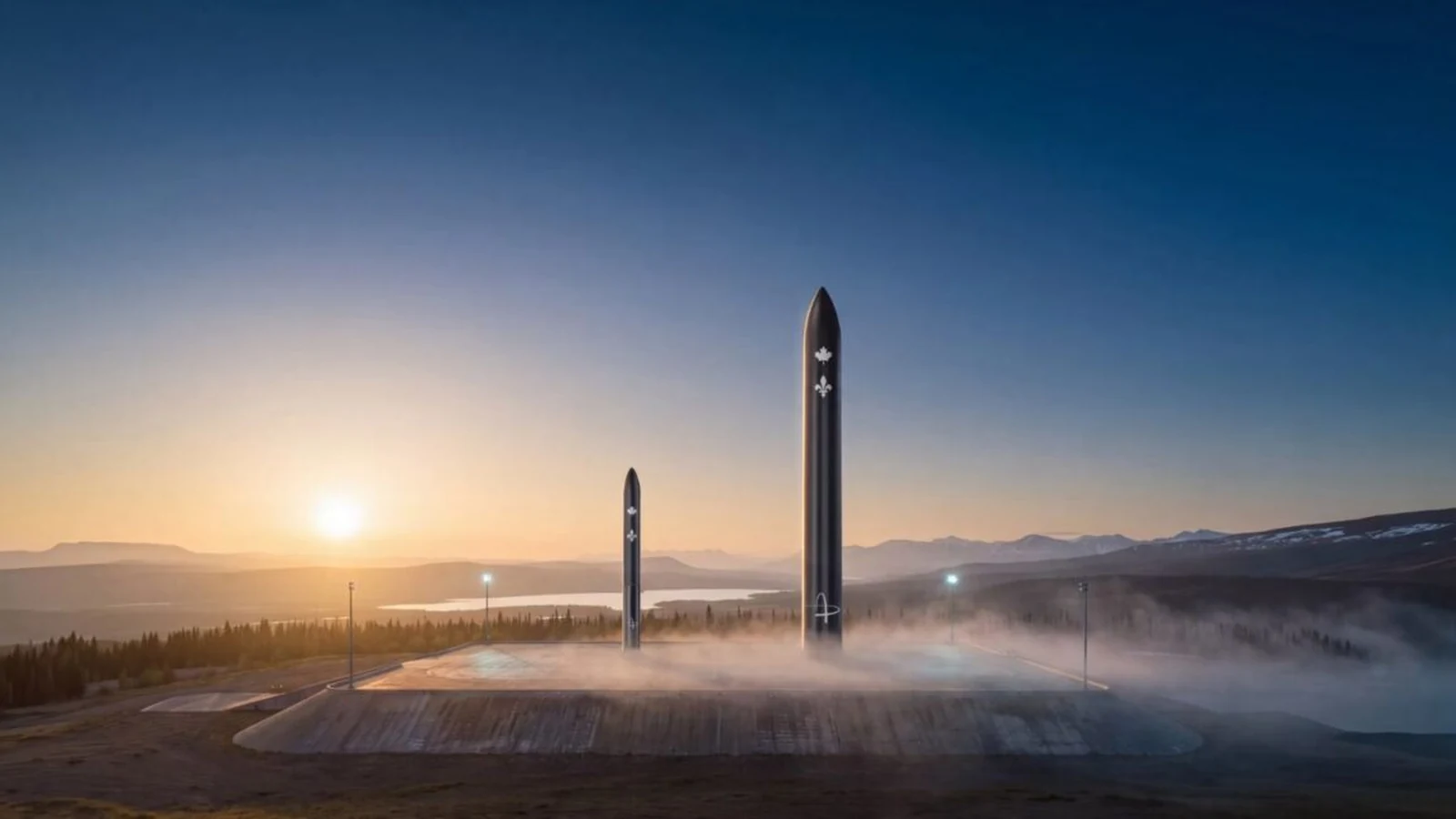
In Canada, launch startup Reaction Dynamics announced plans to raise $350 million to expand its workforce from 68 to more than 350 employees, [spaceQ reports](https://spaceq.ca/reaction-dynamics-borealis-six-tonne-2031/). The company is actively developing the small-lift Aurora rocket, which targets an orbital flight by 2028.
Alongside the Aurora program, Reaction Dynamics revealed intentions to build a medium-lift vehicle named Borealis, with a planned debut by 2031. Designed to lift six tons to low-Earth orbit, Borealis would deliver slightly under half the advertised payload capacity of competitive vehicles like Rocket Lab's Neutron rocket.
Bachar Elzein, founder and chief executive of Reaction Dynamics, emphasized the importance of domestic capabilities. "We founded Reaction Dynamics because we believe Canada should be able to reach orbit on its own terms," Elzein stated, noting that Aurora provides the initial pathway to orbit in 2028 while Borealis aims to deliver sovereign access to orbit at scale by 2031.
Rocket Lab Advances With Upcoming Electron Flight
Commercial launch activity continues at a steady pace as Rocket Lab prepares for its 98th flight of the Electron rocket. [The mission](https://rocketlabcorp.com/missions/launches/hawkeye-360/), dubbed 'We’re Not Hawking Around,' is scheduled to carry three HAWK satellites into orbit for constellation operator HawkEye 360.
Rocket Lab remains one of the few aerospace entities to successfully develop and frequently fly a purely commercial small-lift rocket. Industry observers continue to monitor ongoing developments across the sector, including broader commercial market pressures and the evolving race to introduce new medium-lift launch vehicles.
Sources
- Ars TechnicaRocket Report: SpaceX says no thanks to military launches; Spanish rocket nearly ready
Continue chronologically

Related stories
US Space Force Seeks New Spaceport by 2030 to Relieve Bases
The US Space Force is under pressure to find a location for a new heavy-lift spaceport by 2030 to relieve launch congestion in Florida and California.
SpaceX Reportedly Seeks $40B Debt Package for Nvidia Hardware
SpaceX is reportedly aiming for a $40 billion debt package to acquire Nvidia Rubin AI accelerators and build out massive infrastructure.

Launch Crisis More Severe Than Anticipated, Report Says
A new report from Quilty Space indicates that the global rocket launch crisis is worse than expected and may persist well into the late 2030s.
Alex Gibney's 4-Hour Musk Documentary Examines Tech Titan
Alex Gibney's four-hour documentary examines Elon Musk's rise, blending archival footage and an adversarial tone in a two-part cinematic portrait.