How Retro Consoles Handled Graphics Before Modern GPUs
For more than two decades, game consoles relied on bespoke, fixed-function chips to render graphics until the introduction of PC-style hardware.
 Radwan AbdulhadiEditor and technology writer
The Era of Fixed-Function Graphics Chips
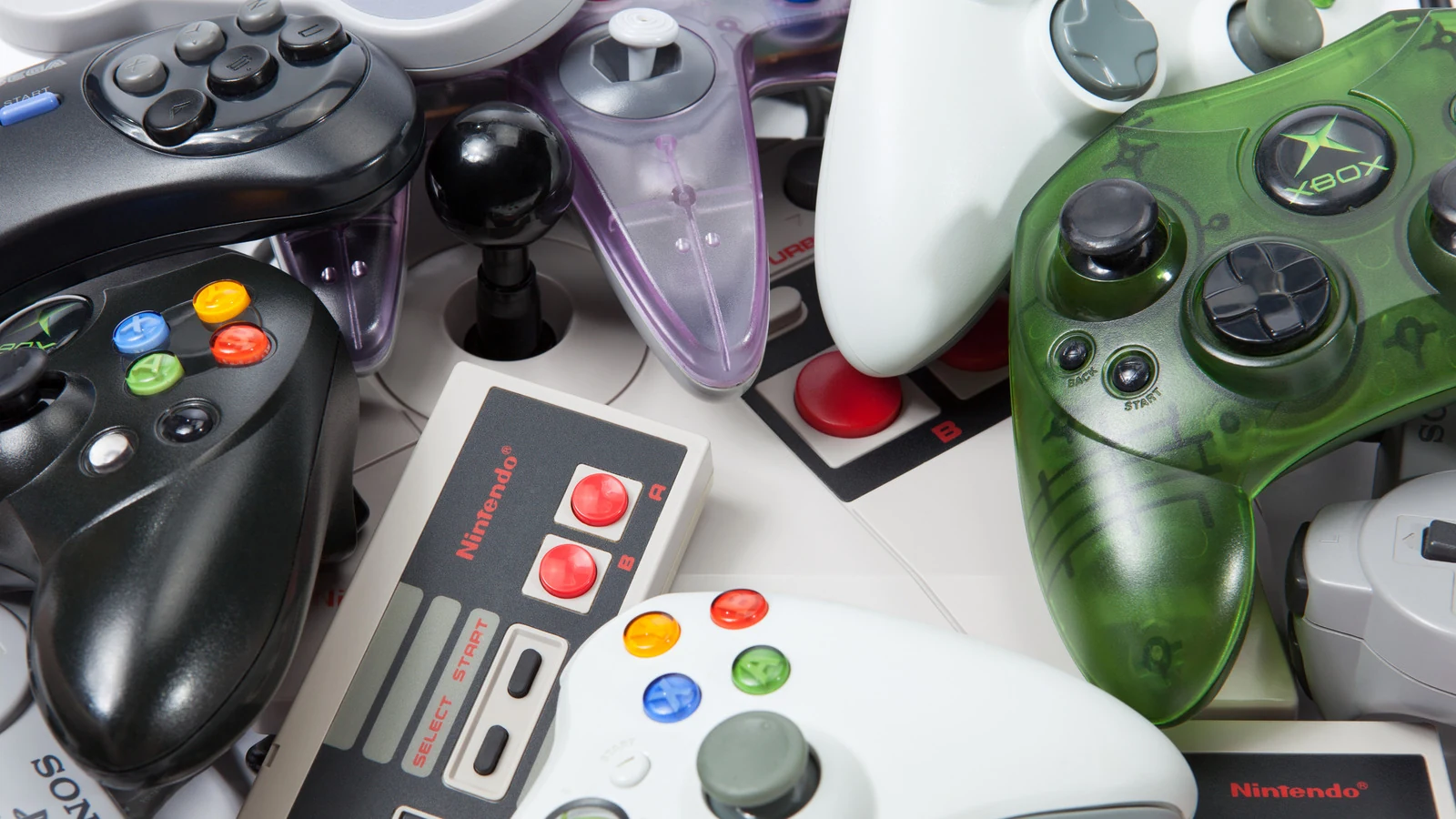
Before the advent of modern GPUs, console graphics came from bespoke, fixed-function chips for more than two decades. Players of early systems like the NES often encountered hardware quirks caused by these limitations. For example, when too many Goombas lined up on the same row in Super Mario Bros., some of them would start to flicker. That phenomenon occurred because the NES's graphics chip hit its hard limit of eight sprites per scanline, dropping anything past eight and alternating which ones appeared.
Inside the NES, the Ricoh 2C02 Picture Processing Unit handled graphic rendering. As a rudimentary chip incapable of running code, it took tile artwork from the cartridge along with lookup tables from memory to turn them into a TV signal one scanline at a time. This arrangement—featuring a dedicated picture generator fed by the CPU—defined how most consoles rendered graphics from the late 1970s into the 2000s.
Memory Limits and Scanline Processing
The Ricoh 2C02 operated using roughly 10kB of memory, split into about 8kB of tile shapes stored on the cartridge and 2kB of RAM inside the console holding background maps. Separate small memories tracked the position, shape, and orientation of up to 64 sprites, outputting a 256x240 pixel resolution built from 8x8 tiles.
As the CRT TV's electron beam swept across each screen line, the 2C02 determined which 8x8 tile belonged at each spot by cross-referencing active sprites. Because this took place in step with the electron beam, the CPU could not safely rewrite the picture while it was being drawn. Such hardware constraints help explain why retro games look better on old CRT TVs.
Alternative Early Architectures
Unlike the NES, earlier machines like the Atari 2600 required the CPU to handle graphics directly. Because its Television Interface Adaptor lacked a frame buffer, the central processor had to feed new values to the chip for every scanline drawn by the beam. Going back even further to 1972, the Magnavox Odyssey featured no processor or memory at all, drawing dots and lines using discrete diode-transistor logic.
Shared Workloads on the PlayStation 2
As video games transitioned into the 3D era, manufacturers adopted multi-chip configurations to share processing loads. Sony demonstrated how this worked when it showcased the PS2's chips in March 1999. The system paired a 128-bit CPU built with Toshiba called the Emotion Engine with a separate graphics chip named the Graphics Synthesizer, running at roughly 295 MHz and 147 MHz respectively in final units.
The Graphics Synthesizer did not perform geometry work. Instead, once a triangle reached it, the shape had already been placed within the frame, leaving the chip to fill it in with color and texture. Geometry computations occurred on the Emotion Engine via two vector units. According to documentation from Sony and Toshiba's engineers, a single vector unit could manage 85 million transforms per second, showcasing how early 3D consoles divided graphical responsibilities.
The Arrival of the Xbox and Modern GPUs
Although Sony used the GPU term for the original PlayStation's Toshiba-designed graphics chip in 1994, the modern definition of a GPU—a chip capable of running small programs written by developers—did not arrive until the GeForce 3 in early 2001. NVIDIA and Microsoft finalized their agreement for the original console in March 2000, and Bill Gates officially announced the system shortly after.
The finished hardware system was officially unveiled at CES 2001 and launched in November 2001. It marked a massive shift by incorporating an Intel Pentium III and a custom NVIDIA graphics processor based on the GeForce 3, permanently changing how consoles approached graphics processing.
Sources
- EngadgetHow did retro consoles handle graphics before modern GPUs?
Continue chronologically
Related entity coverage
Related stories
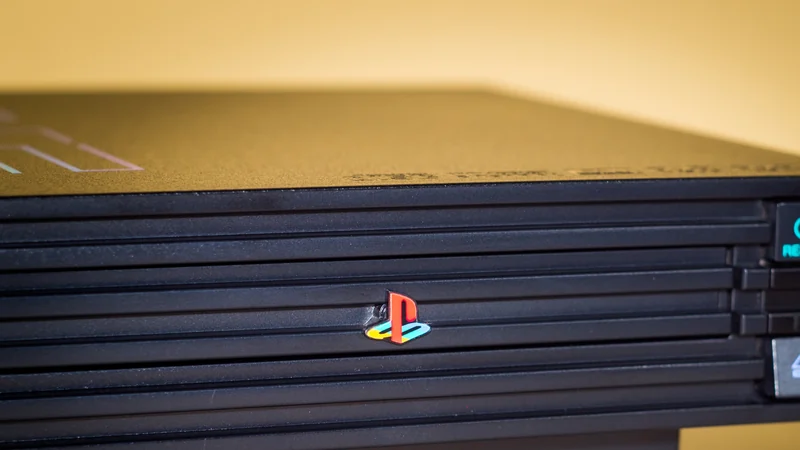
Original PlayStation 2 Security Chip Reverse Engineered
More than 25 years after the fat PlayStation 2 launched, developers have successfully reverse engineered and dumped its stubborn SPC970 security chip.
Kojima Productions Rebuts Financial Difficulty Rumors
Kojima Productions has officially addressed reports regarding its financial health following the transition of its latest title, Physint, to Xbox.

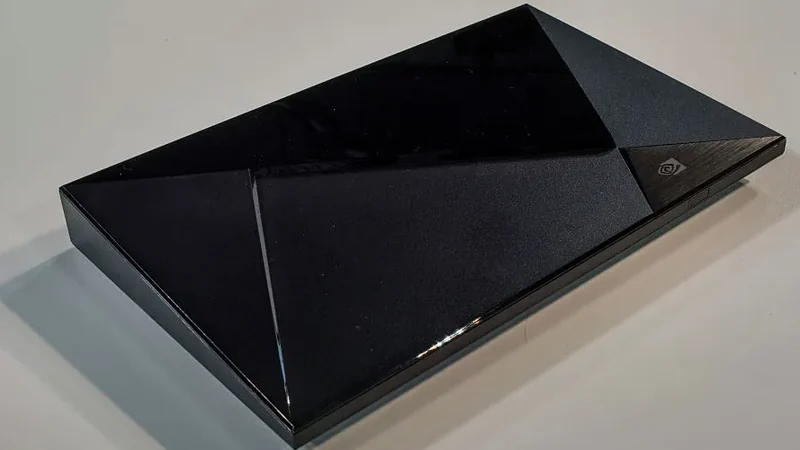
Nvidia Shield TV Pro Gets $100 Price Hike Due to AI
The 7-year-old Nvidia Shield TV Pro has received a $100 price increase to $299.99, as soaring component and memory costs tied to generative AI hit hardware.
Microsoft Prepares for Windows, Surface, and AI Event
Microsoft is holding a major event in San Francisco to discuss local AI, the Surface Laptop Ultra, and upcoming agentic AI software integrations.