
Intel Celeron 1200 Revived After CPU Pin Repair
A meticulous repair project has brought an Intel Celeron 1200 processor back from the brink after a critical pin was torn away along with the underlying substrate pad. The revived chip not only boots but has been overclocked by 33 percent.
 Radwan AbdulhadiEditor and technology writer
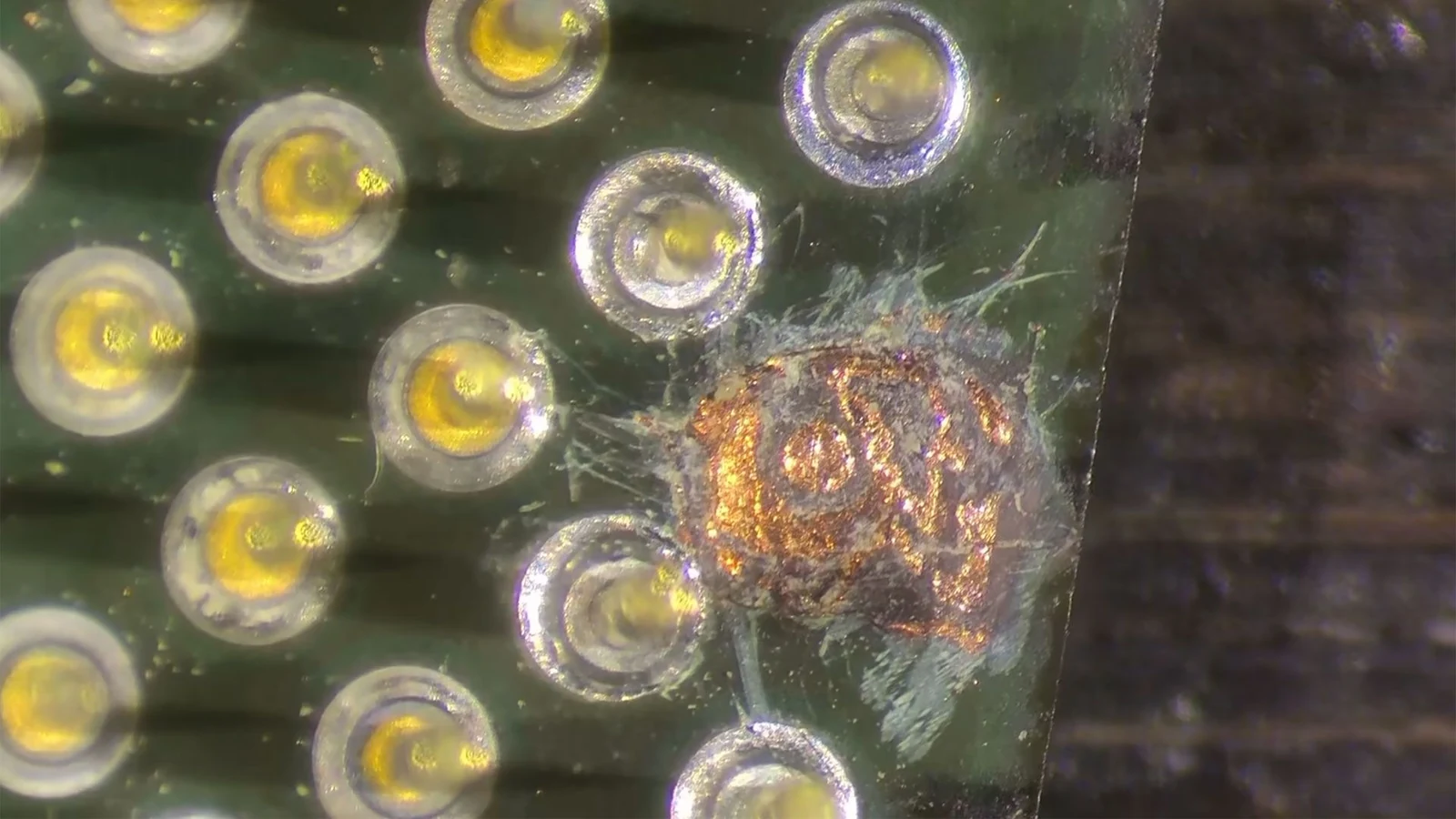
A Quarter-Century-Old Chip Faces Fatal Damage
An Intel Celeron 1200 processor built on the Tualatin architecture has been brought back to life after suffering what appeared to be a fatal injury. The chip, which is roughly twenty-five years old, had one of its pins completely missing and the underlying pad ripped off as well. As a close relative of the Pentium III, the Celeron 1200 occupied an important place in Intel's lineup of the era, but with a severed data pin the processor simply would not boot in any system.
The damage was concentrated on pin D47, a data line that is essential for the chip to communicate with the platform. According to Bits und Bolts, the repair creator who documented the project, the situation was a definite fix-or-be-damned scenario. Unlike cases where a missing pin can be tolerated because other pins duplicate its function, such as power or ground connections, a lost data pin leaves the processor non-operational.
Digging Into the Substrate for a Delicate Repair
The repair process began with a close examination of the damage. Bits und Bolts dug a hole into the CPU substrate to expose the affected area more clearly. Zoomed-in imaging revealed several layers of copper beneath the green surface material. The repair required that the new pin connect solely to the central circular copper pad visible at the site of the damage, without accidentally bridging any of the surrounding copper planes.
To isolate the connection point, Bits und Bolts applied solder mask to the area around the central pad while it cured. The creator noted that the pins involved are extremely small, making it an intricate task to mask the surrounding region cleanly and solidly. Once the solder mask had set, the next step was to harvest a donor pin from another Tualatin processor that was already confirmed broken.
Soldering and Verification Before Boot
Returning to the Celeron 1200 under repair, Bits und Bolts added flux to the exposed copper area and attempted to tin the central circular pad to which the donor pin would be attached. The soldering of the donor pin proceeded smoothly, leaving it perfectly positioned and upright. Although the added pin is clearly visible, the creator was relieved when the repaired processor mated cleanly into the socket without any issues.
Rather than powering up the system immediately, Bits und Bolts took several multimeter readings to check for obvious electrical problems. No issues were detected. The moment of truth followed, and the patched-up processor successfully booted the system without any problems. Bits und Bolts stated that this was the first time they had repaired a processor pin issue that appeared so grave.
Benchmarking and a 33 Percent Overclock
With the repaired Celeron 1200 running stably, Bits und Bolts put the chip through a series of benchmark tests, including SiSoft Sandra. The results confirmed that the processor was fully functional after the surgery. The creator then pushed the chip further, overclocking it by 33 percent from its stock 1,200 MHz frequency to a stable 1,600 MHz.
The successful overclock adds a notable outcome to what began as a salvage operation. While the Celeron 1200 was never positioned as a high-performance part, achieving a stable 1,600 MHz operation on a repaired Tualatin chip demonstrates that the substrate repair restored not just basic functionality but also headroom for performance tuning.
Context on CPU Pin Repairs
CPU pin repairs are not unheard of in the enthusiast community, but they vary widely in complexity depending on the nature of the damage. As noted by Bits und Bolts, some processors can continue to operate with one or two pins missing when the remaining pins share the same function. Power and ground pins are often duplicated across the package, providing a degree of redundancy.
However, data pins such as D47 on the Celeron 1200 carry unique signal paths that cannot be compensated for by other pins. In these cases, physical repair or replacement is the only path to restoring the processor. The successful outcome of this project highlights both the skill involved and the value of detailed substrate-level work when traditional approaches are no longer an option.
Sources
- Tom's HardwareEnthusiast digs into CPU substrate for surgery to replace ripped-off data pin — resurrected chip boots and hits 33% overclock