Scientists Replicate Infamous 1960s Worm Memory Study
A modern Harvard lab is attempting to reproduce bizarre historical experiments investigating whether flatworms can absorb memories by consuming each other.
 Radwan AbdulhadiEditor and technology writer
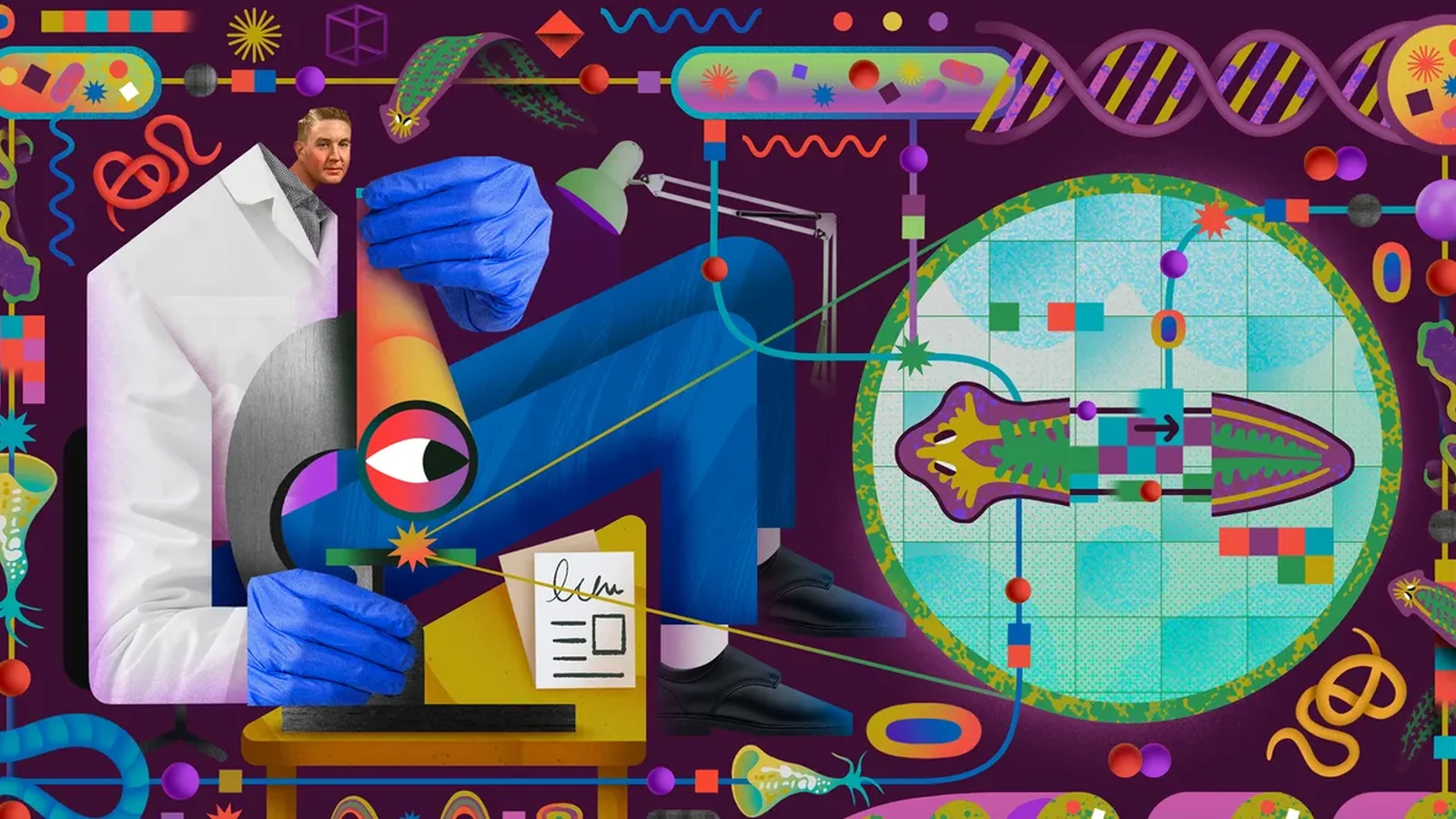
Chasing Wild Flatworms in the Cold
In an effort to settle a long-standing debate that has fascinated neuroscientists for decades, researchers have turned to the field to source biological specimens. Specifically, the team required some worms known as planarians—arrow-headed flatworms representing some of the simplest organisms to possess a brain and a nervous system featuring bilateral symmetry. While laboratories typically rely on commercial biological supply companies, mail-order specimens fell short of experimental requirements, prompting field collection expeditions.
Fieldwork took researchers across freezing waterways, including the icy banks of the Charles River in Boston, alongside stream-hopping efforts in Oregon and Michigan lakes. Despite utilizing vintage guidebooks and traditional angling techniques, the collected planarians failed to demonstrate the expected behavioral responses once brought back to the laboratory.
The Origins of Planarian Memory Research
The modern attempts to recreate these trials trace back to the work of James McConnell, an eccentric behavioral psychologist during the 1960s who convinced the scientific establishment that planarians could undergo classical conditioning. McConnell's early experiments involved substituting flatworms into standard rat conditioning studies, repeatedly pairing a bright light with an electric shock. Over time, the worms learned to associate the light with the shock, reacting by scrunching their bodies.
Beyond simple conditioning, planarians exhibited extreme regenerative capabilities. When chopped in half, both halves could regrow into complete adults, preserving trained behavioral responses even when regenerated from headless tails. This unexpected outcome suggested that memory retention was not exclusively localized within traditional neural structures.
Cannibalism and RNA Theories
Buoyed by these initial regenerative findings, McConnell pushed his research further through unconventional methods. After pureeing trained worms and feeding them to untrained cannibals, he observed that the recipient worms appeared to acquire the light response immediately. These sensational findings aligned with the era's emerging discoveries regarding DNA and molecular biology, leading McConnell to hypothesize that engrams possessed a chemical basis and could be encoded within RNA structures.
While mainstream memory research eventually shifted away from these hypotheses, modern cognitive scientists continue to investigate alternative biological systems for clues regarding memory formation and retention across simple organisms.
Modern Replication Challenges
Today, researchers revisiting these historical experiments face significant hurdles. Despite systematic efforts to train contemporary planarian populations under controlled laboratory conditions, modern specimens have consistently failed to replicate the learning behaviors documented in the original 1960s literature. As investigations continue, scientists remain split on whether the original findings represented genuine biological phenomena or historical anomalies.
Sources
- WIREDAre Memories Transferable? Meet the Scientists Replicating an Infamous Study to Find Out
Continue chronologically

Related stories
SNO+ Detects Geoneutrinos to Map Earth's Interior
Scientists are using a global network of underground detectors to measure elusive geoneutrinos and map Earth's radioactive interior.

Amazon Echo Dot Max Named Best Alexa Speaker in WIRED Review
Discover WIRED's top-tested Alexa speakers for 2026, including the new Echo Dot Max, updated pricing details, and performance highlights.
WIRED Details Top Travel Mugs for 2026 Commutes
WIRED highlights the best travel mugs for 2026, featuring insulated, leakproof, and self-heating picks from top brands like Hydro Flask and Ember.

Bose QC Headphones (2nd Gen) Hit Lowest Price Yet
Bose QuietComfort Headphones (2nd Gen) receive their first major discount since launching, offering steep savings ahead of Black Friday.