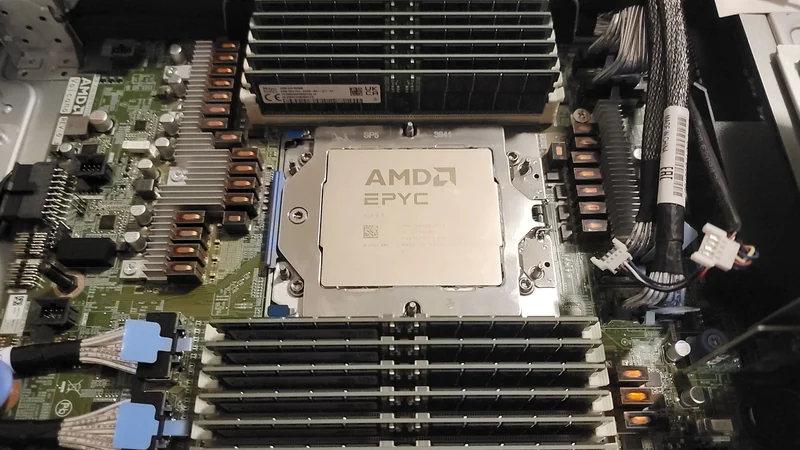
AMD EPYC Verano AI CPU to Feature SB1 Socket and LPDDR5X
AMD's upcoming EPYC 'Verano' processors designed for AI servers are expected to utilize a dedicated SB1 socket, departing from standard general-purpose server sockets.
 Radwan AbdulhadiEditor and technology writer
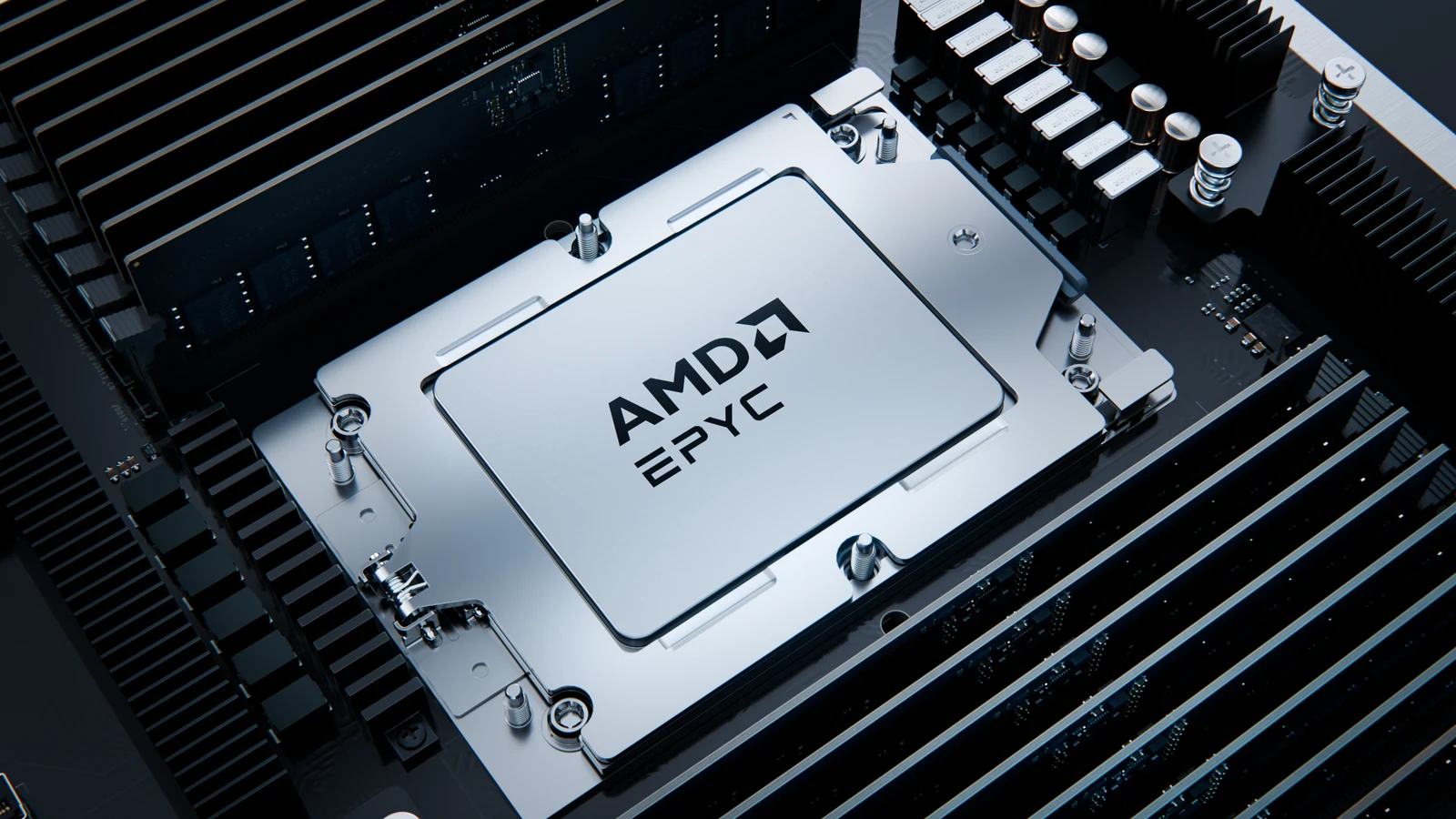
AMD's Verano Platform and the New SB1 Socket
AMD's upcoming EPYC 9006-series 'Verano' CPUs, specifically designed for AI servers, will utilize an all-new SB1 socket and require different cooling systems compared to other processors in the lineup. According to a listing at Dynatron , a leading manufacturer of server coolers discovered by InstLatX64 , the new SB1 socket is smaller than the SP7 and SP8 sockets used for other Zen 6-based EPYC CPUs, resulting in distinct power and cooling requirements.
Details regarding the new platform initially surfaced through industry leaks and hardware tracking. Additional hardware data and insights were extensively covered in a report by Tom's Hardware , highlighting the specialized architecture intended for artificial intelligence workloads.
Specialized Architecture for AI Servers
AMD's Verano processor differs significantly from conventional EPYC server offerings. The CPU is engineered with up to 72 Zen 6 cores operating at speeds up to 5 GHz. Additionally, it integrates a massive 24-channel LPDDR5X memory subsystem utilizing replaceable SOCAMM2 modules.
AMD positions Verano explicitly as a host processor for AI servers. In these configurations, CPUs primarily orchestrate workloads running on AI accelerators rather than focusing strictly on maximum general-purpose compute performance. This specialization helps explain why AMD developed the SB1 socket instead of reusing SP7—which accommodates up to 256-core EPYC 'Venice' processors—or SP8, which is designed for models featuring up to 128 cores. At present, AMD has not disclosed the full specifications, dimensions, or capabilities of the SB1 socket.
Comparison to Industry Strategies
Given Verano's highly specialized role as a host processor for AI accelerators, AMD might not offer a broad range of SKUs typical of its general-purpose EPYC families. If Verano is deployed in systems featuring a predetermined count of Instinct accelerators, AMD could provide just a single configuration or a very small number of CPU configurations. This approach ensures a consistent ratio of CPU cores, memory bandwidth, and host-to-accelerator connectivity per GPU, while simplifying system power, cooling, and qualification—a strategy similarly employed by Nvidia with its Grace and Vera processors.
Adopting this methodology explains the intent behind utilizing a dedicated SB1 socket rather than relying on existing infrastructure. Rather than supporting a broad range of CPU configurations compatible with SP7 and SP8 sockets, SB1 can be tightly optimized for specific CPU SKUs, their 24-channel LPDDR5X memory subsystem, and a targeted system topology. However, because AMD has not officially announced how many Verano SKUs it plans to release, these structural expectations remain speculative.
Cooling Requirements and Thermal Expectations
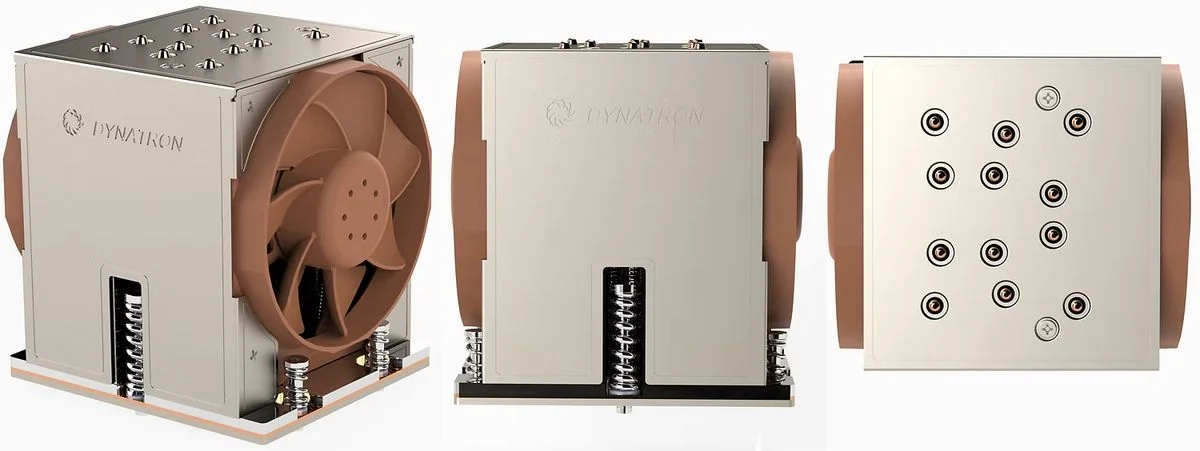
The preliminary SB1-4U-Active cooler listed by Dynatron provides the first tangible indication of the thermal management Verano will demand. The 4U unit measures 128.05 by 106.6 by 130.7 mm and integrates an aluminum fin stack combined with a vapor chamber and heat pipes. It features a double-ball-bearing fan operating at speeds up to 6,000 RPM, delivering up to 91.7 CFM of airflow.
These specifications closely mirror those of Dynatron's J26 4U cooler built for AMD's larger SP7 CPUs, down to matching dimensions. This similarity could suggest that Dynatron reused the J26 mechanical design for SB1 or merely utilized placeholder specifications until the final cooler configuration is completed. Dynatron has not yet specified the maximum supported processor power for the cooler, meaning the listing cannot currently determine Verano's exact thermal design power (TDP). Nevertheless, the inclusion of a large vapor-chamber-based 4U active cooler implies that Verano will feature substantial power consumption despite housing significantly fewer cores than higher-end general-purpose EPYC 'Venice' processors.
Projected Launch Timeline
As hardware manufacturers prepare components for upcoming server architectures, ecosystem details continue to emerge through supplier leaks and product listings. AMD currently plans to officially launch the Verano platform in the second half of 2027, bringing its specialized AI host processors to market.
Sources
- Tom's HardwareAMD's EPYC Verano AI host CPU will reportedly use a special SB1 socket
Continue chronologically
Related entity coverage
Related stories
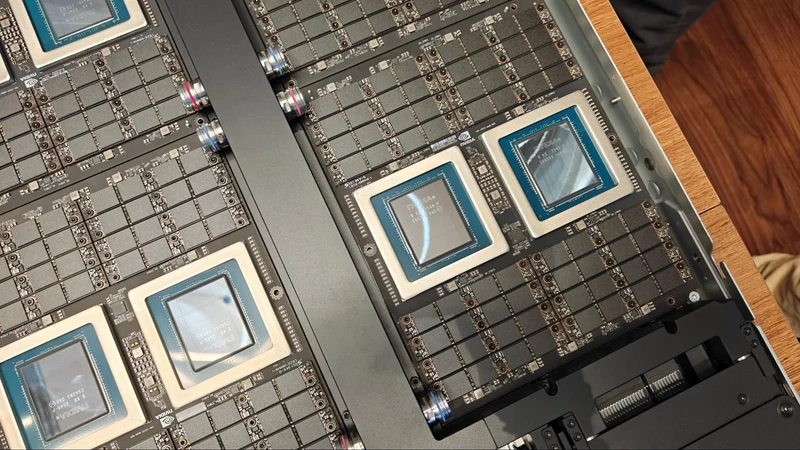
Nvidia Vera CPU Benchmarked Against AMD and Intel
Nvidia's Vera data center CPU is benchmarked against AMD EPYC Turin and Intel Granite Rapids-AP, showcasing strong Python performance and bandwidth.
Modder Brings Full Nvidia DLSS 5 Suite to AMD GPUs
A developer project brings the full Nvidia DLSS 5 suite—including Neural Rendering and Ray Reconstruction—to three generations of AMD gaming GPUs.
Alienware RTX 5090 and Ryzen 9 9950X3D Gaming PC Deal
Discover a powerful Alienware gaming PC featuring an RTX 5090 and AMD Ryzen 9 9950X3D available for $7,499, offering surprising value amid rising hardware costs.
OpenAI Deploys Jalapeño ASICs with AMD EPYC Turin Hosts
OpenAI's hardware leadership explains why AMD EPYC Turin CPUs were chosen over Nvidia's Vera for the rack-scale deployment of Jalapeño ASICs.