Tesla Roadster Fan Downforce Preceded by Iconic History
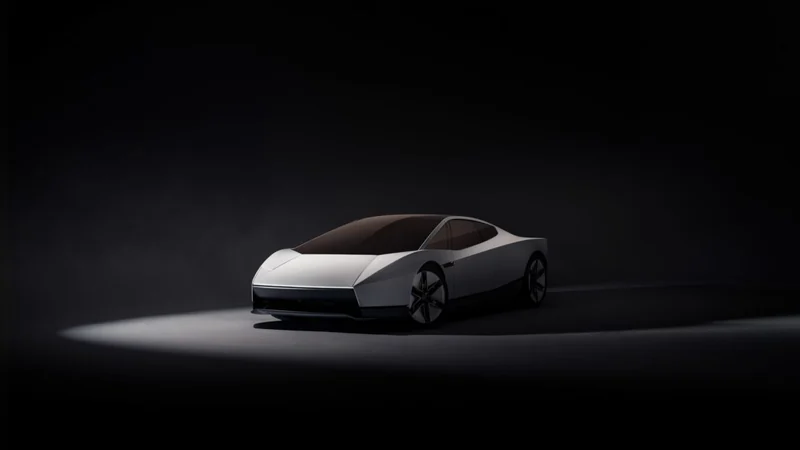
Tesla's redesigned next-generation Roadster utilizes a multi-mode fan and ground sealing system to generate downforce, but fan-assisted suction has a long history in automotive engineering.
 Radwan AbdulhadiEditor and technology writer
Tesla Roadster's Gravity-Defying Stunts
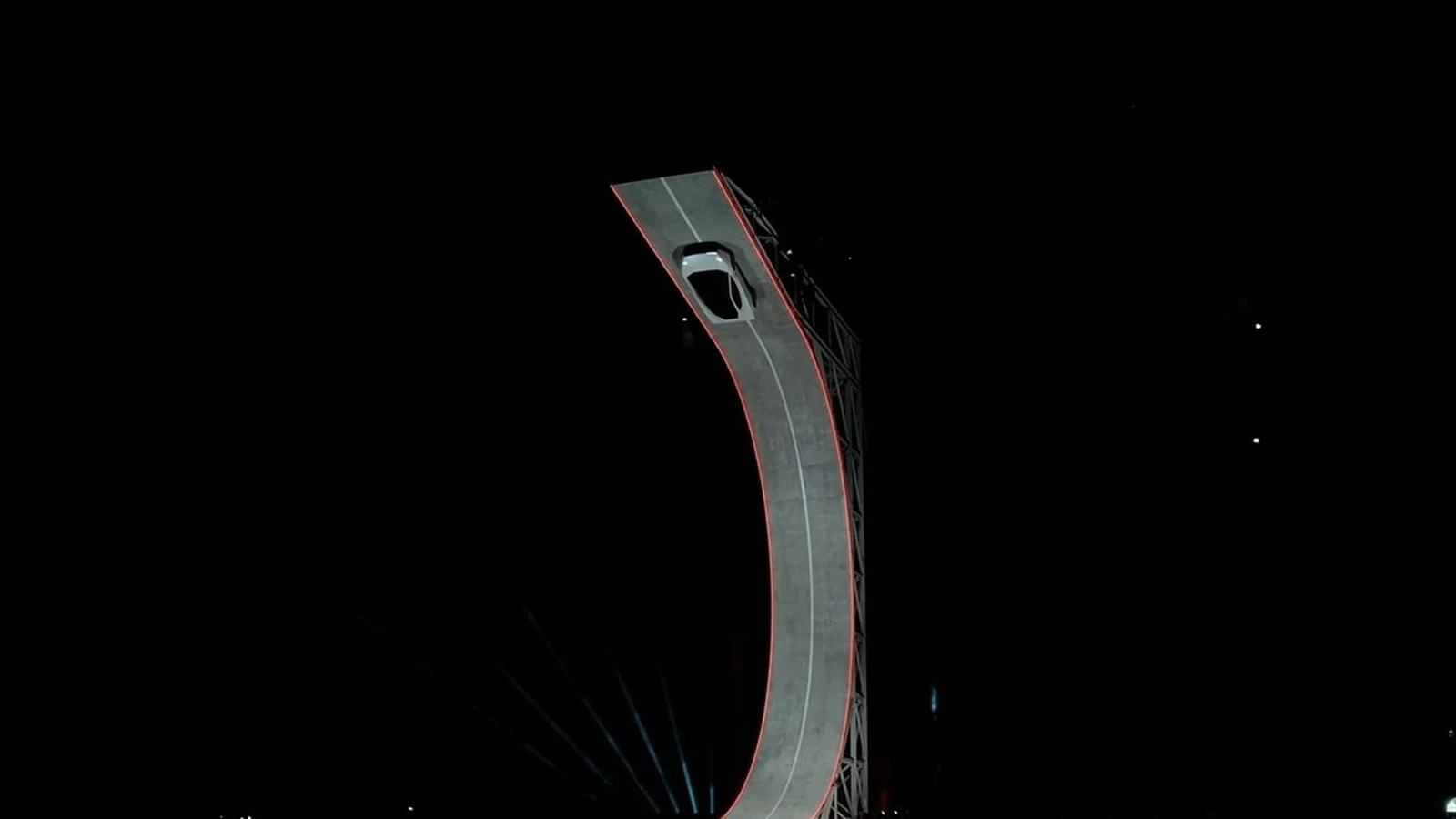
Tesla recently demonstrated its long-awaited next-generation Roadster with a series of dramatic stunts, including driving up a C-shaped ramp to a position perpendicular to the ground where it appeared to hang upside down. According to information shared on the official Tesla website, the vehicle achieves this effect by employing a multi-mode fan and ground sealing system functioning as a downforce generator.
The automaker explains that the powered fans work in conjunction with a retractable rear wing to pull air from underneath the vehicle, supplying the necessary suction to hold the car upside down at any speed. Tesla also notes that the Roadster is capable of generating up to 2 gs of downforce.
McMurtry Automotive and the Spéirling
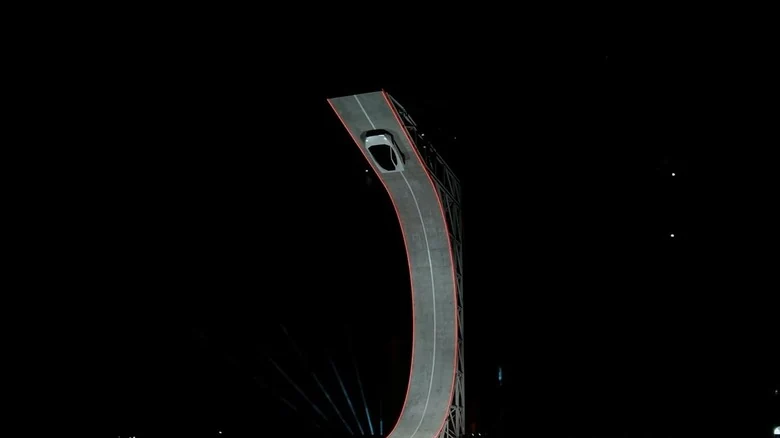
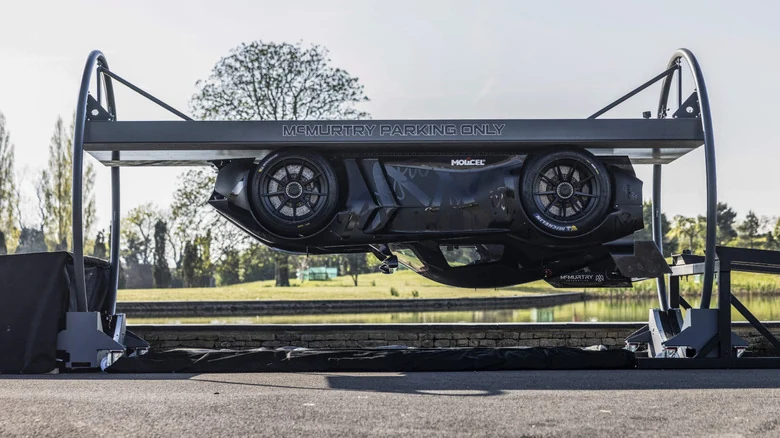
However, the new Roadster is far from the first vehicle to leverage a fan system for generating downforce. Following the Roadster's unveiling, McMurtry Automotive posted a cheeky response on Instagram showcasing its own suction technology, which is called Downforce-on-Demand.
McMurtry's Spéirling is an electric sports car initially unveiled in 2025 and demonstrated at the company's headquarters in England, where it clung upside down to a rotating platform completely unsupported. The company unveiled the final production version of the Spéirling Pure in July 2026, noting that the technology generates enough downforce to allow the vehicle to cling to surfaces at a standstill and corner at more than 3g.
McMurtry plans to produce only 100 units of the Spéirling, with prices starting at $132,300 and initial customer deliveries expected before the end of the year.
The Historic Chaparral 2J
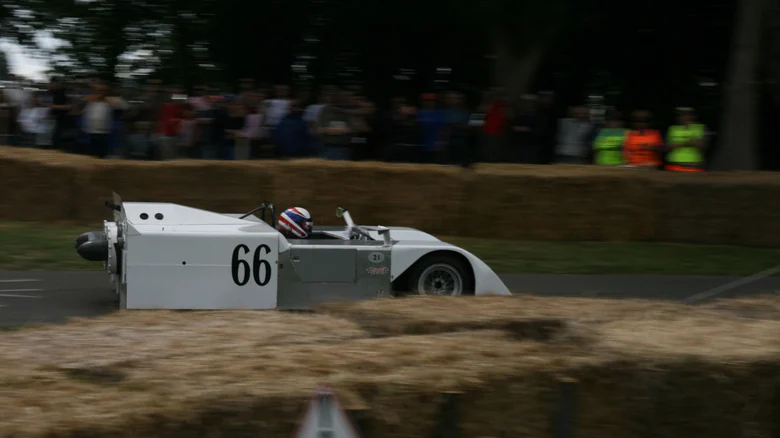
Decades before modern electric supercars and Tesla's latest design, American racing drivers Jim Hall and Hap Sharp entered the Can-Am Championship series in 1970 with a boxy prototype called the Chaparral 2J. Powered by a modified 7.6-liter Chevrolet V8 engine, the vehicle's suction technology originated from a Chevrolet project before joining Hall's racing team.
The Chaparral 2J utilized two fans adapted from a military tank engine alongside a transparent polycarbonate skirt creating an enclosed area beneath the car. This allowed the system to generate between 1.25 g and 1.5 g of suction by pulling air directly from the enclosed space.
The Brabham BT46 Fan Car
Another prominent milestone in fan-car history was the Brabham BT46, an F1 racing car designed by South African-British racer Gordon Murray for the 1978 season. Designers installed a large single fan at the rear connected through a series of clutches, utilizing skirts similar to the Chaparral 2J to seal the gaps between the vehicle bottom and the ground.
Although the team claimed the fan was primarily intended for cooling to comply with Formula 1 regulations, the system extracted air from beneath the car to create a strong suction effect that increased with vehicle speed. The Brabham BT46 raced only once at the 1978 Swedish Grand Prix, where it successfully won the event.
Production Timelines and Availability
Detailed coverage of these automotive milestones can be found through various automotive reports, such as reporting from Engadget covering the legacy of fan-assisted downforce vehicles.
As for Tesla's vehicle, Elon Musk stated that the Roadster is scheduled to enter production in 2028. Reservations are currently open, with the base Roadster requiring a $50,000 reservation fee, while the "Thrust" trim level featuring the specialized suction system and acceleration thrusters costs $250,000 to reserve.
Sources
- EngadgetThe Tesla Roadster is far from the first car to use fans for downforce
Continue chronologically

Related stories
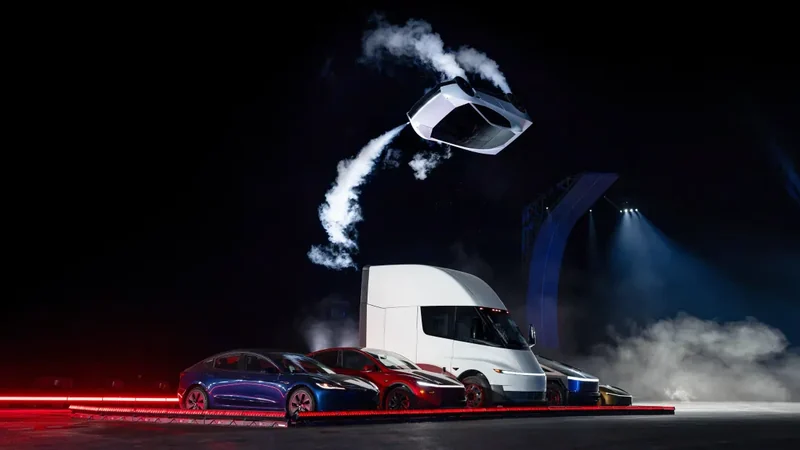
Tesla Roadster Flying Stunt Highlights Prototype Reality
Tesla's recent demonstration of a flying Roadster showcased impressive engineering and cold-gas thrusters, but the vehicle is not approved for public road use.
Tesla Targets 2028 Production for Redesigned Roadster
Tesla has announced a 2028 production target for its redesigned Roadster sports car, following years of delays and a high-profile stunt reveal.
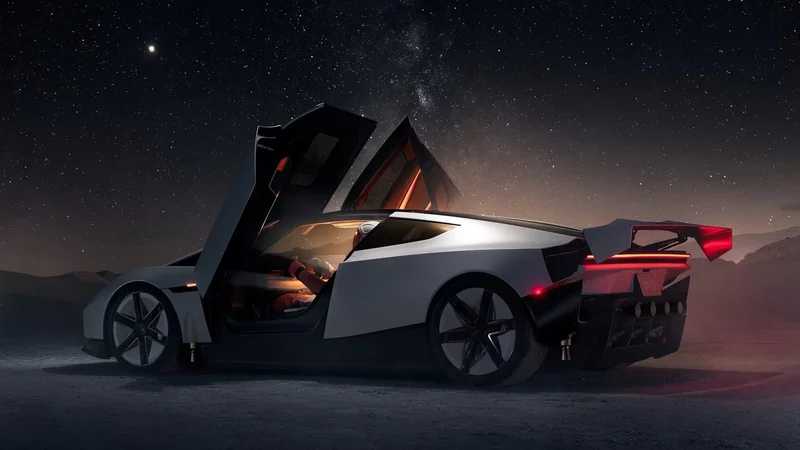
Tesla Revives Roadster With Decades-Old Stunt Technology
Tesla is once again trying to bring back the Roadster, leaning on decades-old stunt technology and bold performance claims amid wider financial challenges.
Tesla Starts Optimus Robot Production as Profit Falls 43%
Tesla has started manufacturing its Optimus humanoid robot in California, even as skyrocketing expenses and flat revenue caused a 43% drop in profit.